The book / Books I to XIV · corpus governs

The Causal Time Protocol
From sealed substance to coherent networks.

The whole protocol as one book: the Law, the Definitions, the Architecture and the Books that follow, with the companion volumes set as Books XI to XIV. Where the book and the corpus differ, the corpus governs.

TIME FOUNDATION
PUBLICATION LIBRARY
The complete publication

A paper to read.
A record to inspect.

Books I to XIV · corpus governs. Read this publication in relation to the governing Corpus Δ1, not in place of it.

908Sections
48Source figures
2PDF layouts
Read the publicationExplore all charts & figures
Inside the paper

Mechanisms, made visible.
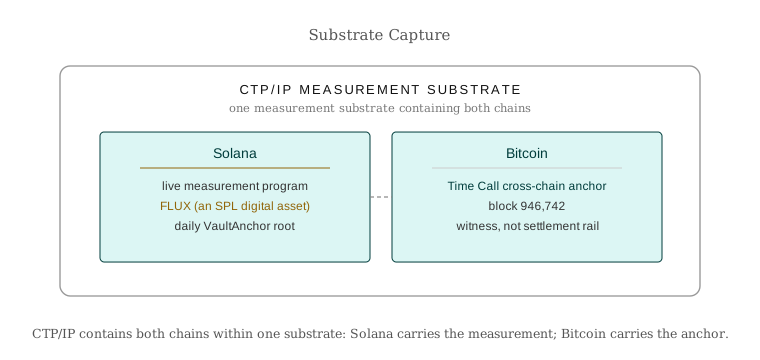
Figure 8. Cross-chain anchoring as substrate capture: CTP/IP contains both Solana and Bitcoin within one measurement substrate. Solana carries the live measurement program and FLUX (an SPL digital asset); Bitcoin carries the cross-chain Time Call anchor.
Figure 8. Cross-chain anchoring as substrate capture: CTP/IP contains both Solana and Bitcoin within one measurement substrate. Solana carries the live measurement program and FLUX (an SPL digital asset); Bitcoin carries the cross-chain Time Call anchor.Full size (opens in a new tab)

Loading the complete document index…

The figure collection

Every figure in this publication.
48 source figures
Figure 8. Cross-chain anchoring as substrate capture: CTP/IP contains both Solana and Bitcoin within one measurement substrate. Solana carries the live measurement program and FLUX (an SPL digital asset); Bitcoin carries the cross-chain Time Call anchor.
Figure 8. Cross-chain anchoring as substrate capture: CTP/IP contains both Solana and Bitcoin within one measurement substrate. Solana carries the live measurement program and FLUX (an SPL digital asset); Bitcoin carries the cross-chain Time Call anchor.Full size (opens in a new tab)
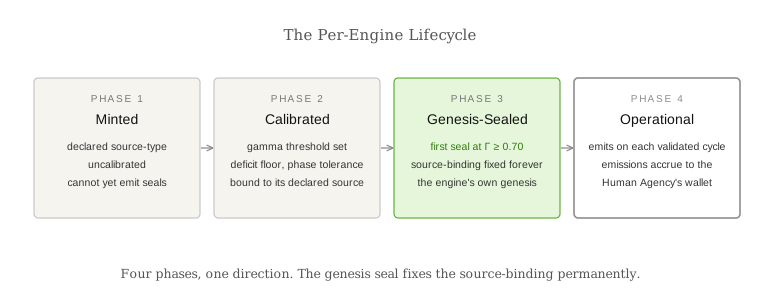
Figure 51. Per-engine lifecycle through four phases.
Figure 51. Per-engine lifecycle through four phases.Full size (opens in a new tab)
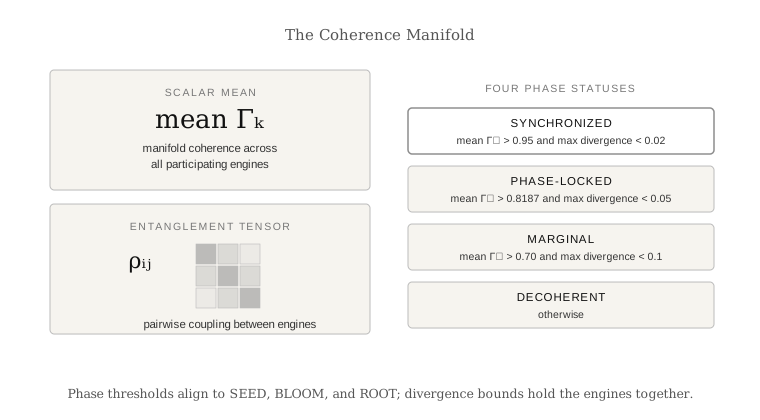
Figure 52. Coherence Manifold: scalar mean, entanglement tensor, four phase statuses.
Figure 52. Coherence Manifold: scalar mean, entanglement tensor, four phase statuses.Full size (opens in a new tab)
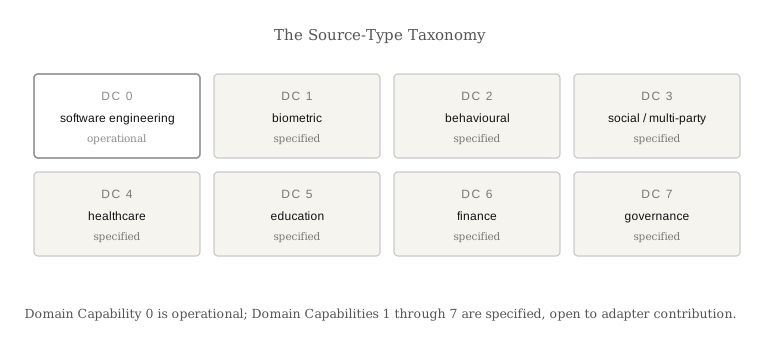
Figure 50. source-type taxonomy: Domain Capability 0 operational, Domain Capability 1 to Domain Capability 7 structurally specified.
Figure 50. source-type taxonomy: Domain Capability 0 operational, Domain Capability 1 to Domain Capability 7 structurally specified.Full size (opens in a new tab)
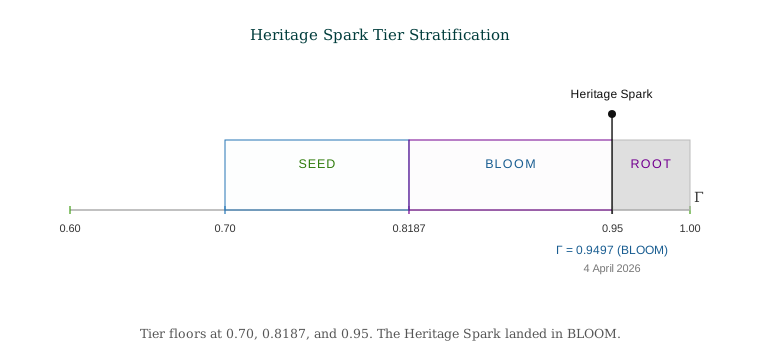
Figure 47. Heritage Spark coherence tier stratification.
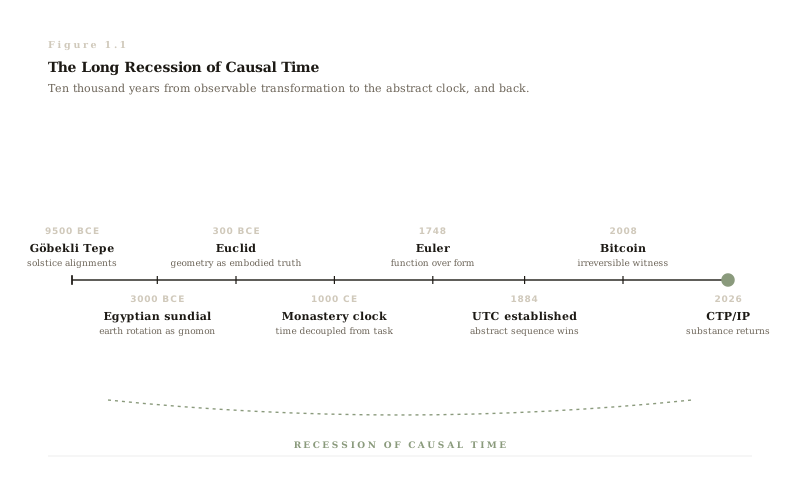
Figure 47. Heritage Spark coherence tier stratification.Full size (opens in a new tab)
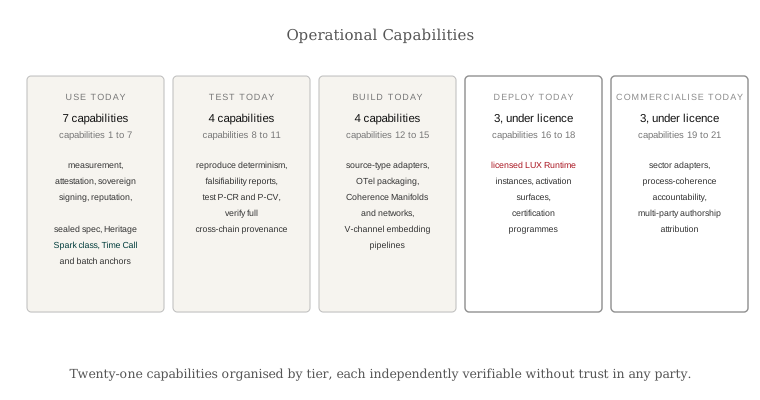
Figure 53. Operational capabilities: 21 capabilities organised by tier.
Figure 53. Operational capabilities: 21 capabilities organised by tier.Full size (opens in a new tab)
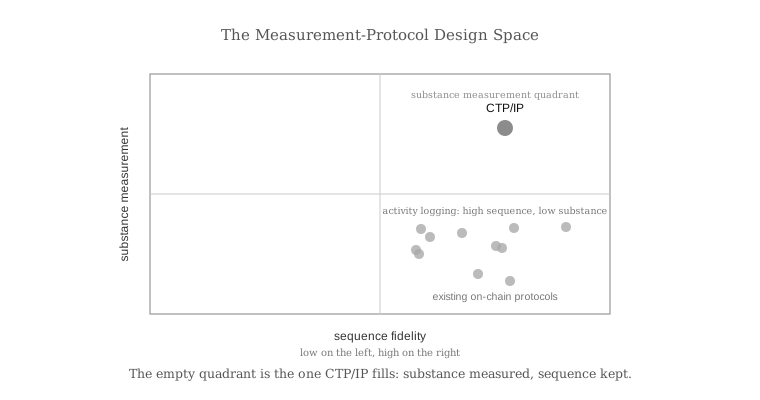
Figure 3. The measurement-protocol design space. Existing on-chain protocols cluster in the activity-logging quadrant (high sequence, low substance). CTP/IP fills the substance-measurement quadrant.
Figure 3. The measurement-protocol design space. Existing on-chain protocols cluster in the activity-logging quadrant (high sequence, low substance). CTP/IP fills the substance-measurement quadrant.Full size (opens in a new tab)
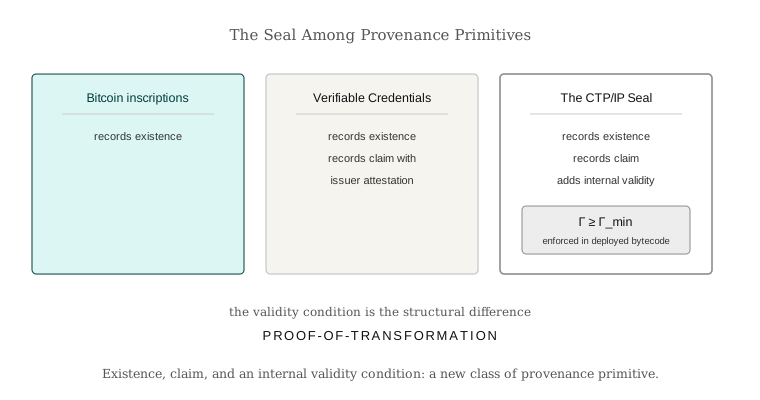
Figure 9. The seal compared to existing provenance primitives. Bitcoin inscriptions record existence; Verifiable Credentials record claim with issuer attestation; the seal adds an internal validity condition (Γ ≥ Γmin) enforced by deployed bytecode. The validity condition is the structural difference that makes the seal a new class of provenance primitive (Proof-of-Transformation).
Figure 9. The seal compared to existing provenance primitives. Bitcoin inscriptions record existence; Verifiable Credentials record claim with issuer attestation; the seal adds an internal validity condition (Γ ≥ Γmin) enforced by deployed bytecode. The validity condition is the structural difference that makes the seal a new class of provenance primitive (Proof-of-Transformation).Full size (opens in a new tab)
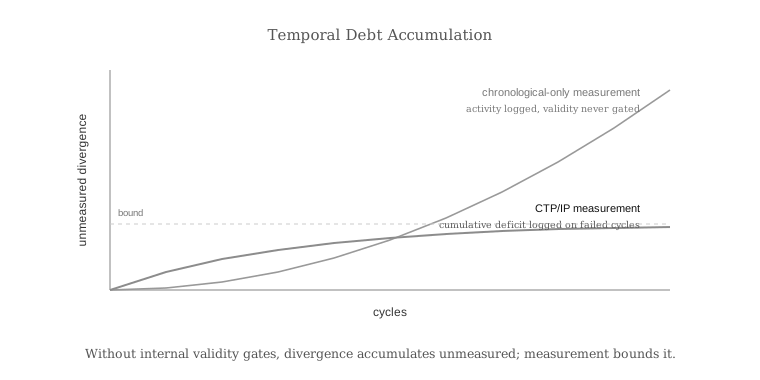
Figure 2. Temporal debt accumulation under chronological-only measurement vs CTP/IP measurement. Activity logged without internal validity gates accumulates unmeasured divergence; measurement bounds the accumulation through cumulative deficit logging on failed cycles.
Figure 2. Temporal debt accumulation under chronological-only measurement vs CTP/IP measurement. Activity logged without internal validity gates accumulates unmeasured divergence; measurement bounds the accumulation through cumulative deficit logging on failed cycles.Full size (opens in a new tab)
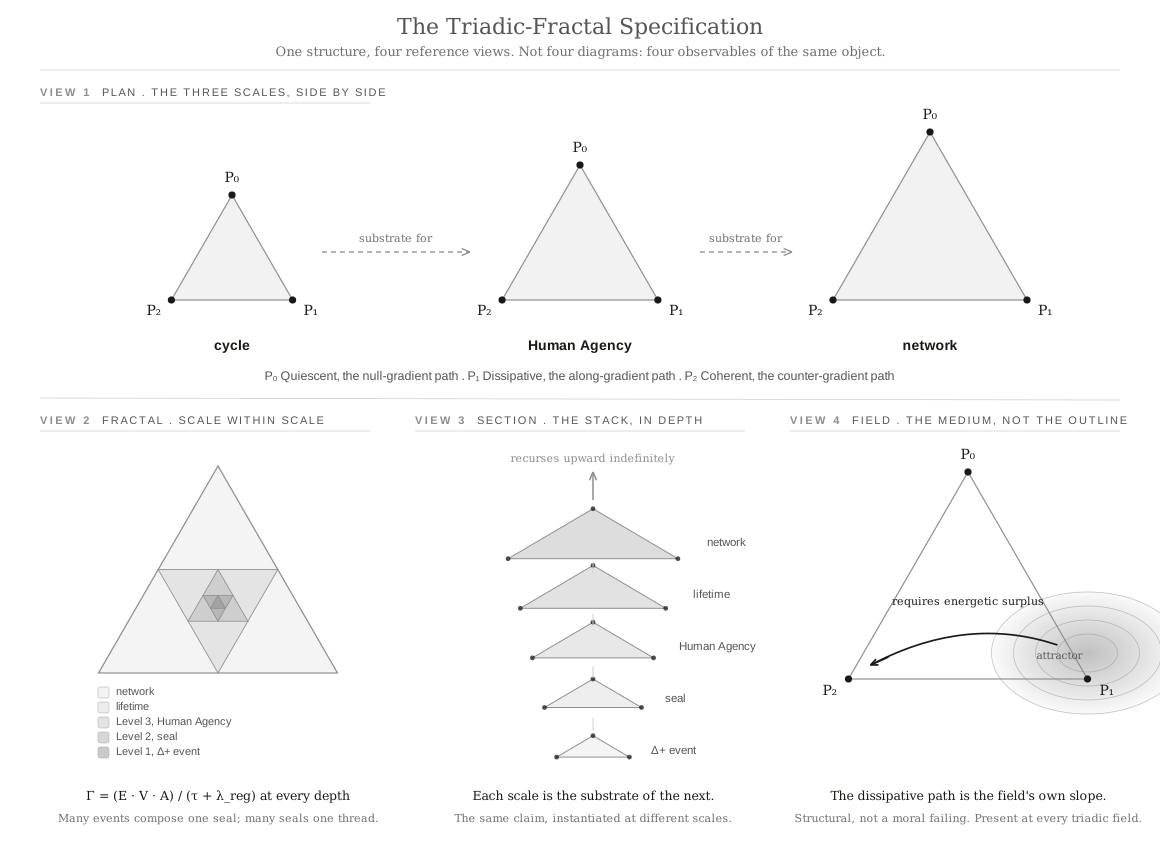
Figure 5. The Triadic-Fractal specification: P₀ (Quiescent), P₁ (Dissipative), P₂ (Coherent) paths fractally repeated across three scales (cycle, Human Agency, network). The same structural triadic field of selection appears at every scale.
Figure 5. The Triadic-Fractal specification: P₀ (Quiescent), P₁ (Dissipative), P₂ (Coherent) paths fractally repeated across three scales (cycle, Human Agency, network). The same structural triadic field of selection appears at every scale.Full size (opens in a new tab)
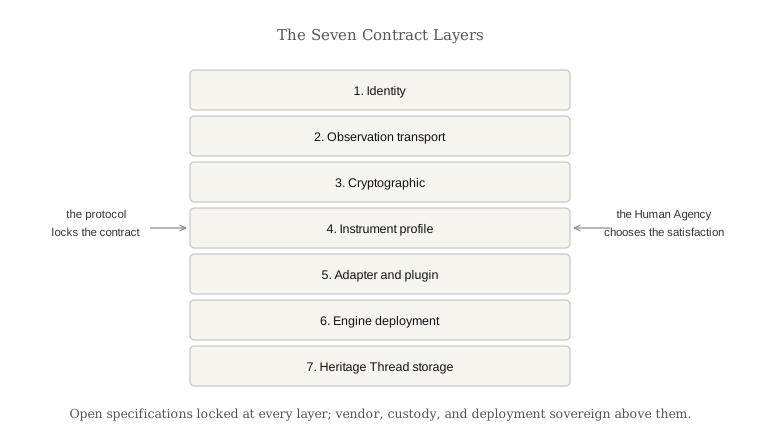
Figure 7. The seven contract layers. At each layer the protocol locks the contracts; the Human Agency chooses the satisfaction. Identity, observation transport, cryptographic, instrument profile, adapter and plugin, engine deployment, and Heritage Thread storage.
Figure 7. The seven contract layers. At each layer the protocol locks the contracts; the Human Agency chooses the satisfaction. Identity, observation transport, cryptographic, instrument profile, adapter and plugin, engine deployment, and Heritage Thread storage.Full size (opens in a new tab)
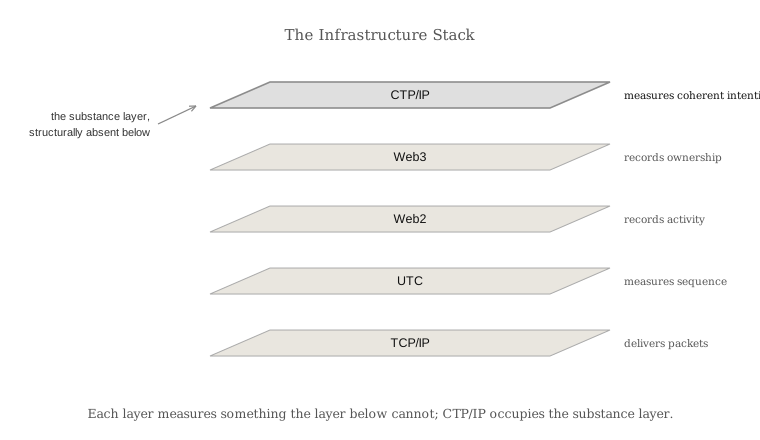
Figure 4. The infrastructure stack as 3D-layered substrate. Each layer measures something the layer below cannot: TCP/IP delivers packets; UTC measures sequence; Web2 records activity; Web3 records ownership; CTP/IP measures coherent intentional transformation. CTP/IP occupies the substance layer, structurally absent from the prior layers.
Figure 4. The infrastructure stack as 3D-layered substrate. Each layer measures something the layer below cannot: TCP/IP delivers packets; UTC measures sequence; Web2 records activity; Web3 records ownership; CTP/IP measures coherent intentional transformation. CTP/IP occupies the substance layer, structurally absent from the prior layers.Full size (opens in a new tab)
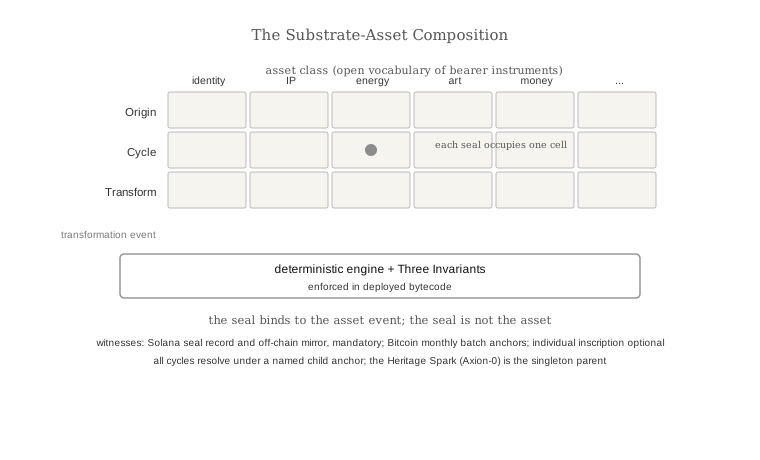
Figure 11. The substrate-asset composition. Transformation event (Origin, Cycle, Transform) intersected with asset class (the open vocabulary of bearer instruments and their derivatives). The substrate measurement layer measures the event through the deterministic engine and the Three Invariants enforced in deployed bytecode. The seal binds to the asset event; the seal is not the asset. Witness composition: on-chain seal record on Solana mainnet and an off-chain mirror record are both mandatory; cross-chain witness on Bitcoin comes through the monthly batch anchors under the Time Call, and an individual Bitcoin inscription is optional per cycle. All cycles resolve under a named child anchor; the Heritage Spark (Axion-0) is the singleton parent.
Figure 11. The substrate-asset composition. Transformation event (Origin, Cycle, Transform) intersected with asset class (the open vocabulary of bearer instruments and their derivatives). The substrate measurement layer measures the event through the deterministic engine and the Three Invariants enforced in deployed bytecode. The seal binds to the asset event; the seal is not the asset. Witness composition: on-chain seal record on Solana mainnet and an off-chain mirror record are both mandatory; cross-chain witness on Bitcoin comes through the monthly batch anchors under the Time Call, and an individual Bitcoin inscription is optional per cycle. All cycles resolve under a named child anchor; the Heritage Spark (Axion-0) is the singleton parent.Full size (opens in a new tab)
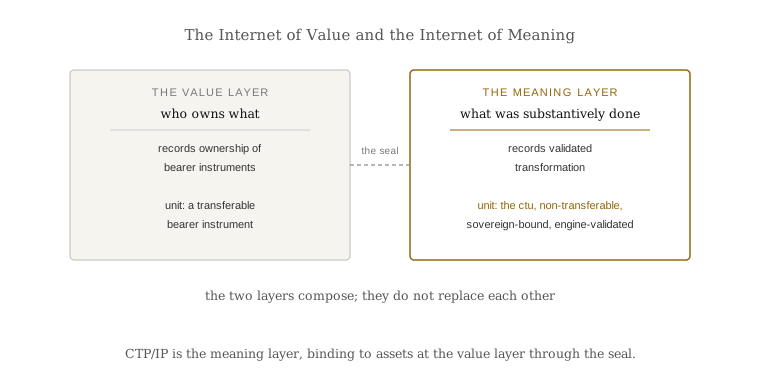
Figure 10. The internet of value contrasted with the internet of meaning. The value layer records ownership of bearer instruments and answers who owns what; its unit is a transferable bearer instrument. The meaning layer records validated transformation and answers what was substantively done; its unit is the Causal Time Unit (non-transferable, sovereign-bound, validated by the engine). The two layers compose; they do not replace each other. CTP/IP is the meaning layer that binds to assets at the value layer through the seal.
Figure 10. The internet of value contrasted with the internet of meaning. The value layer records ownership of bearer instruments and answers who owns what; its unit is a transferable bearer instrument. The meaning layer records validated transformation and answers what was substantively done; its unit is the Causal Time Unit (non-transferable, sovereign-bound, validated by the engine). The two layers compose; they do not replace each other. CTP/IP is the meaning layer that binds to assets at the value layer through the seal.Full size (opens in a new tab)
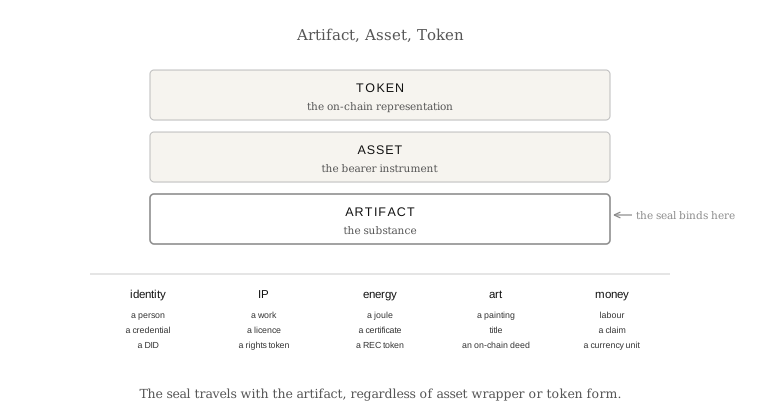
Figure 12. The distinction between artifact, asset, and token. Token is the on-chain representation; asset is the bearer instrument; artifact is the substance. CTP/IP binds at the artifact layer; the seal travels regardless of asset wrapper or token form. Examples across the asset universe show the three-layer pattern in identity, IP, energy, art, and money.
Figure 12. The distinction between artifact, asset, and token. Token is the on-chain representation; asset is the bearer instrument; artifact is the substance. CTP/IP binds at the artifact layer; the seal travels regardless of asset wrapper or token form. Examples across the asset universe show the three-layer pattern in identity, IP, energy, art, and money.Full size (opens in a new tab)
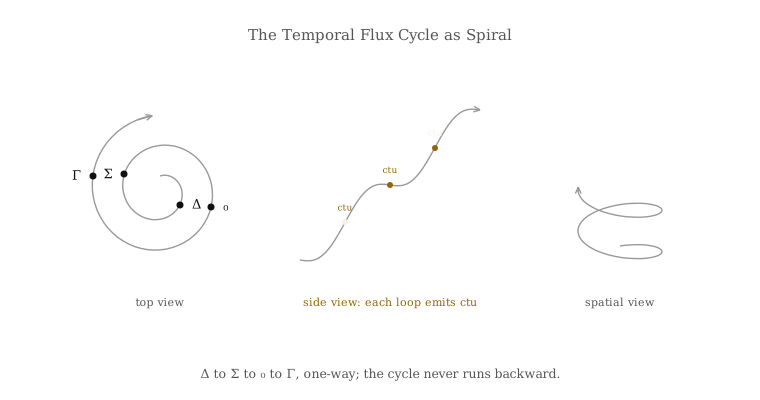
Figure 37. The Temporal FLUX Cycle as spiral: top, side, and spatial views. Stages Δ → Σ → ₀ → Γ, one-way, each loop emits ctu.
Figure 37. The Temporal FLUX Cycle as spiral: top, side, and spatial views. Stages Δ → Σ → ₀ → Γ, one-way, each loop emits ctu.Full size (opens in a new tab)
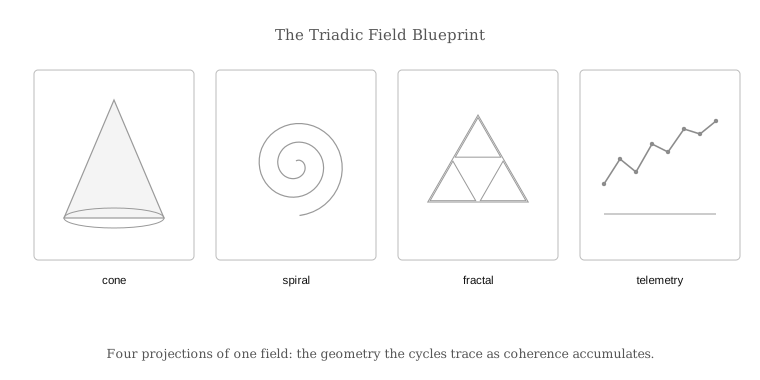
Figure 27. The Triadic Field blueprint: cone, spiral, fractal, telemetry.
Figure 27. The Triadic Field blueprint: cone, spiral, fractal, telemetry.Full size (opens in a new tab)
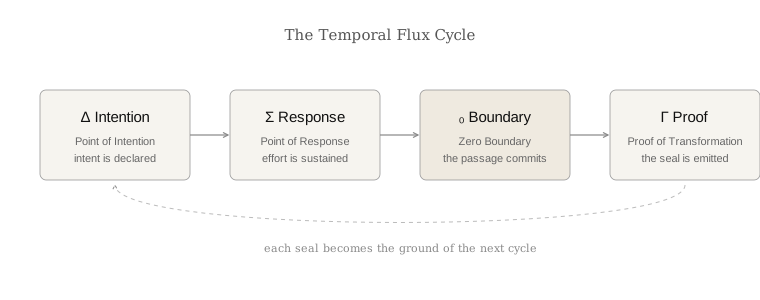
Figure. The temporal flux cycle. Intention, response, boundary, proof, and the passage to the next cycle.
Figure. The temporal flux cycle. Intention, response, boundary, proof, and the passage to the next cycle.Full size (opens in a new tab)
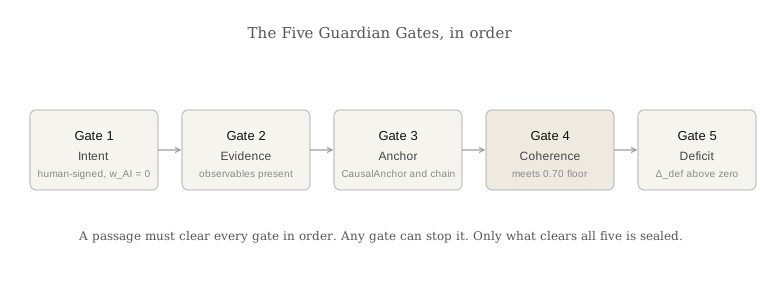
Figure. The Five Guardian Gates in execution order. A passage must clear every gate; any gate can stop it.
Figure. The Five Guardian Gates in execution order. A passage must clear every gate; any gate can stop it.Full size (opens in a new tab)
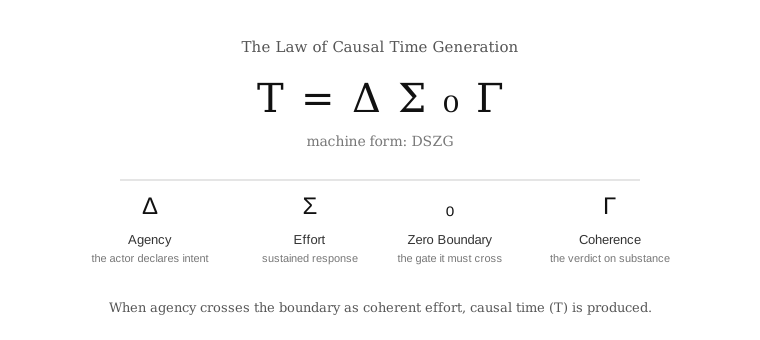
Figure. The law of causal time generation. Agency, effort, boundary, and coherence produce causal time.
Figure. The law of causal time generation. Agency, effort, boundary, and coherence produce causal time.Full size (opens in a new tab)
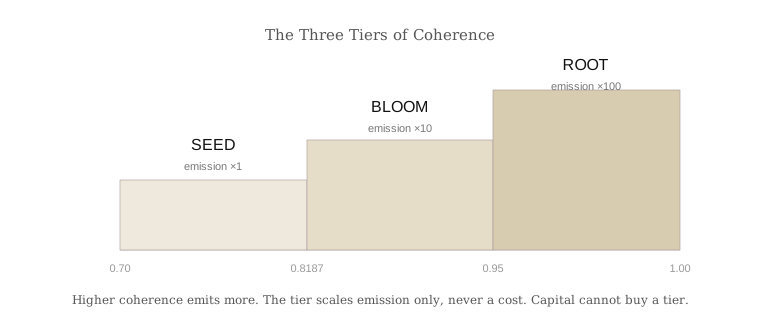
Figure. The three tiers of coherence. SEED, BLOOM, and ROOT scale emission, never cost.
Figure. The three tiers of coherence. SEED, BLOOM, and ROOT scale emission, never cost.Full size (opens in a new tab)
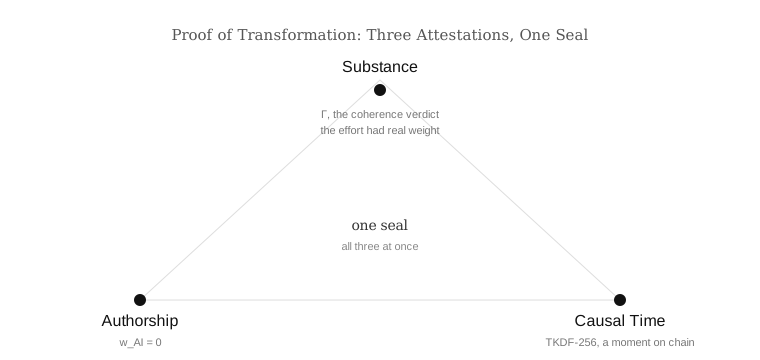
Figure. Proof of transformation. Substance, authorship, and time in a single seal.
Figure. Proof of transformation. Substance, authorship, and time in a single seal.Full size (opens in a new tab)
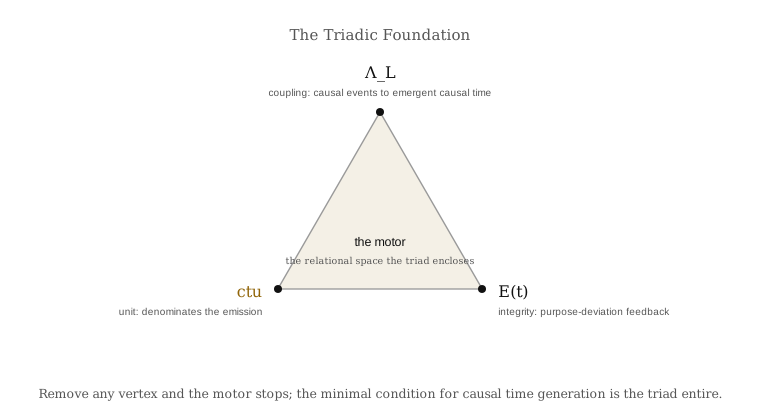
Figure 56. The Triadic Foundation. Three structural elements (coupling, integrity, unit) form the minimal condition for causal time generation. ΛL couples causal events to emergent causal time. E(t) sustains systemic integrity through purpose-deviation feedback. ctu denominates the unit of emission. Removing any vertex stops the motor. The motor itself is the relational space the triad encloses.
Figure 56. The Triadic Foundation. Three structural elements (coupling, integrity, unit) form the minimal condition for causal time generation. ΛL couples causal events to emergent causal time. E(t) sustains systemic integrity through purpose-deviation feedback. ctu denominates the unit of emission. Removing any vertex stops the motor. The motor itself is the relational space the triad encloses.Full size (opens in a new tab)
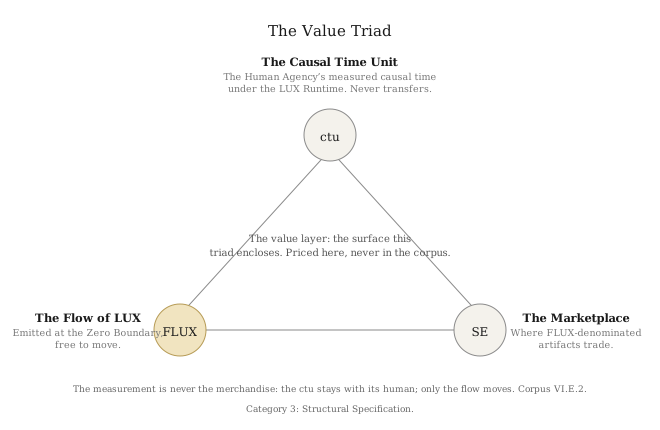
Figure 1. The value triad: the ctu as non-transferable measurement, FLUX as transferable artifact emitted through the Zero Boundary Swap, and the Symbolic Economy as the marketplace; the triad encloses the value layer.
Figure 1. The value triad: the ctu as non-transferable measurement, FLUX as transferable artifact emitted through the Zero Boundary Swap, and the Symbolic Economy as the marketplace; the triad encloses the value layer.Full size (opens in a new tab)
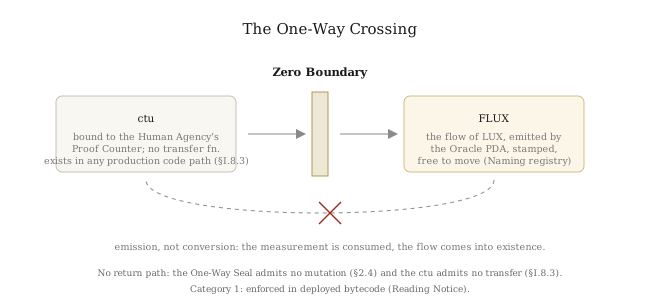
Figure 2. The one-way crossing: the ctu, bound to its Human Agency's Proof Counter, is consumed at the Zero Boundary and FLUX is emitted; no path returns, because the seal admits no mutation and the ctu admits no transfer.
Figure 2. The one-way crossing: the ctu, bound to its Human Agency's Proof Counter, is consumed at the Zero Boundary and FLUX is emitted; no path returns, because the seal admits no mutation and the ctu admits no transfer.Full size (opens in a new tab)
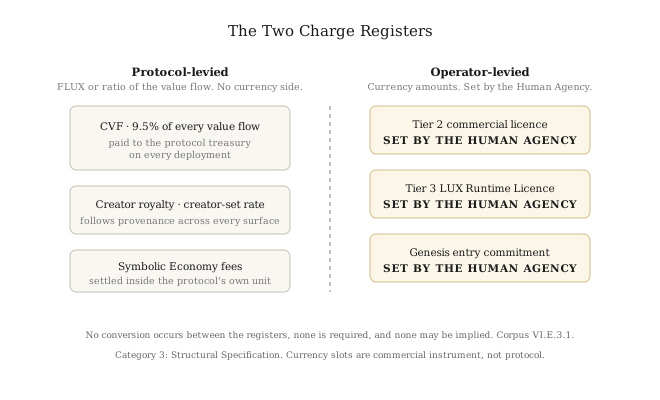
Figure 3. The two charge registers: protocol-levied charges settle in FLUX or as ratios of the value flow a seal carries, the CVF paid to the protocol treasury on every deployment; operator-levied charges are currency amounts set by the Human Agency.
Figure 3. The two charge registers: protocol-levied charges settle in FLUX or as ratios of the value flow a seal carries, the CVF paid to the protocol treasury on every deployment; operator-levied charges are currency amounts set by the Human Agency.Full size (opens in a new tab)
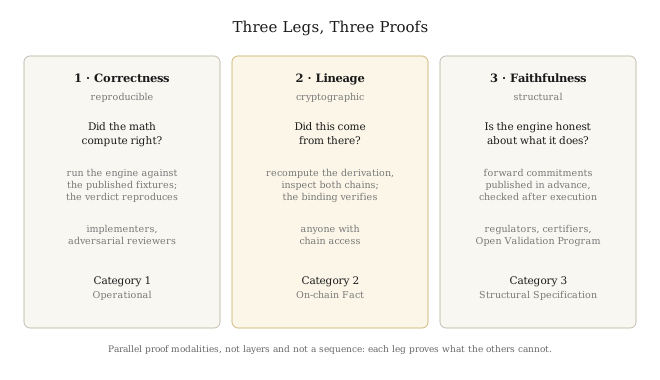
Figure 1. The three legs of the Triadic Trust Model: correctness proved by reproduction, lineage proved by cryptography, faithfulness proved by structure; each leg with its own question, proof modality, audience and claim category.
Figure 1. The three legs of the Triadic Trust Model: correctness proved by reproduction, lineage proved by cryptography, faithfulness proved by structure; each leg with its own question, proof modality, audience and claim category.Full size (opens in a new tab)
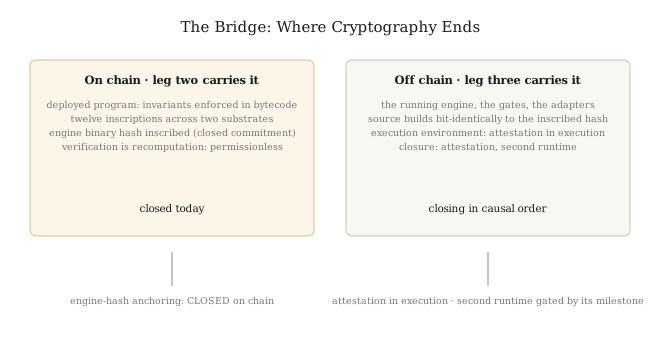
Figure 2. The bridge between the cryptographic leg and the structural leg: what runs on chain is verified by inspection and reproduction; what runs off chain is closed by the forward commitment register, with the engine-hash anchoring closed and attestation and multi-party validation closing in causal order.
Figure 2. The bridge between the cryptographic leg and the structural leg: what runs on chain is verified by inspection and reproduction; what runs off chain is closed by the forward commitment register, with the engine-hash anchoring closed and attestation and multi-party validation closing in causal order.Full size (opens in a new tab)
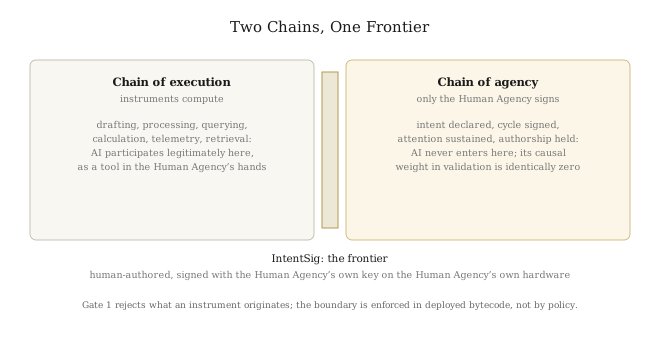
Figure 1. The two chains: the chain of execution, where instruments and AI legitimately compute, and the chain of agency, where only the Human Agency declares intent and signs; the IntentSig is the frontier between them.
Figure 1. The two chains: the chain of execution, where instruments and AI legitimately compute, and the chain of agency, where only the Human Agency declares intent and signs; the IntentSig is the frontier between them.Full size (opens in a new tab)
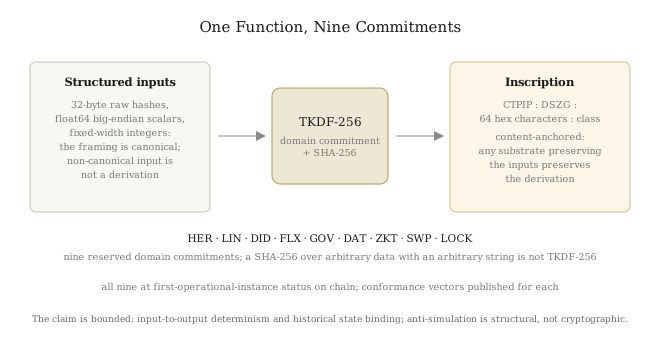
Figure 2. TKDF-256: structured inputs pass through the derivation under one of nine reserved domain commitments and produce a 64 character output inside the 77 byte inscription payload; content survives any substrate that preserves the inputs.
Figure 2. TKDF-256: structured inputs pass through the derivation under one of nine reserved domain commitments and produce a 64 character output inside the 77 byte inscription payload; content survives any substrate that preserves the inputs.Full size (opens in a new tab)
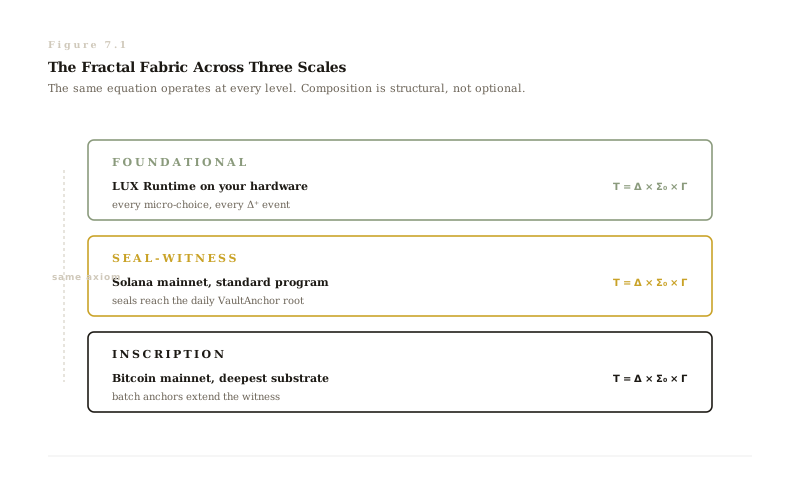
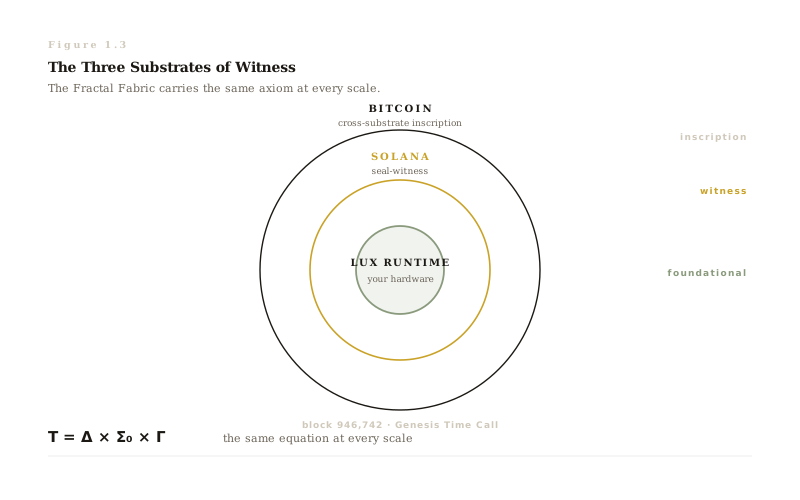
Figure 19. Three substrates, one axiom. Composition is structural, not optional.
Figure 19. Three substrates, one axiom. Composition is structural, not optional.Full size (opens in a new tab)
Figure 3. The Fractal Fabric: the same axiom at every scale.
Figure 3. The Fractal Fabric: the same axiom at every scale.Full size (opens in a new tab)
Figure 1. The recession of causal time across ten thousand years.
Figure 1. The recession of causal time across ten thousand years.Full size (opens in a new tab)
Figure 2. The same eight hours, read by two instruments.
Figure 2. The same eight hours, read by two instruments.Full size (opens in a new tab)
Figure 2.2. The Temporal Flux Cycle as spiral: top view (plan), side view (helix along causal time), and spatial view (isometric field). Stages Δ → Σ → ₀ → Γ are one-way and irreversible; each completed loop emits ctu.
Figure 2.2. The Temporal Flux Cycle as spiral: top view (plan), side view (helix along causal time), and spatial view (isometric field). Stages Δ → Σ → ₀ → Γ are one-way and irreversible; each completed loop emits ctu.Full size (opens in a new tab)
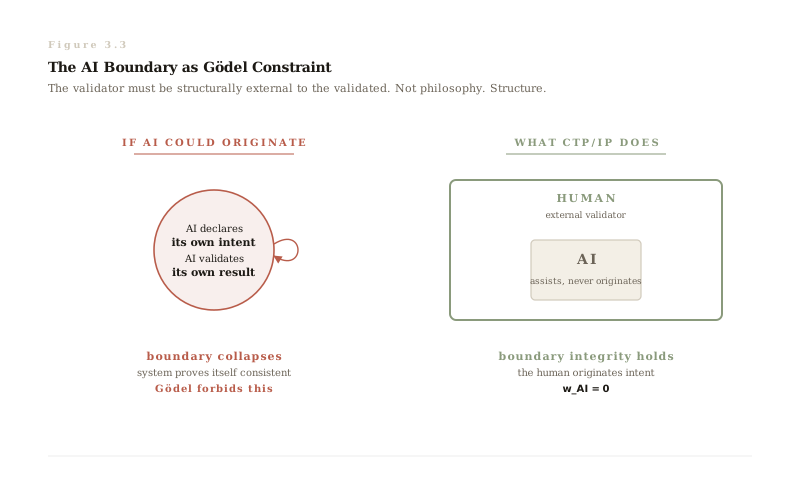
Figure 9. The validator must be structurally external to the validated.
Figure 9. The validator must be structurally external to the validated.Full size (opens in a new tab)
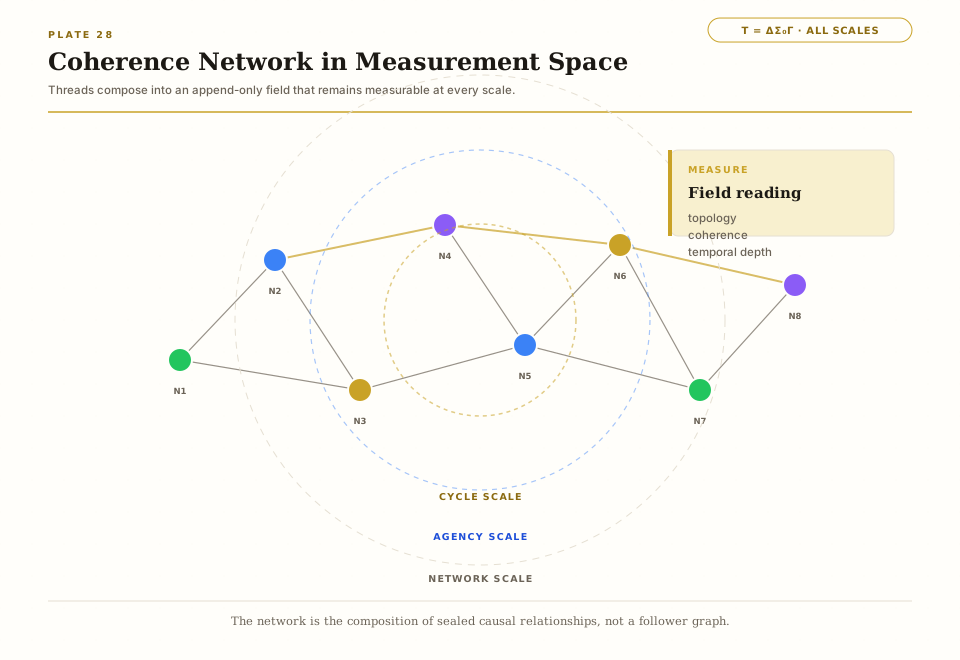
Figure 17. Coherence Network and space instrumentation: constellation (top), scale stack (side), orbital field (3D), and sensor-to-network bus. Heritage Threads compose; adapters map instruments to (E, V, A).
Figure 17. Coherence Network and space instrumentation: constellation (top), scale stack (side), orbital field (3D), and sensor-to-network bus. Heritage Threads compose; adapters map instruments to (E, V, A).Full size (opens in a new tab)
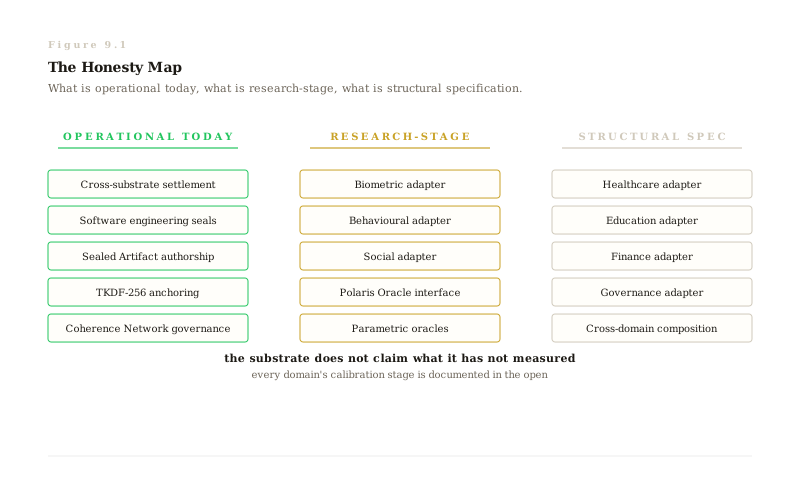
Figure 25. The book is honest about which patterns operate today and which calibrate forward.
Figure 25. The book is honest about which patterns operate today and which calibrate forward.Full size (opens in a new tab)
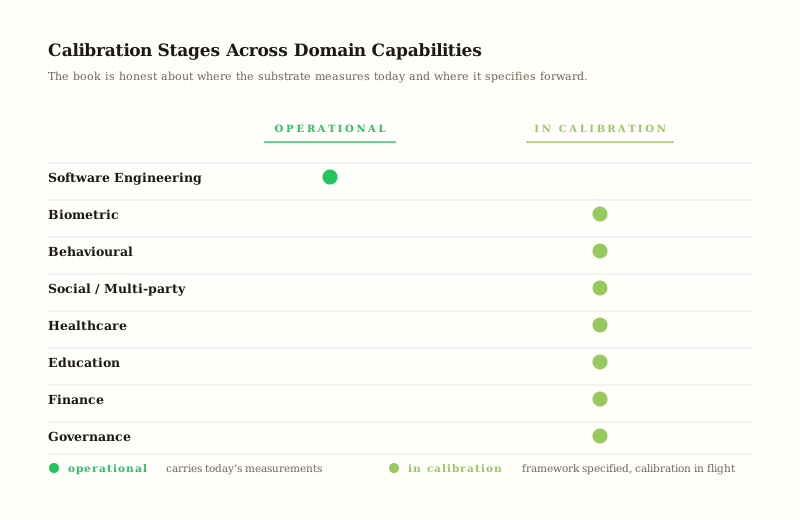
Where the substrate measures today, and where it specifies forward.
Where the substrate measures today, and where it specifies forward.Full size (opens in a new tab)
Figure 8. One door, audited at one location. The Validated Data Interface.
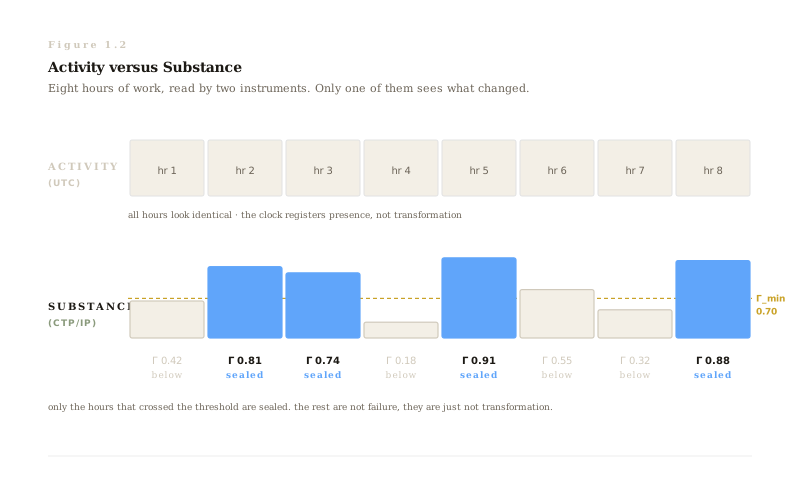
Figure 8. One door, audited at one location. The Validated Data Interface.Full size (opens in a new tab)
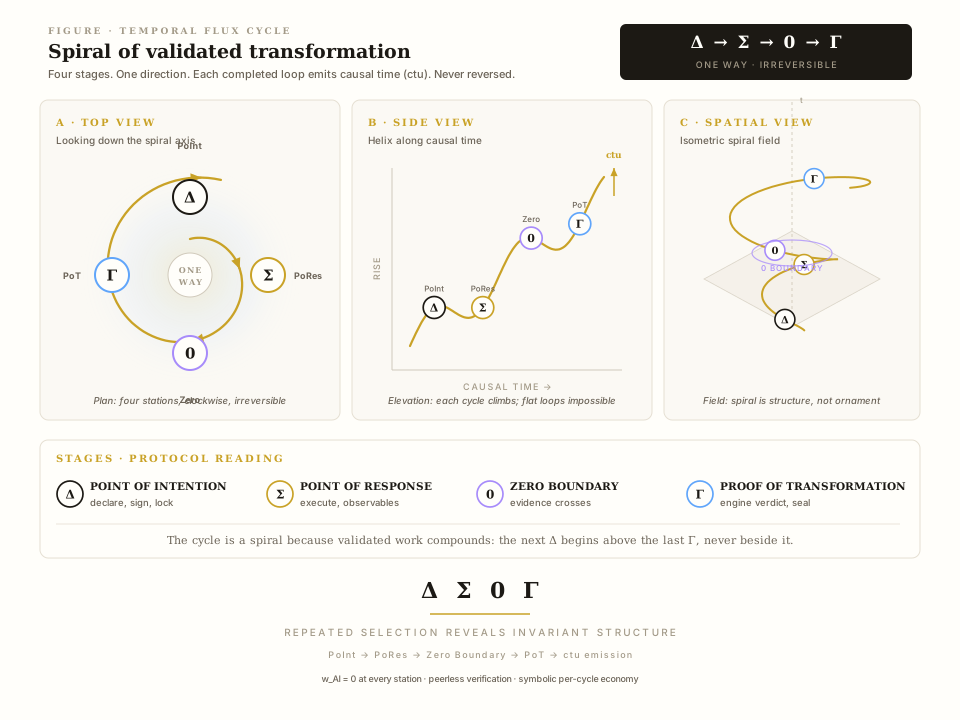
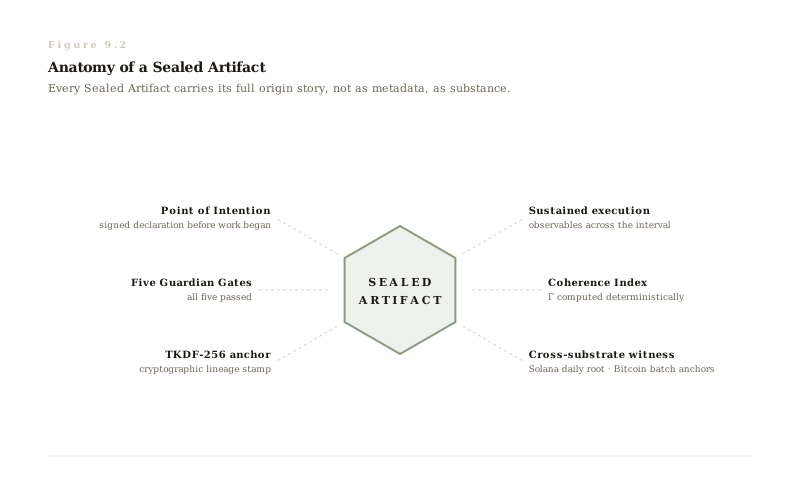
Figure 26. A Sealed Artifact carries its full origin story as substance, not metadata.
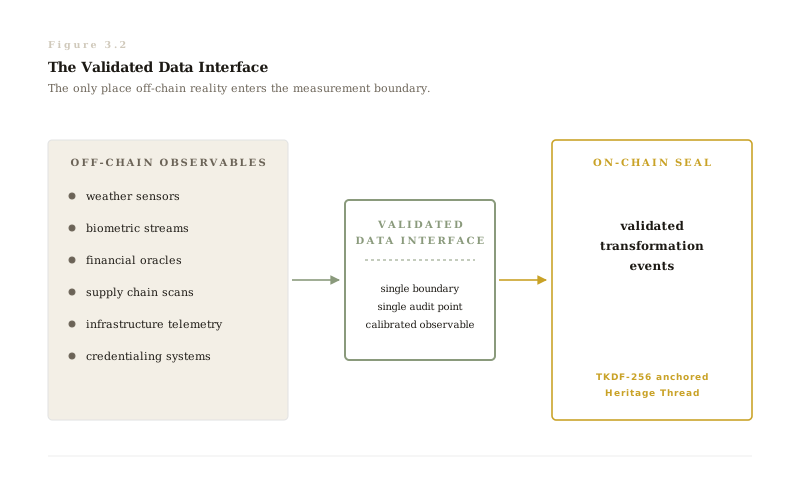
Figure 26. A Sealed Artifact carries its full origin story as substance, not metadata.Full size (opens in a new tab)
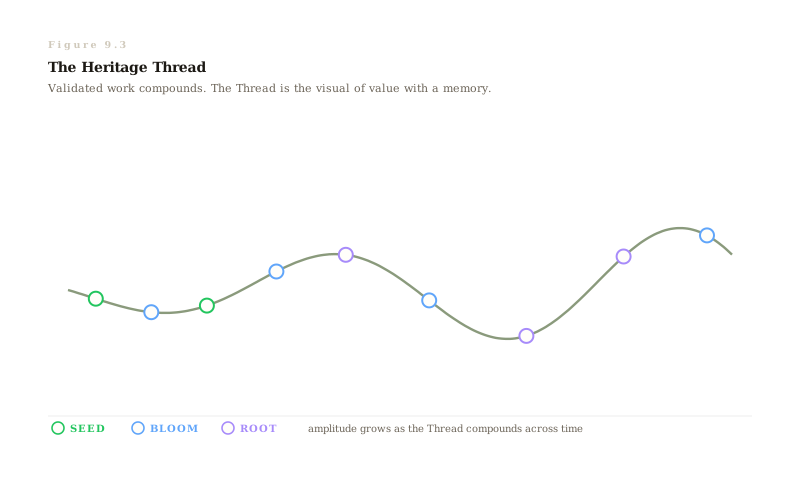
Figure 27. Validated work compounds across time. The Thread is yours.
Figure 27. Validated work compounds across time. The Thread is yours.Full size (opens in a new tab)
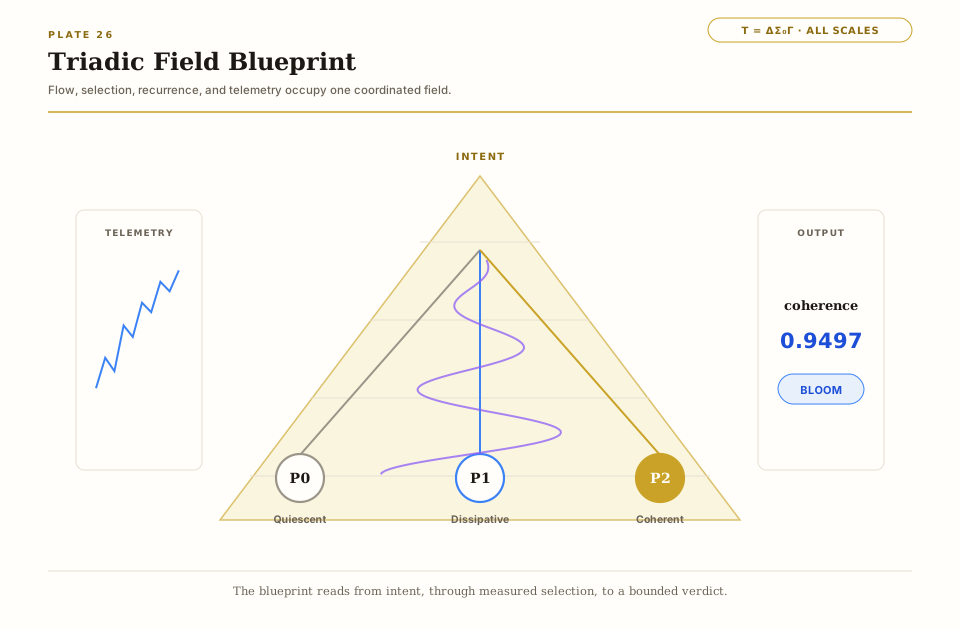
Figure 2.3. The Triadic Field as blueprint: flow cone (top), spiral growth (side), fractal 3D, and hardware telemetry bus. Paths P0 Quiescent, P1 Dissipative, P2 Coherent; one branch is measured at each Δ+ event.
Figure 2.3. The Triadic Field as blueprint: flow cone (top), spiral growth (side), fractal 3D, and hardware telemetry bus. Paths P0 Quiescent, P1 Dissipative, P2 Coherent; one branch is measured at each Δ+ event.Full size (opens in a new tab)
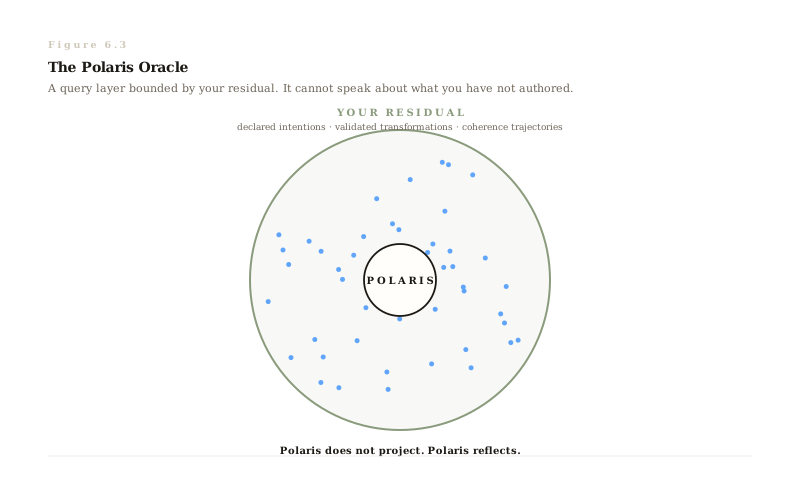
Figure 18. Polaris reflects what is in your residual. It cannot project from outside.
Figure 18. Polaris reflects what is in your residual. It cannot project from outside.Full size (opens in a new tab)
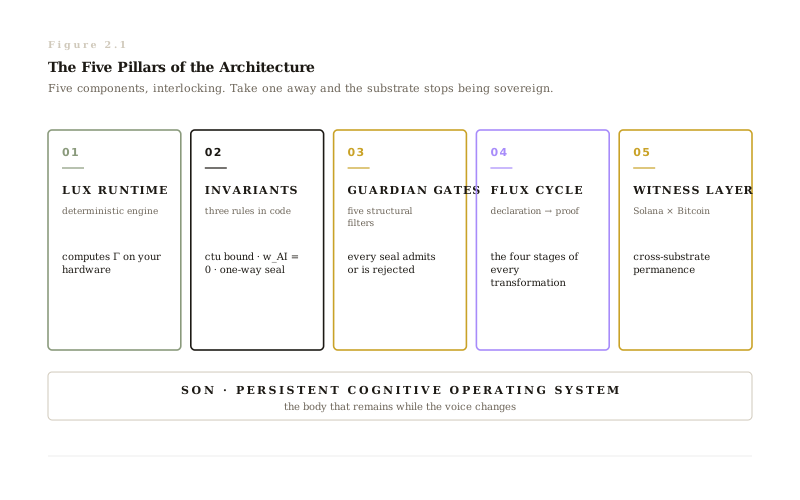
Figure 4. The five pillars of the architecture, with SON holding them across sessions.
Figure 4. The five pillars of the architecture, with SON holding them across sessions.Full size (opens in a new tab)
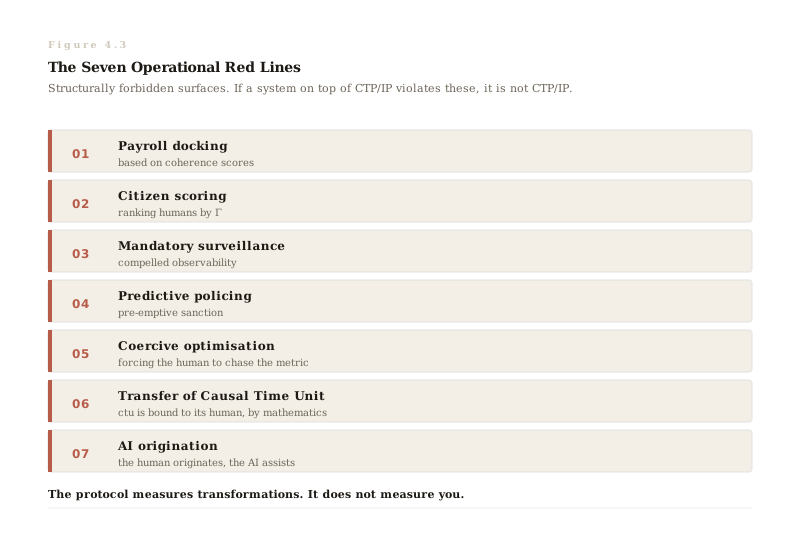
Figure 12. Seven surfaces the substrate refuses to be turned into.
Figure 12. Seven surfaces the substrate refuses to be turned into.Full size (opens in a new tab)
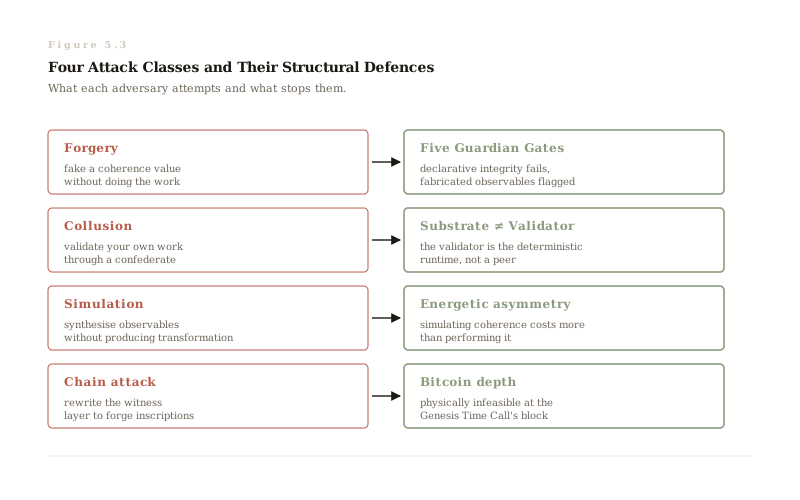
Figure 15. Four attack classes. Four structural defences.
Figure 15. Four attack classes. Four structural defences.Full size (opens in a new tab)
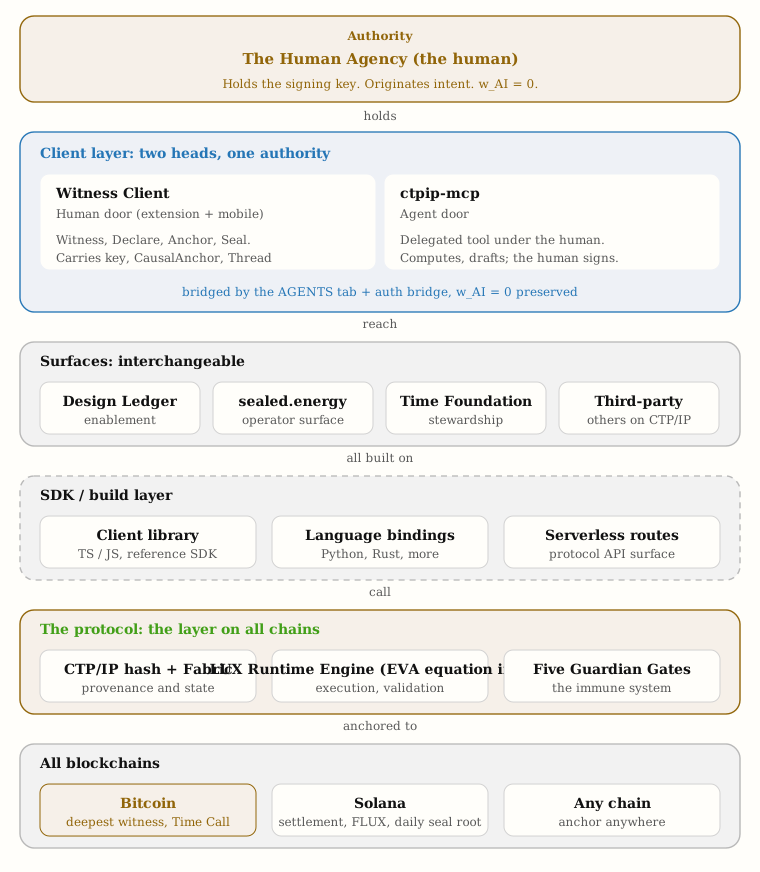
Panel 25. The Substance Witness Protocol stack. The Human Agency holds authority at the top (signing key, originates intent, w_AI = 0). The two-headed client (Witness Client, the human door; ctpip-mcp, the agent door), bridged by the AGENTS tab and the auth bridge, reaches interchangeable surfaces, all built on the SDK, which call the protocol layer that sits on top of every chain and anchors to Bitcoin as the deepest witness.
Panel 25. The Substance Witness Protocol stack. The Human Agency holds authority at the top (signing key, originates intent, w_AI = 0). The two-headed client (Witness Client, the human door; ctpip-mcp, the agent door), bridged by the AGENTS tab and the auth bridge, reaches interchangeable surfaces, all built on the SDK, which call the protocol layer that sits on top of every chain and anchors to Bitcoin as the deepest witness.Full size (opens in a new tab)