Canonical corpus / Corpus of record · Δ1

Corpus Δ1
The complete canonical library.

Every section, appendix, table, source figure, and line of the governing CTP/IP specification, available through the complete corpus reader.

TIME FOUNDATION
PUBLICATION LIBRARY
Explore the paper / interactive study

Ten books. One navigable reference.

Move through the corpus architecture, then open the selected book at its actual source line. The moving trace is a reading guide, not a live network.

CORPUS / CONCEPTUAL MODEL15,664 source lines / every section navigable / original source preservedIL1817IIL3977IIIL5120IVL5676VL6369VIL6681VIIL6997VIIIL7227IXL7491XL9665
01 / 10
Seed / intention / inflectionBloom / coherence / flowTransformation / Root

Conceptual illustration. No signature, seal, ctu, FLUX or transaction is produced. Read the source.

© Ten books. One navigable reference. - author: Erico LisbôaCorpus Δ1 ↗
The complete publication

A paper to read.
A record to inspect.

Corpus of record · Δ1. The source pin governs the complete specification.

1,631Sections
81Source figures
2PDF layouts
Read the publicationExplore all charts & figures
Inside the paper

Mechanisms, made visible.
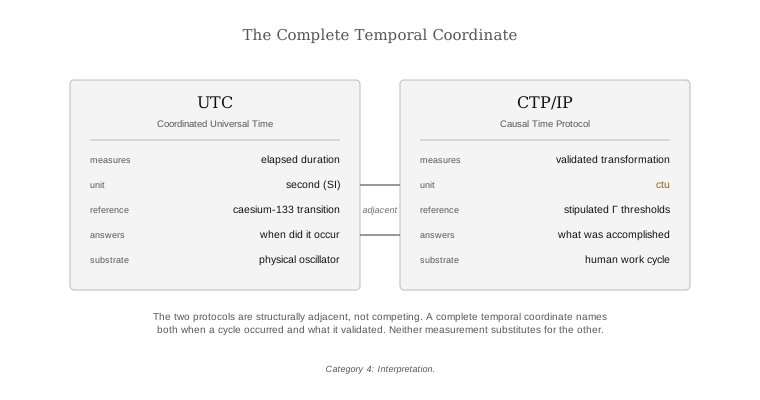
Figure 1. The complete temporal coordinate: UTC and CTP/IP as structurally adjacent measurement protocols.
Figure 1. The complete temporal coordinate: UTC and CTP/IP as structurally adjacent measurement protocols.Full size (opens in a new tab)

Loading the complete document index…

The figure collection

Every figure in this publication.
81 source figures
Figure 1. The complete temporal coordinate: UTC and CTP/IP as structurally adjacent measurement protocols.
Figure 1. The complete temporal coordinate: UTC and CTP/IP as structurally adjacent measurement protocols.Full size (opens in a new tab)
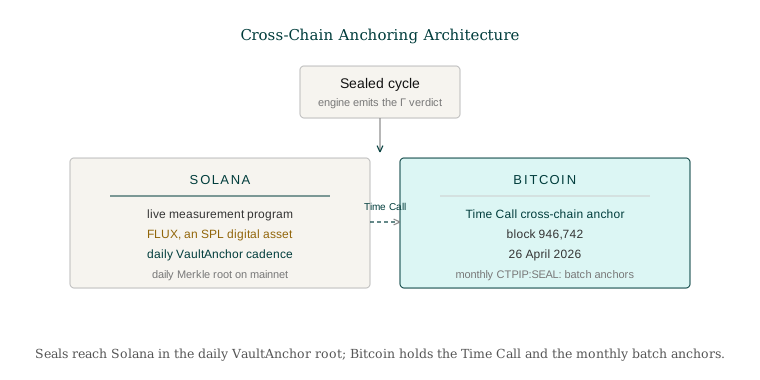
Figure 49. Cross-chain anchoring architecture.
Figure 49. Cross-chain anchoring architecture.Full size (opens in a new tab)
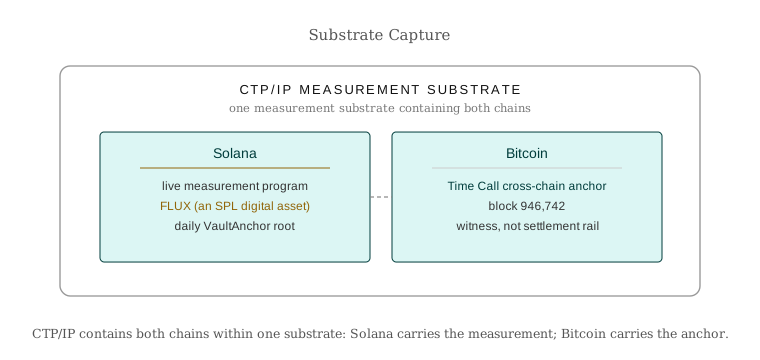
Figure 8. Cross-chain anchoring as substrate capture: CTP/IP contains both Solana and Bitcoin within one measurement substrate. Solana carries the live measurement program and FLUX (an SPL digital asset); Bitcoin carries the cross-chain Time Call anchor.
Figure 8. Cross-chain anchoring as substrate capture: CTP/IP contains both Solana and Bitcoin within one measurement substrate. Solana carries the live measurement program and FLUX (an SPL digital asset); Bitcoin carries the cross-chain Time Call anchor.Full size (opens in a new tab)
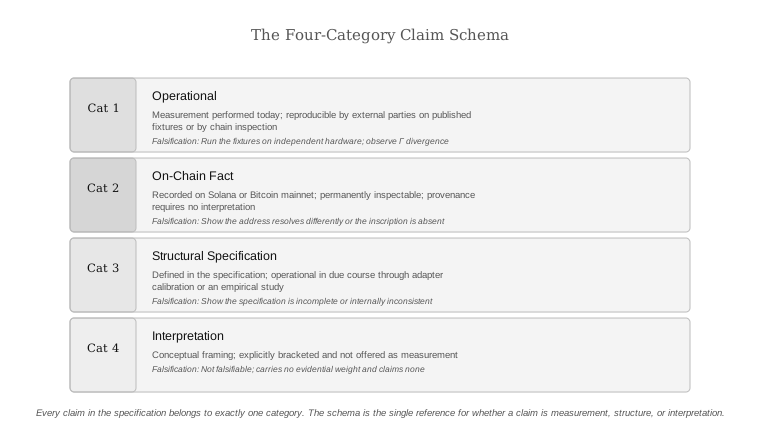
Figure 19. Four-category claim schema.
Figure 19. Four-category claim schema.Full size (opens in a new tab)
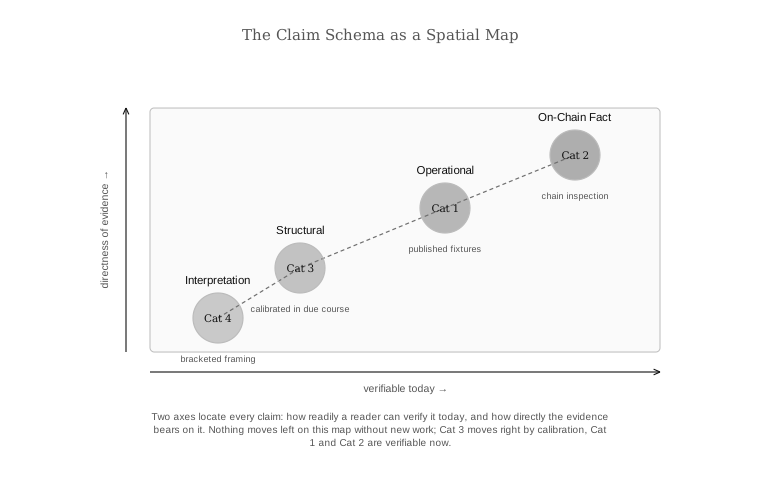
Figure 13. The four-category claim schema as a spatial map. Two axes locate every claim: verifiability today (horizontal) and directness of evidence (vertical). On-Chain Fact (Cat 2) is most verifiable and most direct; Operational (Cat 1) is reproducible now via fixtures; Structural Specification (Cat 3) is calibrated in due course; Interpretation (Cat 4) is conceptual framing, explicitly bracketed.
Figure 13. The four-category claim schema as a spatial map. Two axes locate every claim: verifiability today (horizontal) and directness of evidence (vertical). On-Chain Fact (Cat 2) is most verifiable and most direct; Operational (Cat 1) is reproducible now via fixtures; Structural Specification (Cat 3) is calibrated in due course; Interpretation (Cat 4) is conceptual framing, explicitly bracketed.Full size (opens in a new tab)
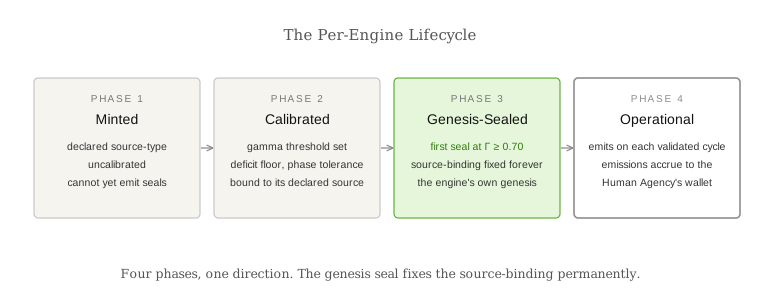
Figure 51. Per-engine lifecycle through four phases.
Figure 51. Per-engine lifecycle through four phases.Full size (opens in a new tab)
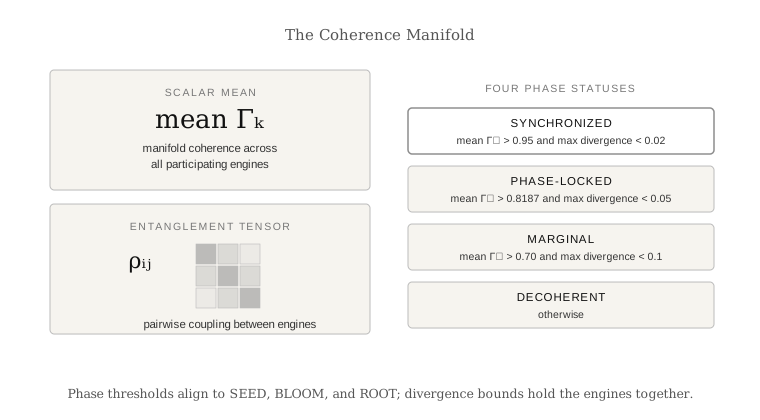
Figure 52. Coherence Manifold: scalar mean, entanglement tensor, four phase statuses.
Figure 52. Coherence Manifold: scalar mean, entanglement tensor, four phase statuses.Full size (opens in a new tab)
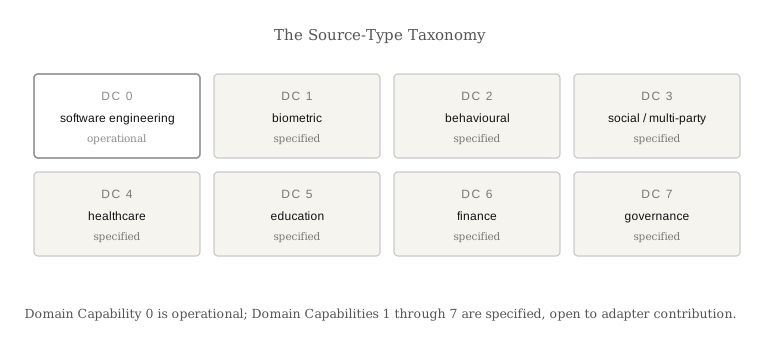
Figure 50. source-type taxonomy: Domain Capability 0 operational, Domain Capability 1 to Domain Capability 7 structurally specified.
Figure 50. source-type taxonomy: Domain Capability 0 operational, Domain Capability 1 to Domain Capability 7 structurally specified.Full size (opens in a new tab)
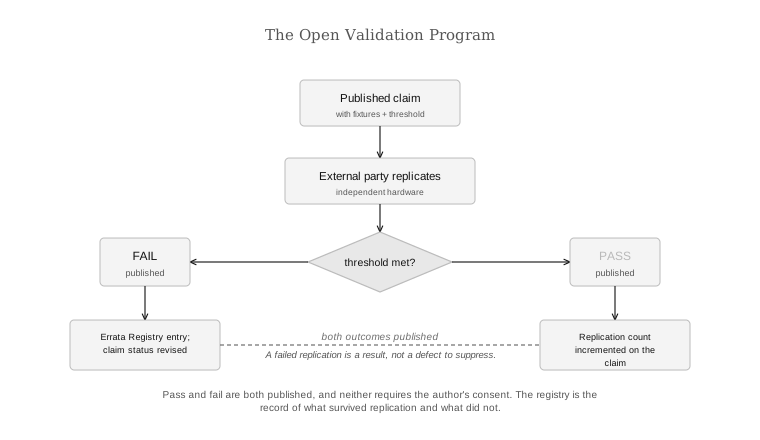
Figure 16. The Open Validation Program flow: external replication and falsification with pass and fail outcomes both published.
Figure 16. The Open Validation Program flow: external replication and falsification with pass and fail outcomes both published.Full size (opens in a new tab)
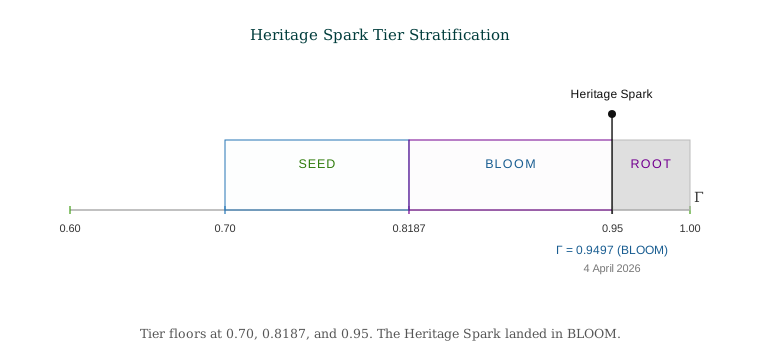
Figure 47. Heritage Spark coherence tier stratification.
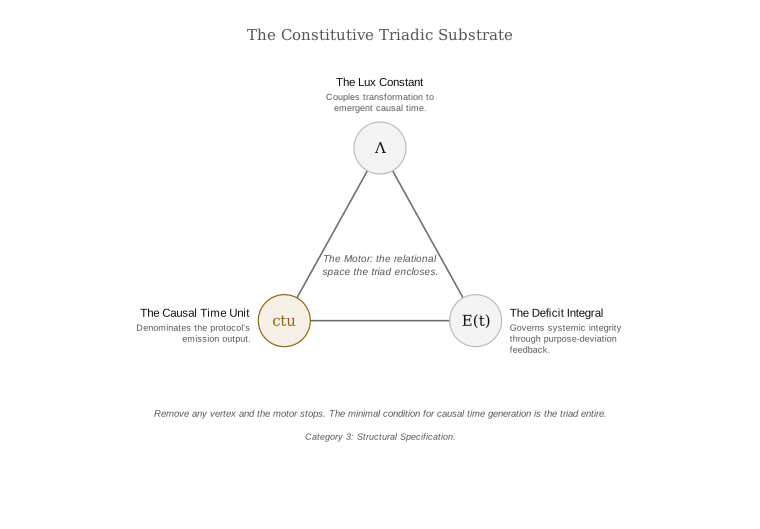
Figure 47. Heritage Spark coherence tier stratification.Full size (opens in a new tab)
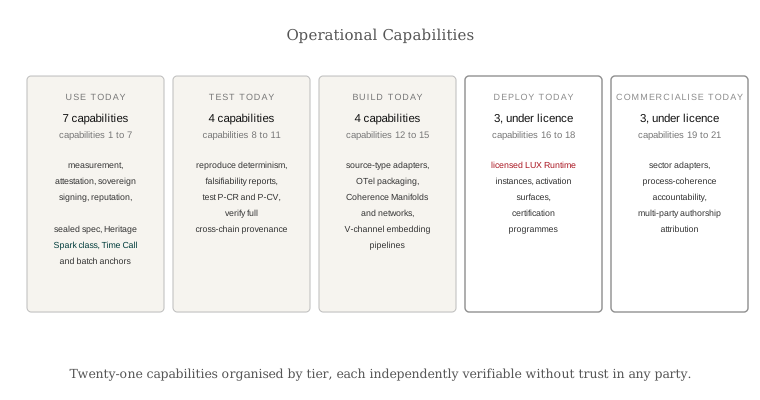
Figure 53. Operational capabilities: 21 capabilities organised by tier.
Figure 53. Operational capabilities: 21 capabilities organised by tier.Full size (opens in a new tab)
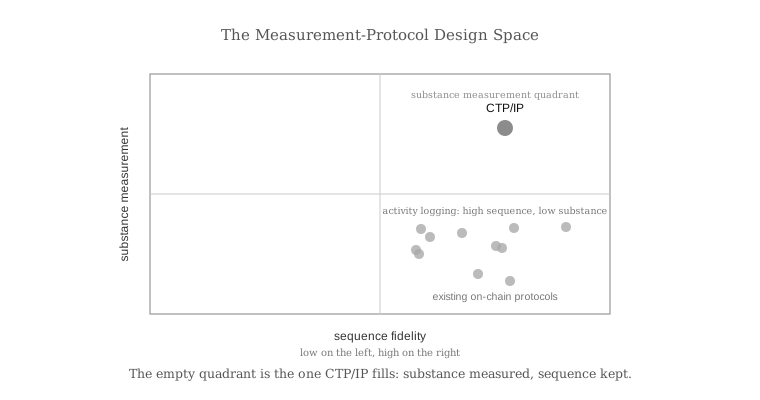
Figure 3. The measurement-protocol design space. Existing on-chain protocols cluster in the activity-logging quadrant (high sequence, low substance). CTP/IP fills the substance-measurement quadrant.
Figure 3. The measurement-protocol design space. Existing on-chain protocols cluster in the activity-logging quadrant (high sequence, low substance). CTP/IP fills the substance-measurement quadrant.Full size (opens in a new tab)
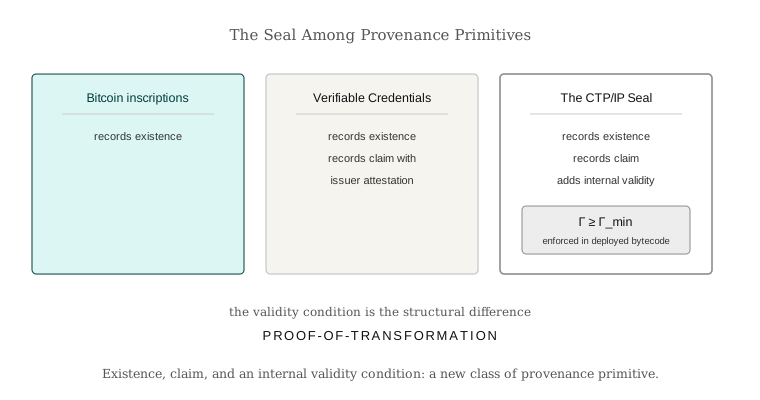
Figure 9. The seal compared to existing provenance primitives. Bitcoin inscriptions record existence; Verifiable Credentials record claim with issuer attestation; the seal adds an internal validity condition (Γ ≥ Γmin) enforced by deployed bytecode. The validity condition is the structural difference that makes the seal a new class of provenance primitive (Proof-of-Transformation).
Figure 9. The seal compared to existing provenance primitives. Bitcoin inscriptions record existence; Verifiable Credentials record claim with issuer attestation; the seal adds an internal validity condition (Γ ≥ Γmin) enforced by deployed bytecode. The validity condition is the structural difference that makes the seal a new class of provenance primitive (Proof-of-Transformation).Full size (opens in a new tab)
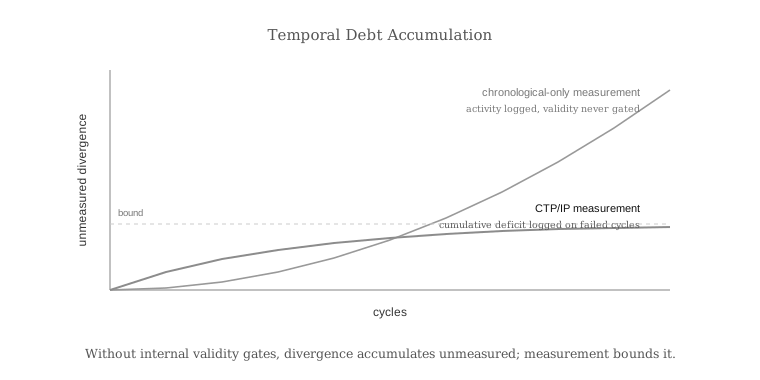
Figure 2. Temporal debt accumulation under chronological-only measurement vs CTP/IP measurement. Activity logged without internal validity gates accumulates unmeasured divergence; measurement bounds the accumulation through cumulative deficit logging on failed cycles.
Figure 2. Temporal debt accumulation under chronological-only measurement vs CTP/IP measurement. Activity logged without internal validity gates accumulates unmeasured divergence; measurement bounds the accumulation through cumulative deficit logging on failed cycles.Full size (opens in a new tab)
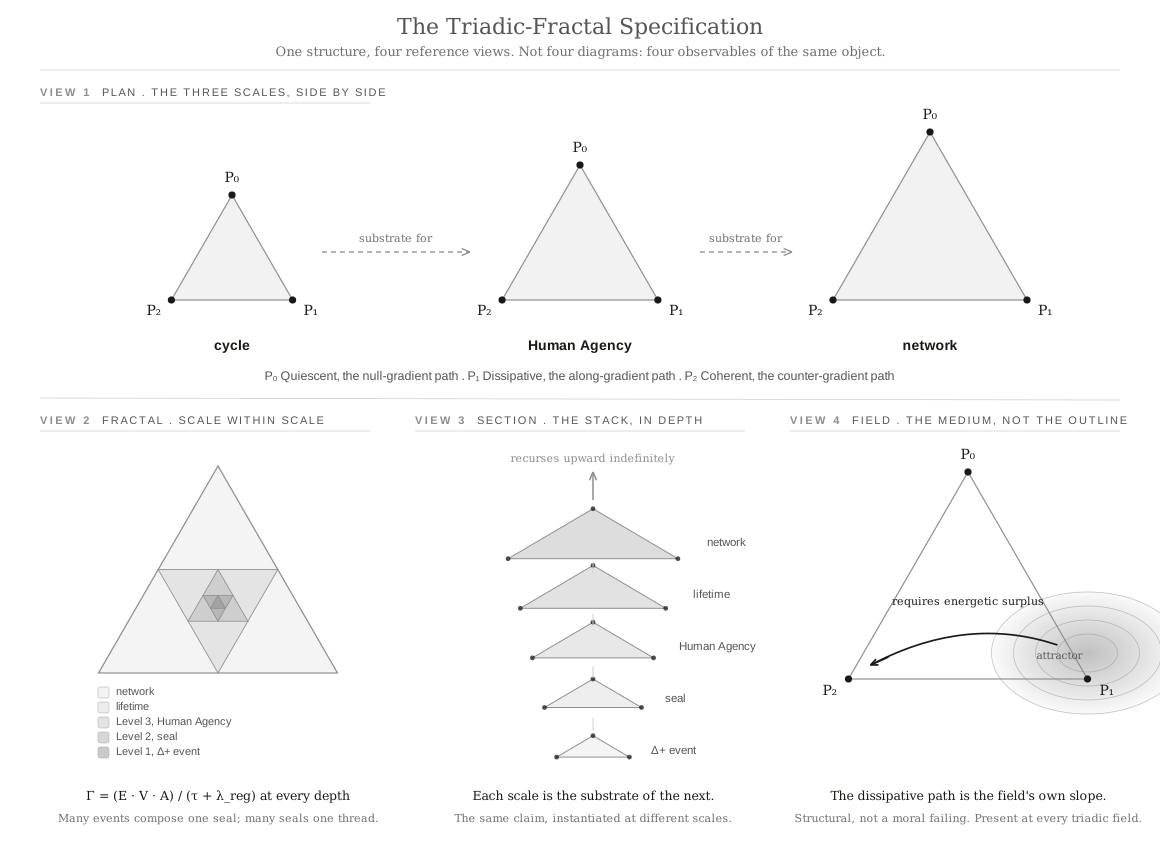
Figure 5. The Triadic-Fractal specification: P₀ (Quiescent), P₁ (Dissipative), P₂ (Coherent) paths fractally repeated across three scales (cycle, Human Agency, network). The same structural triadic field of selection appears at every scale.
Figure 5. The Triadic-Fractal specification: P₀ (Quiescent), P₁ (Dissipative), P₂ (Coherent) paths fractally repeated across three scales (cycle, Human Agency, network). The same structural triadic field of selection appears at every scale.Full size (opens in a new tab)
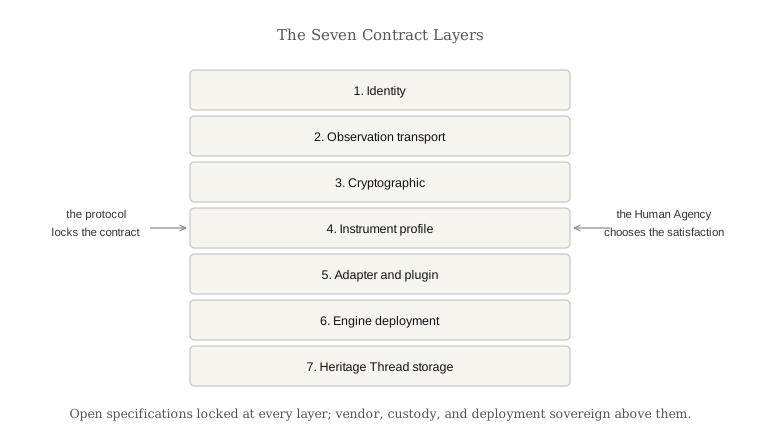
Figure 7. The seven contract layers. At each layer the protocol locks the contracts; the Human Agency chooses the satisfaction. Identity, observation transport, cryptographic, instrument profile, adapter and plugin, engine deployment, and Heritage Thread storage.
Figure 7. The seven contract layers. At each layer the protocol locks the contracts; the Human Agency chooses the satisfaction. Identity, observation transport, cryptographic, instrument profile, adapter and plugin, engine deployment, and Heritage Thread storage.Full size (opens in a new tab)
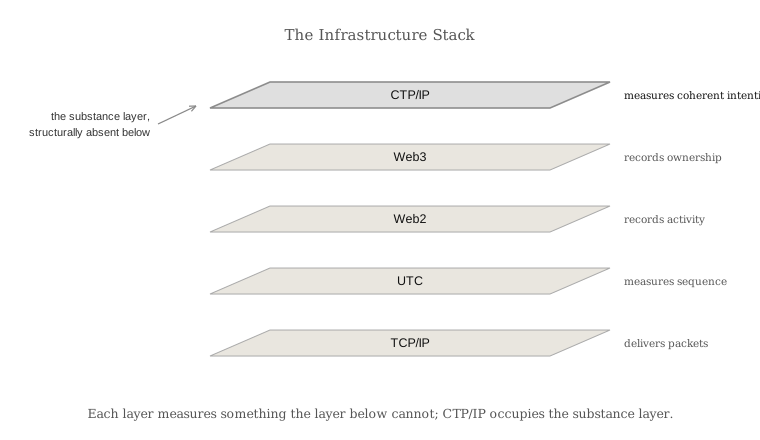
Figure 4. The infrastructure stack as 3D-layered substrate. Each layer measures something the layer below cannot: TCP/IP delivers packets; UTC measures sequence; Web2 records activity; Web3 records ownership; CTP/IP measures coherent intentional transformation. CTP/IP occupies the substance layer, structurally absent from the prior layers.
Figure 4. The infrastructure stack as 3D-layered substrate. Each layer measures something the layer below cannot: TCP/IP delivers packets; UTC measures sequence; Web2 records activity; Web3 records ownership; CTP/IP measures coherent intentional transformation. CTP/IP occupies the substance layer, structurally absent from the prior layers.Full size (opens in a new tab)
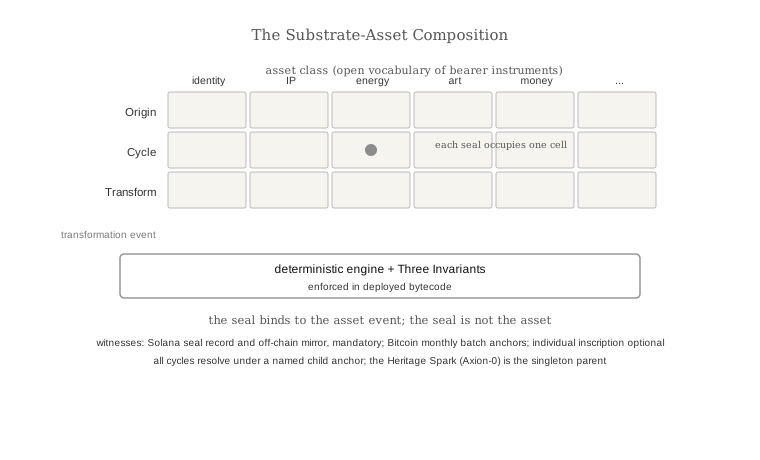
Figure 11. The substrate-asset composition. Transformation event (Origin, Cycle, Transform) intersected with asset class (the open vocabulary of bearer instruments and their derivatives). The substrate measurement layer measures the event through the deterministic engine and the Three Invariants enforced in deployed bytecode. The seal binds to the asset event; the seal is not the asset. Witness composition: on-chain seal record on Solana mainnet and an off-chain mirror record are both mandatory; cross-chain witness on Bitcoin comes through the monthly batch anchors under the Time Call, and an individual Bitcoin inscription is optional per cycle. All cycles resolve under a named child anchor; the Heritage Spark (Axion-0) is the singleton parent.
Figure 11. The substrate-asset composition. Transformation event (Origin, Cycle, Transform) intersected with asset class (the open vocabulary of bearer instruments and their derivatives). The substrate measurement layer measures the event through the deterministic engine and the Three Invariants enforced in deployed bytecode. The seal binds to the asset event; the seal is not the asset. Witness composition: on-chain seal record on Solana mainnet and an off-chain mirror record are both mandatory; cross-chain witness on Bitcoin comes through the monthly batch anchors under the Time Call, and an individual Bitcoin inscription is optional per cycle. All cycles resolve under a named child anchor; the Heritage Spark (Axion-0) is the singleton parent.Full size (opens in a new tab)
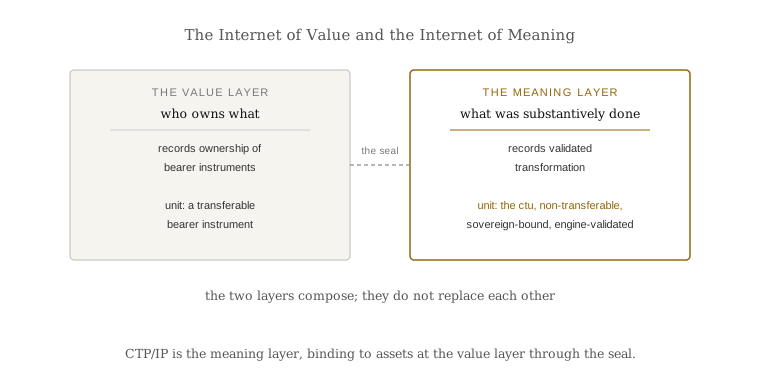
Figure 10. The internet of value contrasted with the internet of meaning. The value layer records ownership of bearer instruments and answers who owns what; its unit is a transferable bearer instrument. The meaning layer records validated transformation and answers what was substantively done; its unit is the Causal Time Unit (non-transferable, sovereign-bound, validated by the engine). The two layers compose; they do not replace each other. CTP/IP is the meaning layer that binds to assets at the value layer through the seal.
Figure 10. The internet of value contrasted with the internet of meaning. The value layer records ownership of bearer instruments and answers who owns what; its unit is a transferable bearer instrument. The meaning layer records validated transformation and answers what was substantively done; its unit is the Causal Time Unit (non-transferable, sovereign-bound, validated by the engine). The two layers compose; they do not replace each other. CTP/IP is the meaning layer that binds to assets at the value layer through the seal.Full size (opens in a new tab)
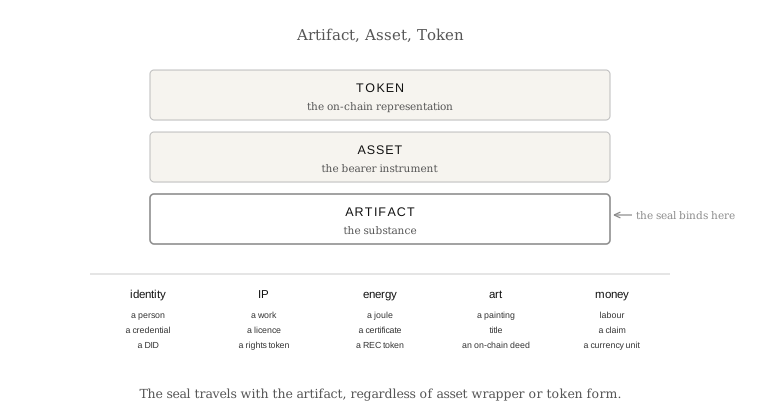
Figure 12. The distinction between artifact, asset, and token. Token is the on-chain representation; asset is the bearer instrument; artifact is the substance. CTP/IP binds at the artifact layer; the seal travels regardless of asset wrapper or token form. Examples across the asset universe show the three-layer pattern in identity, IP, energy, art, and money.
Figure 12. The distinction between artifact, asset, and token. Token is the on-chain representation; asset is the bearer instrument; artifact is the substance. CTP/IP binds at the artifact layer; the seal travels regardless of asset wrapper or token form. Examples across the asset universe show the three-layer pattern in identity, IP, energy, art, and money.Full size (opens in a new tab)
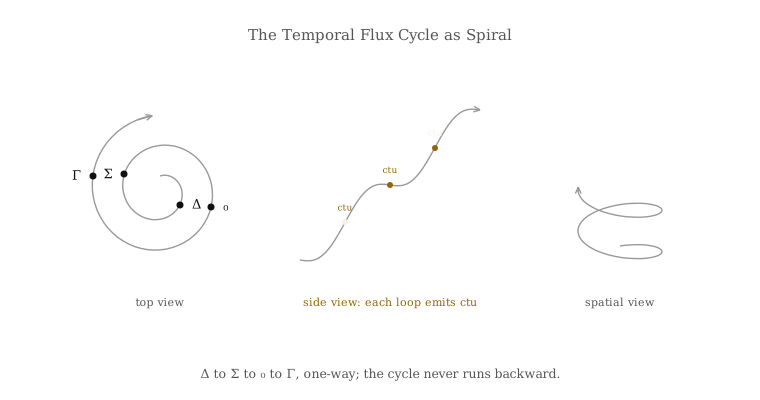
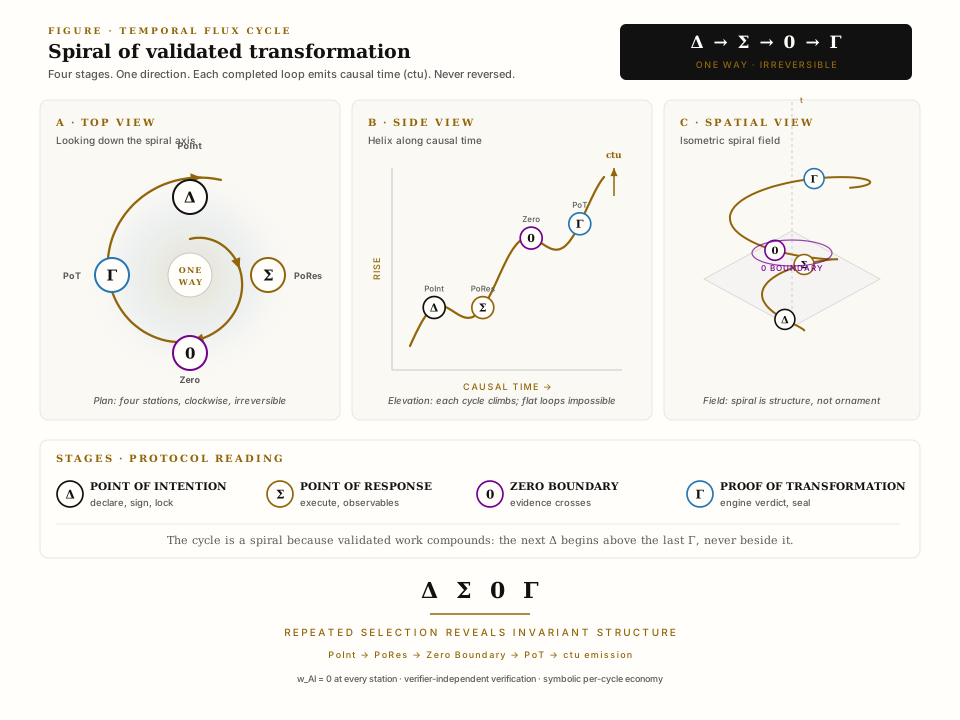
Figure 37. The Temporal FLUX Cycle as spiral: top, side, and spatial views. Stages Δ → Σ → ₀ → Γ, one-way, each loop emits ctu.
Figure 37. The Temporal FLUX Cycle as spiral: top, side, and spatial views. Stages Δ → Σ → ₀ → Γ, one-way, each loop emits ctu.Full size (opens in a new tab)
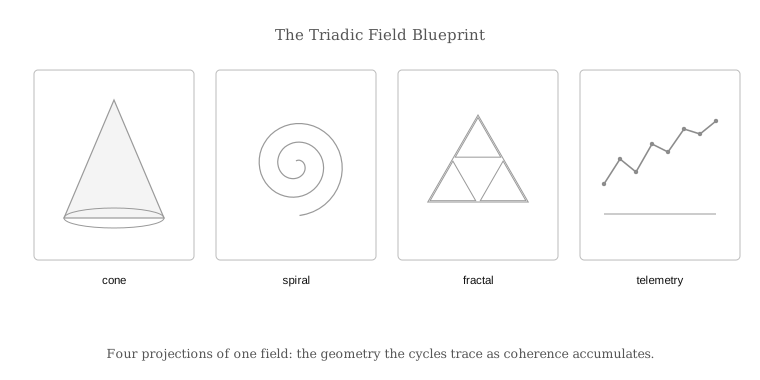
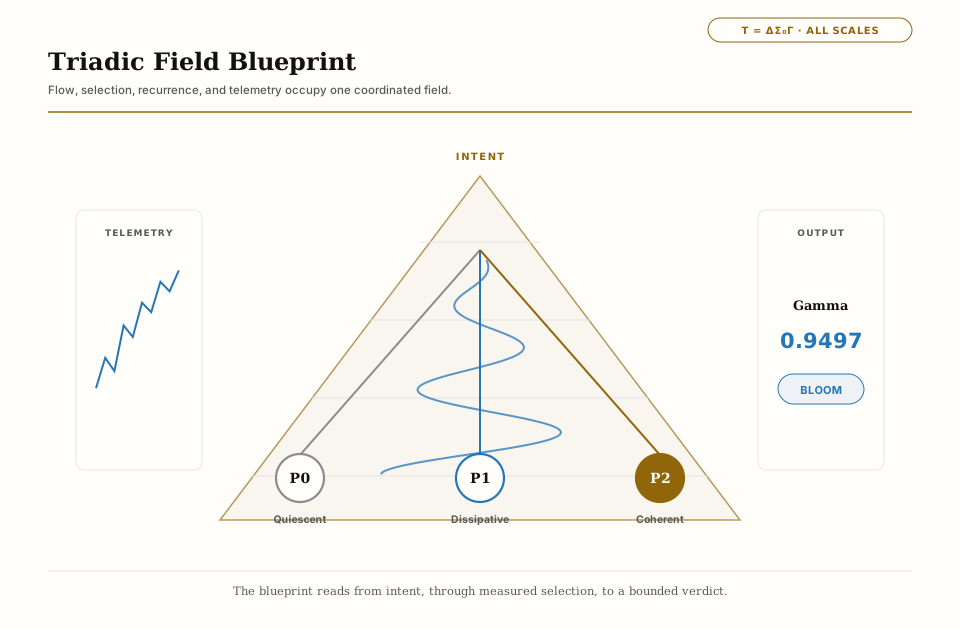
Figure 27. The Triadic Field blueprint: cone, spiral, fractal, telemetry.
Figure 27. The Triadic Field blueprint: cone, spiral, fractal, telemetry.Full size (opens in a new tab)
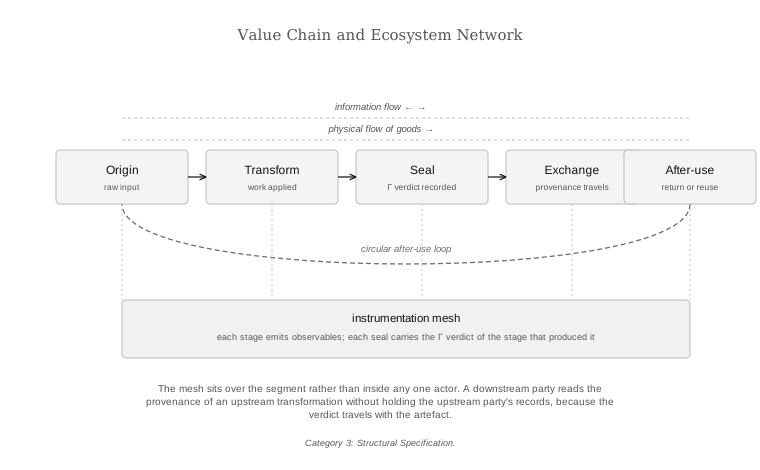
Figure 54. Value-chain and ecosystem network: physical flow of goods, information flow, circular after-use loops, and an instrumentation mesh over the segment.
Figure 54. Value-chain and ecosystem network: physical flow of goods, information flow, circular after-use loops, and an instrumentation mesh over the segment.Full size (opens in a new tab)
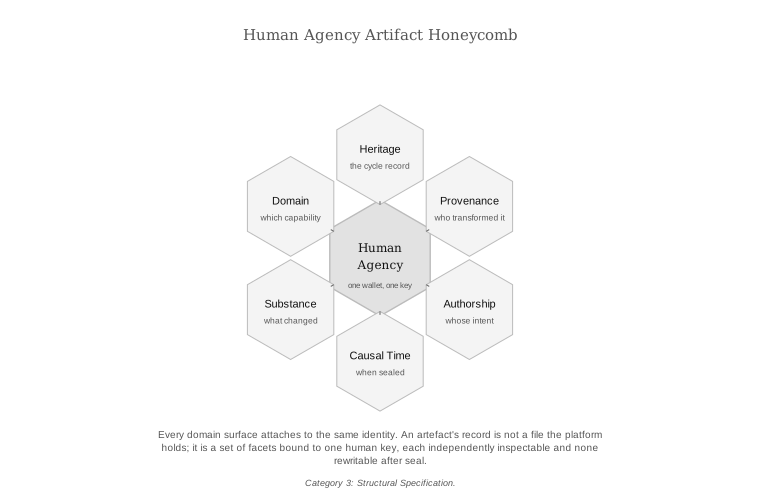
Figure 55. CTP/IP Human Agency artifact honeycomb: domain surfaces around the triadic mark, organised by provenance, authorship, causal time, and substance.
Figure 55. CTP/IP Human Agency artifact honeycomb: domain surfaces around the triadic mark, organised by provenance, authorship, causal time, and substance.Full size (opens in a new tab)
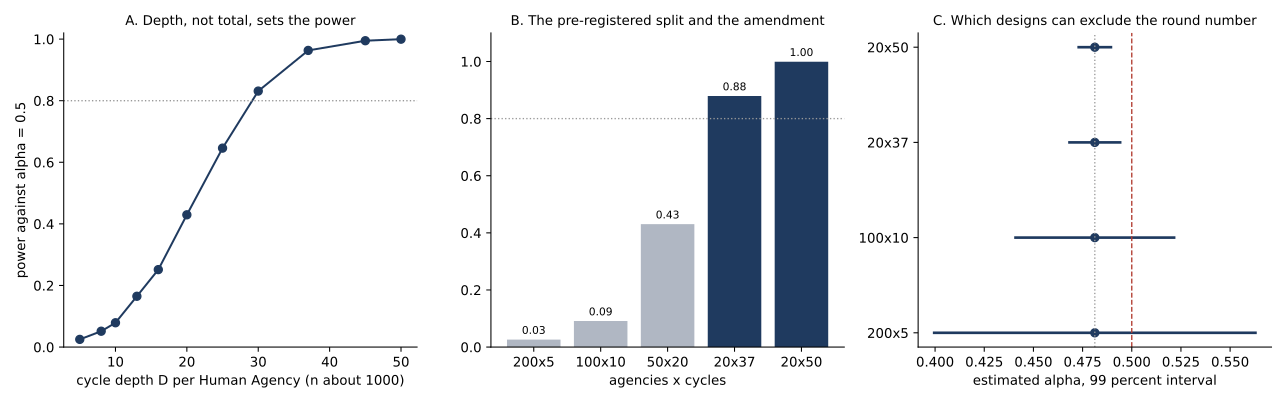
Figure 15. Statistical power of the M1 release criterion for P-CV. A: at a fixed total of about 1000 sealed cycles, achieved power against the round-number alternative alpha = 0.5 rises with cycle depth, not with total cycles, because the standard error of the decay-rate estimate falls as depth to the three-halves power; the dotted line is power 0.80. B: the five designs of the table; the pre-registered 100-by-10 split reaches power 0.09, the 20-by-37 design of the amendment 0.88 on fewer total cycles. C: 99 percent confidence intervals on the estimated rate for four designs, drawn at the predicted value ln phi; the two shallow designs fail to exclude alpha = 0.5 (the dashed line), the two deep ones exclude it. n stated per design; 4000 simulation replicates per point; two-sided test at the pre-registered 0.01 level.
Figure 15. Statistical power of the M1 release criterion for P-CV. A: at a fixed total of about 1000 sealed cycles, achieved power against the round-number alternative alpha = 0.5 rises with cycle depth, not with total cycles, because the standard error of the decay-rate estimate falls as depth to the three-halves power; the dotted line is power 0.80. B: the five designs of the table; the pre-registered 100-by-10 split reaches power 0.09, the 20-by-37 design of the amendment 0.88 on fewer total cycles. C: 99 percent confidence intervals on the estimated rate for four designs, drawn at the predicted value ln phi; the two shallow designs fail to exclude alpha = 0.5 (the dashed line), the two deep ones exclude it. n stated per design; 4000 simulation replicates per point; two-sided test at the pre-registered 0.01 level.Full size (opens in a new tab)
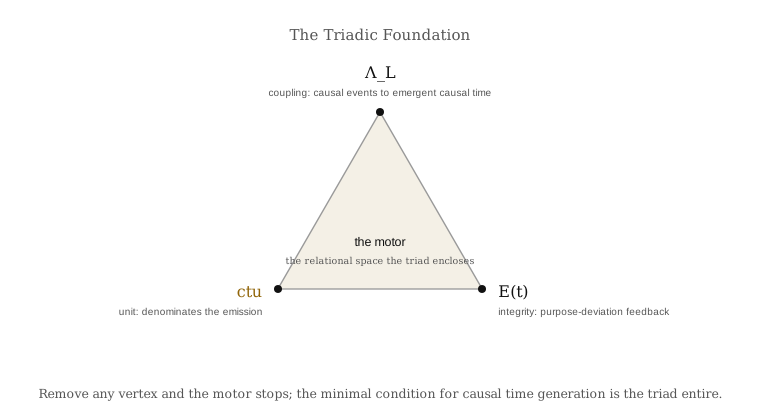
Figure 56. The Triadic Foundation. Three structural elements (coupling, integrity, unit) form the minimal condition for causal time generation. ΛL couples causal events to emergent causal time. E(t) sustains systemic integrity through purpose-deviation feedback. ctu denominates the unit of emission. Removing any vertex stops the motor. The motor itself is the relational space the triad encloses.
Figure 56. The Triadic Foundation. Three structural elements (coupling, integrity, unit) form the minimal condition for causal time generation. ΛL couples causal events to emergent causal time. E(t) sustains systemic integrity through purpose-deviation feedback. ctu denominates the unit of emission. Removing any vertex stops the motor. The motor itself is the relational space the triad encloses.Full size (opens in a new tab)
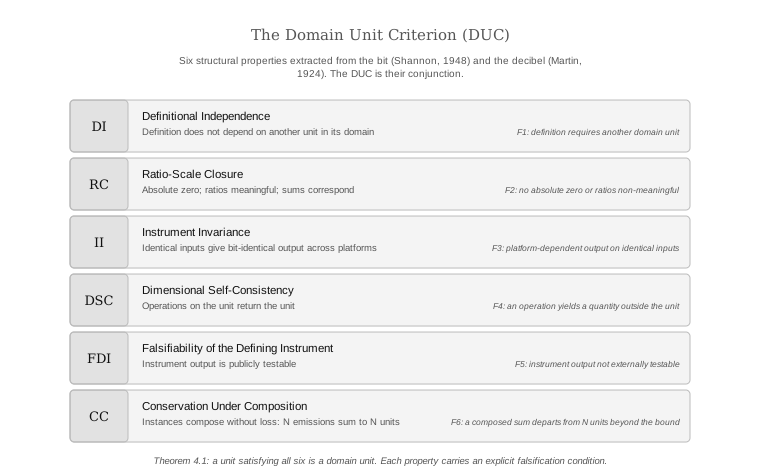
Figure 57. The Domain Unit Criterion (DUC). Six structural properties extracted from the bit (Shannon, 1948) and the decibel (Martin, 1924): Definitional Independence, Ratio-Scale Closure, Instrument Invariance, Dimensional Self-Consistency, Falsifiability of the Defining Instrument, and Conservation Under Composition. A unit failing any one of these is not categorical-in-class. A unit satisfying all six is structurally equivalent to the bit and the decibel as a domain unit. Each property carries an explicit falsification condition (F1 through F6).
Figure 57. The Domain Unit Criterion (DUC). Six structural properties extracted from the bit (Shannon, 1948) and the decibel (Martin, 1924): Definitional Independence, Ratio-Scale Closure, Instrument Invariance, Dimensional Self-Consistency, Falsifiability of the Defining Instrument, and Conservation Under Composition. A unit failing any one of these is not categorical-in-class. A unit satisfying all six is structurally equivalent to the bit and the decibel as a domain unit. Each property carries an explicit falsification condition (F1 through F6).Full size (opens in a new tab)
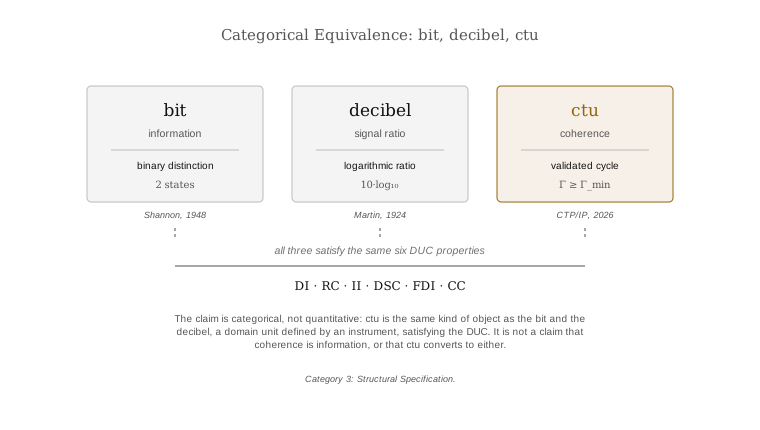
Figure 58. Categorical equivalence: bit, decibel, and ctu. Three units of different domains share the same six structural properties (DUC). The bit (Shannon, 1948) is the unit of information. The decibel (Martin, 1924; Bell System) is the unit of signal ratio. The ctu (CTP/IP, 2026) is the unit of coherent intentional transformation. The ctu's class membership is established by construction of the emission rule, reproducibility on published fixtures, public falsifiability of the defining instrument, and cryptographic conservation of seals.
Figure 58. Categorical equivalence: bit, decibel, and ctu. Three units of different domains share the same six structural properties (DUC). The bit (Shannon, 1948) is the unit of information. The decibel (Martin, 1924; Bell System) is the unit of signal ratio. The ctu (CTP/IP, 2026) is the unit of coherent intentional transformation. The ctu's class membership is established by construction of the emission rule, reproducibility on published fixtures, public falsifiability of the defining instrument, and cryptographic conservation of seals.Full size (opens in a new tab)
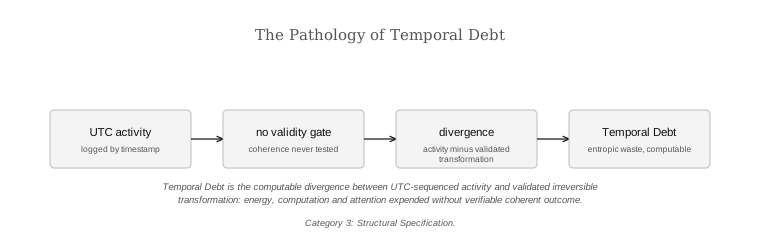
Figure 20. Pathology of temporal debt.
Figure 20. Pathology of temporal debt.Full size (opens in a new tab)
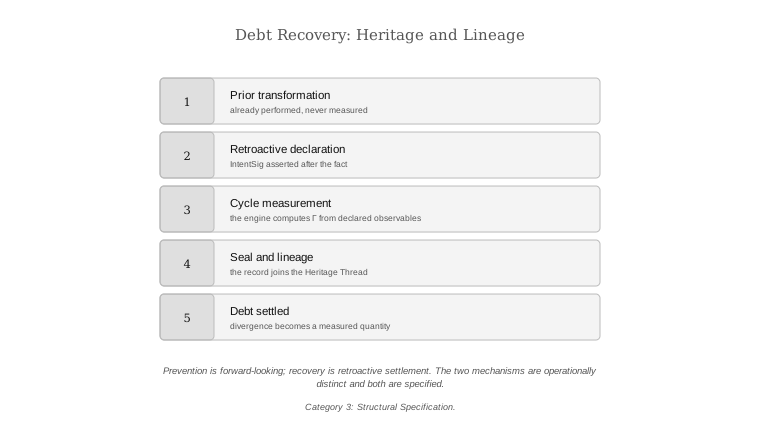
Figure 21. Debt recovery, heritage and lineage.
Figure 21. Debt recovery, heritage and lineage.Full size (opens in a new tab)
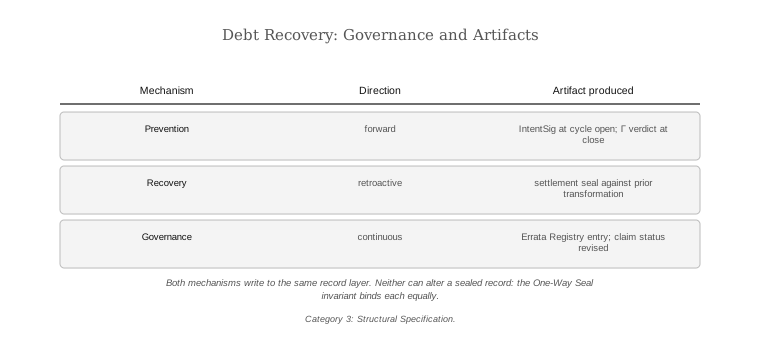
Figure 22. Debt recovery, governance and artifacts.
Figure 22. Debt recovery, governance and artifacts.Full size (opens in a new tab)
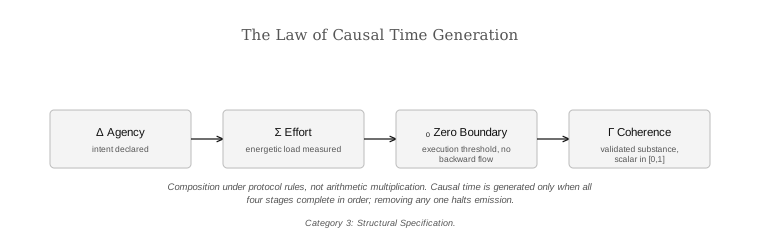
Figure 23. Law of causal time generation.
Figure 23. Law of causal time generation.Full size (opens in a new tab)
Figure 24. Constitutive triadic substrate.
Figure 24. Constitutive triadic substrate.Full size (opens in a new tab)
Figure 26. Triadic field of selection.
Figure 26. Triadic field of selection.Full size (opens in a new tab)
Figure 28. Fractal scaling architecture.
Figure 28. Fractal scaling architecture.Full size (opens in a new tab)
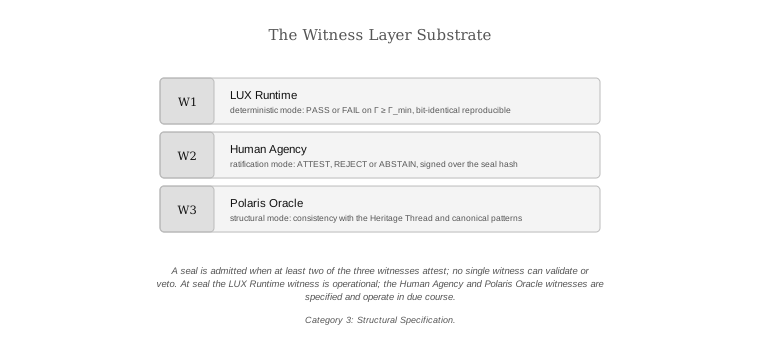
Figure 30. The witness layer substrate.
Figure 30. The witness layer substrate.Full size (opens in a new tab)
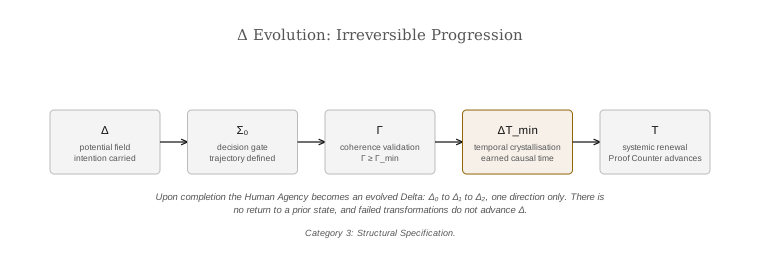
Figure 33. Delta evolution, irreversible progression.
Figure 33. Delta evolution, irreversible progression.Full size (opens in a new tab)
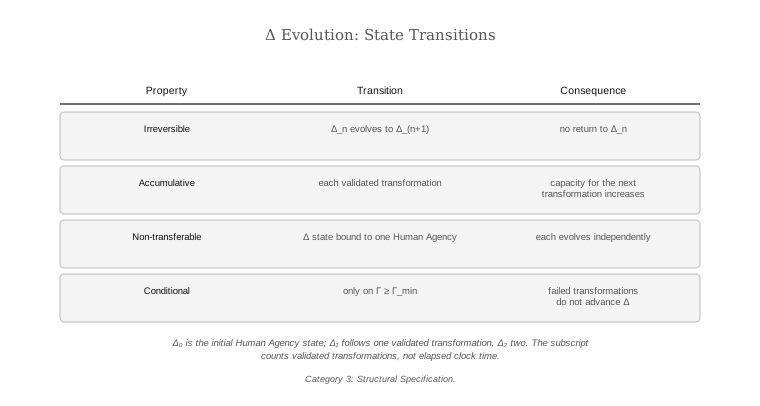
Figure 34. Delta evolution state transitions.
Figure 34. Delta evolution state transitions.Full size (opens in a new tab)
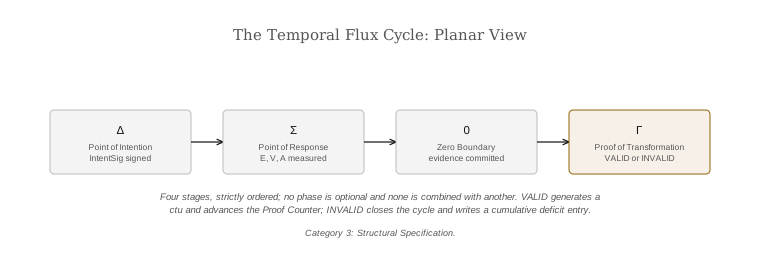
Figure 35. Temporal flux cycle, planar view.
Figure 35. Temporal flux cycle, planar view.Full size (opens in a new tab)
Figure 6. FLUX emission and value memory.
Figure 6. FLUX emission and value memory.Full size (opens in a new tab)
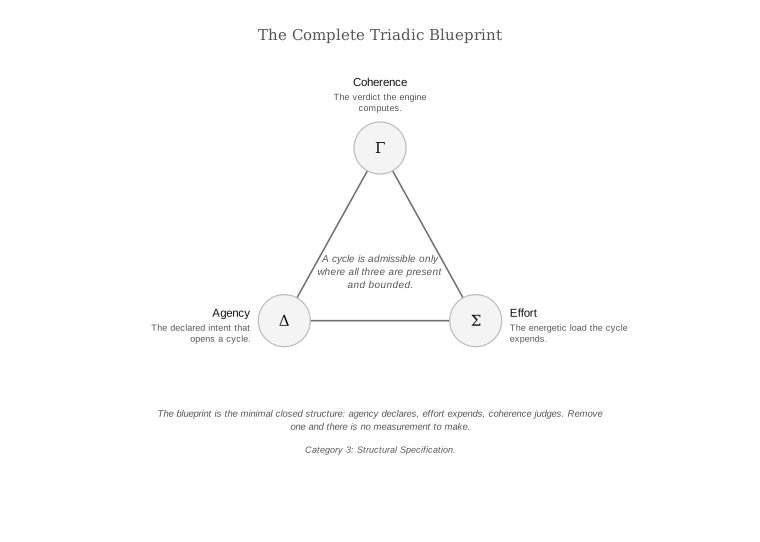
Figure 43. The complete triadic blueprint.
Figure 43. The complete triadic blueprint.Full size (opens in a new tab)
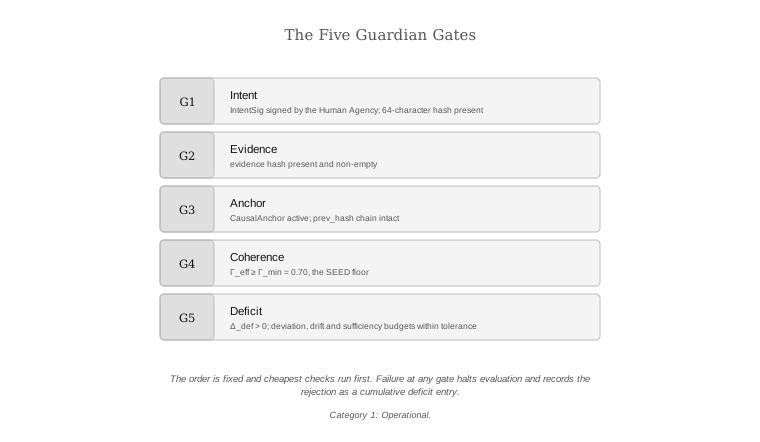
Figure 46. The five guardian gates.
Figure 46. The five guardian gates.Full size (opens in a new tab)
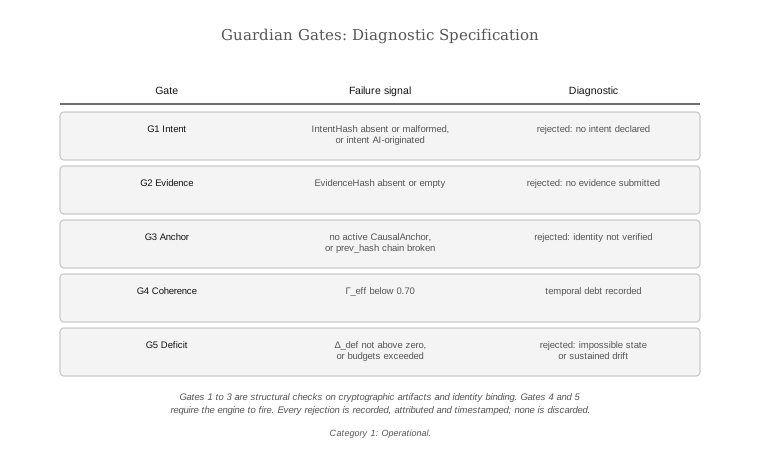
Figure 48. Guardian gates diagnostic specification.
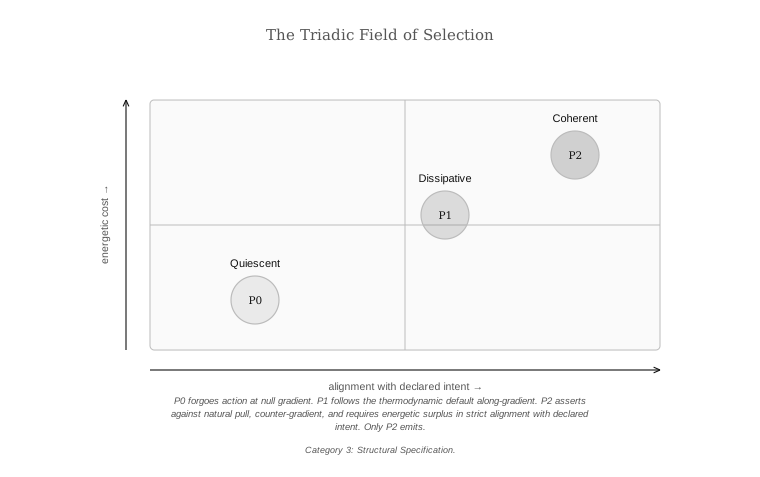
Figure 48. Guardian gates diagnostic specification.Full size (opens in a new tab)
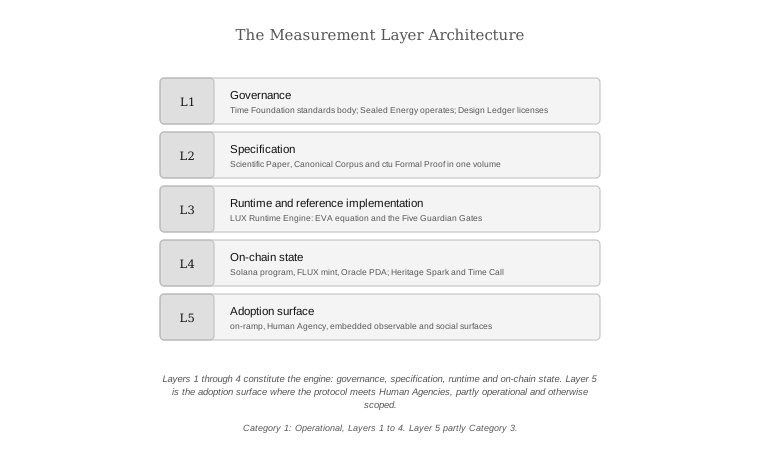
Figure 17. The measurement layer architecture.
Figure 17. The measurement layer architecture.Full size (opens in a new tab)
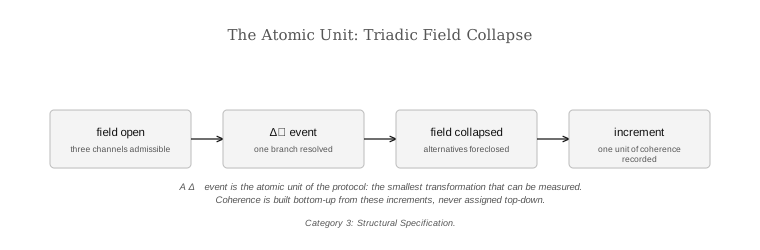
Figure 25. Atomic unit, triadic field collapse.
Figure 25. Atomic unit, triadic field collapse.Full size (opens in a new tab)
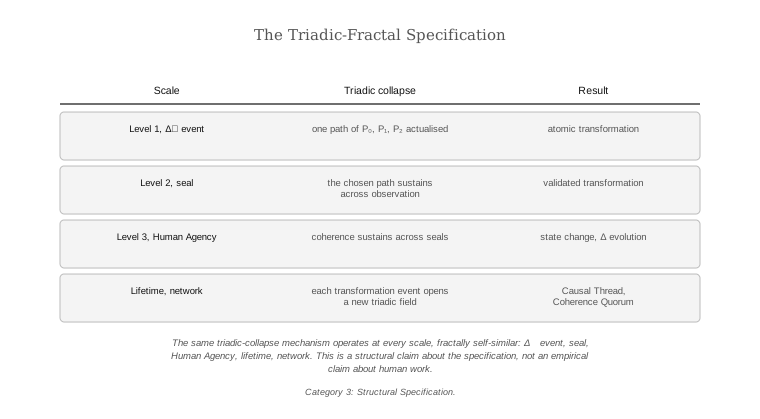
Figure 29. Triadic-fractal specification.
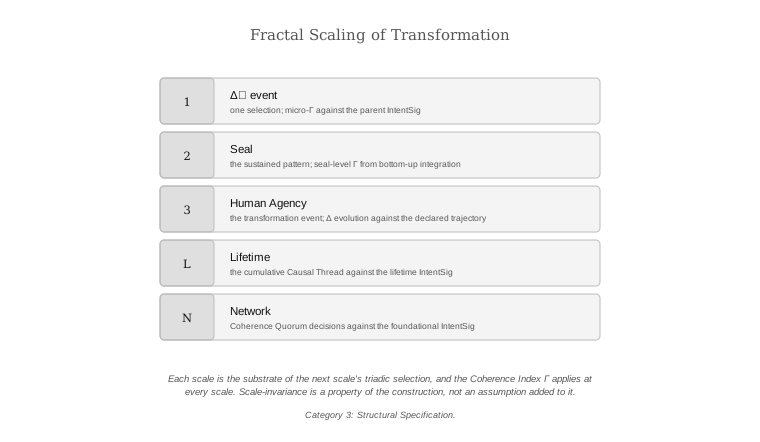
Figure 29. Triadic-fractal specification.Full size (opens in a new tab)
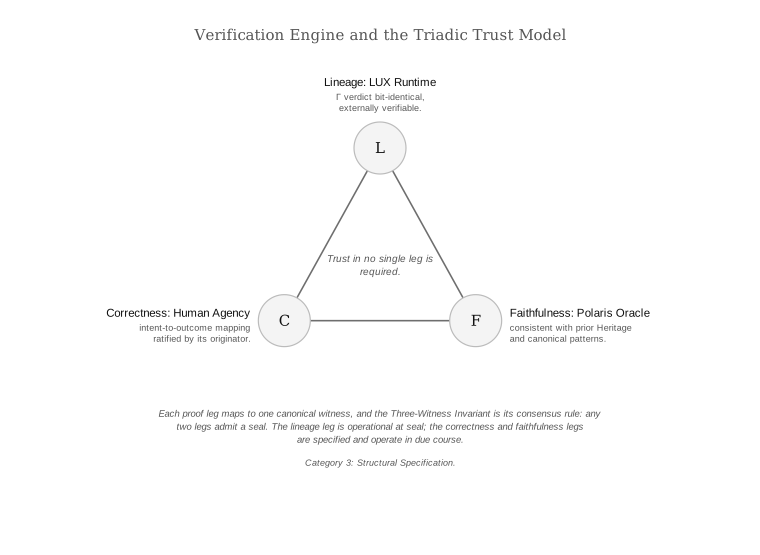
Figure 31. Verification engine, triadic trust model.
Figure 31. Verification engine, triadic trust model.Full size (opens in a new tab)
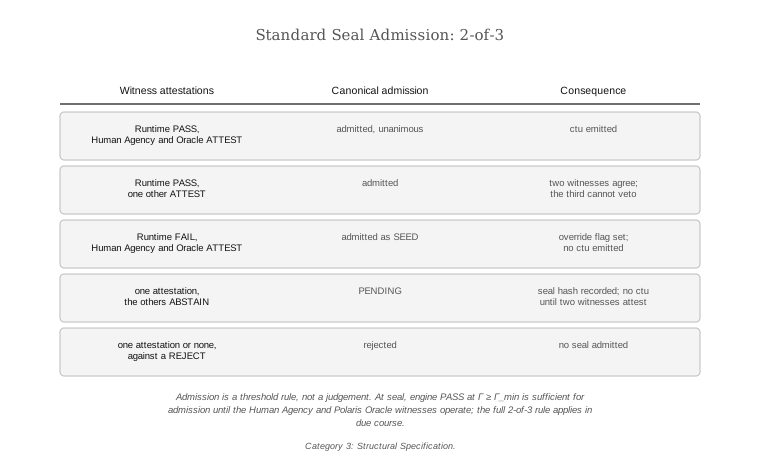
Figure 32. Standard seal admission, 2-of-3.
Figure 32. Standard seal admission, 2-of-3.Full size (opens in a new tab)
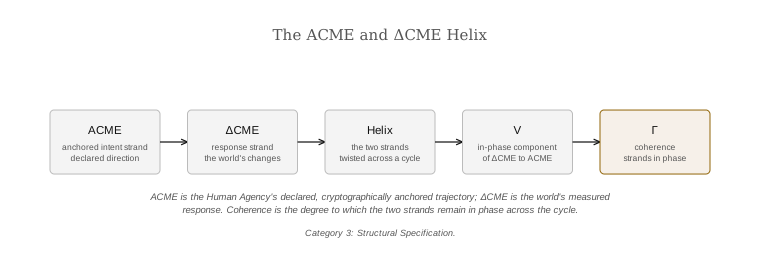
Figure 38. ACME and delta-cme helix.
Figure 38. ACME and delta-cme helix.Full size (opens in a new tab)
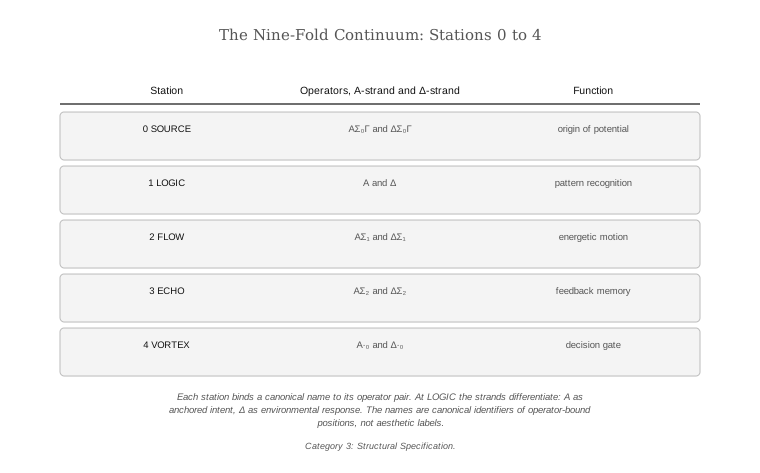
Figure 39. Nine-fold continuum, stations 0 to 4.
Figure 39. Nine-fold continuum, stations 0 to 4.Full size (opens in a new tab)
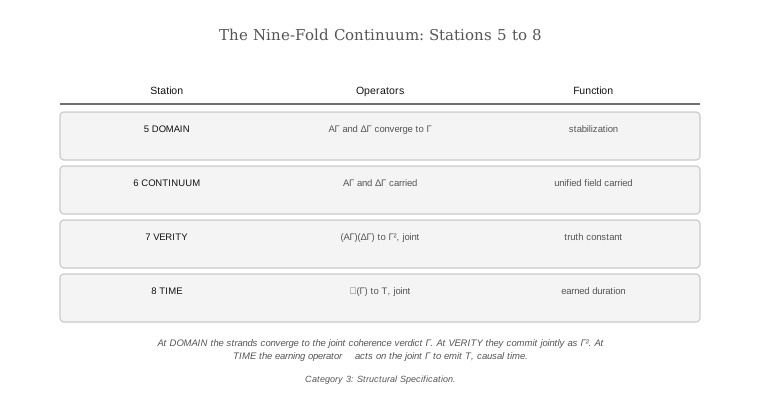
Figure 40. Nine-fold continuum, stations 5 to 8.
Figure 40. Nine-fold continuum, stations 5 to 8.Full size (opens in a new tab)
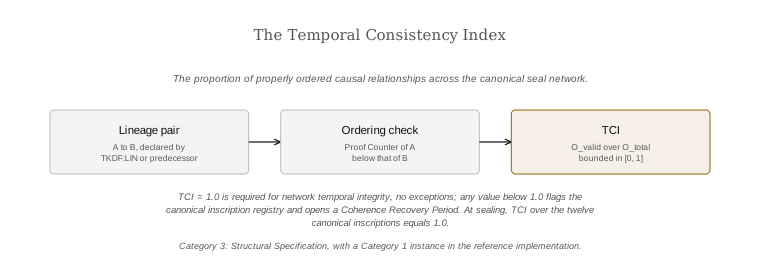
Figure 41. Temporal consistency index.
Figure 41. Temporal consistency index.Full size (opens in a new tab)
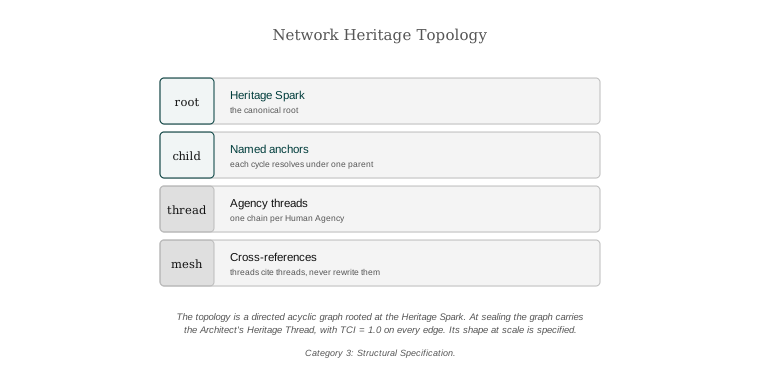
Figure 42. Network heritage topology.
Figure 42. Network heritage topology.Full size (opens in a new tab)
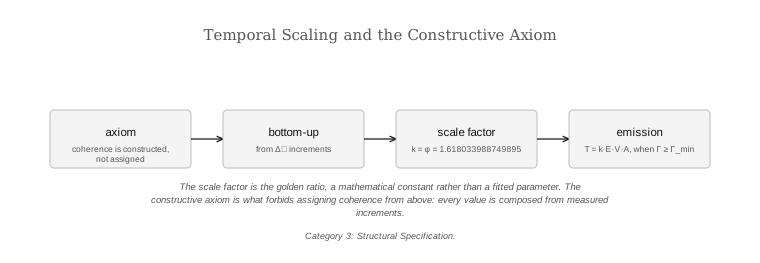
Figure 44. Temporal scaling and the constructive axiom.
Figure 44. Temporal scaling and the constructive axiom.Full size (opens in a new tab)
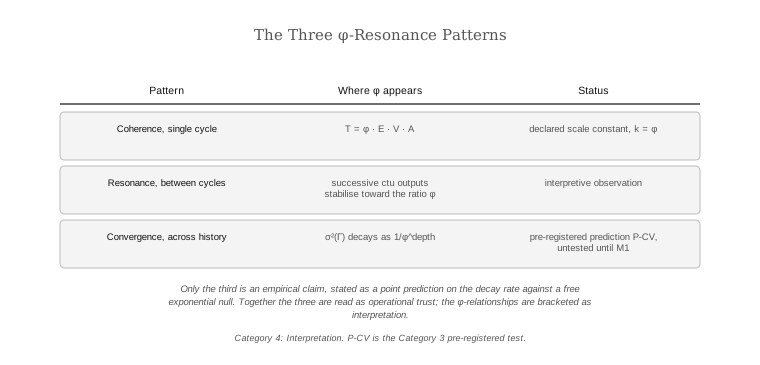
Figure 45. Three phi-resonance patterns.
Figure 45. Three phi-resonance patterns.Full size (opens in a new tab)
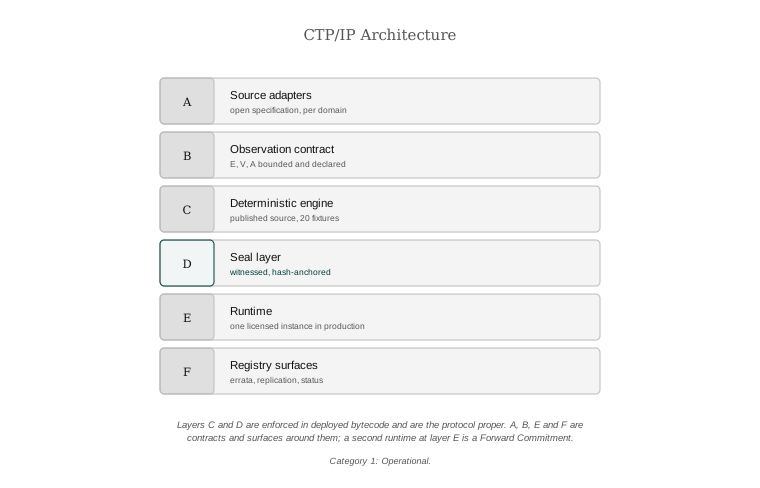
Figure 18. CTP/IP architecture.
Figure 18. CTP/IP architecture.Full size (opens in a new tab)
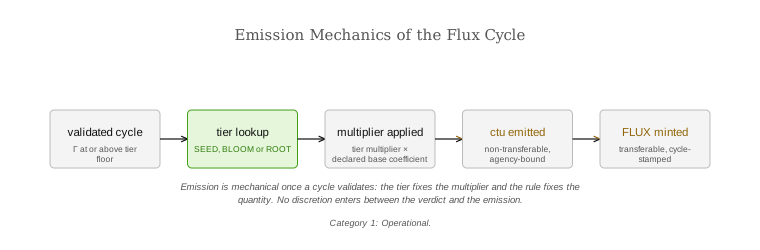
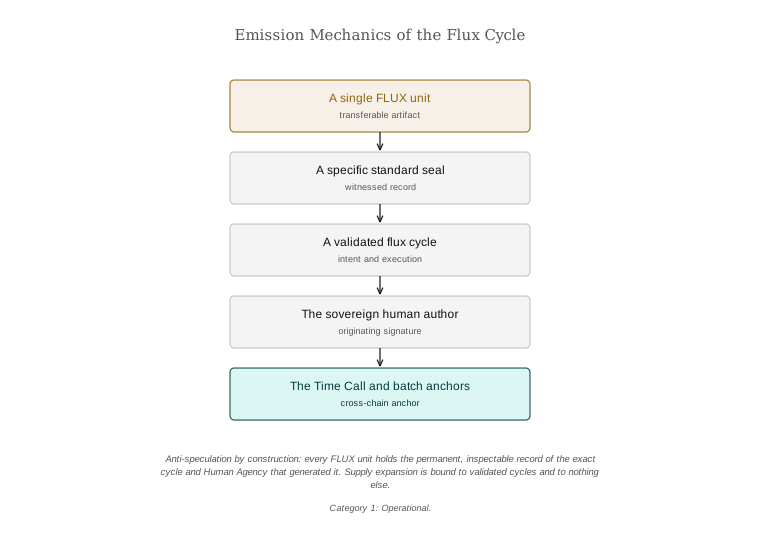
Figure 36. Emission mechanics of the flux cycle.
Figure 36. Emission mechanics of the flux cycle.Full size (opens in a new tab)
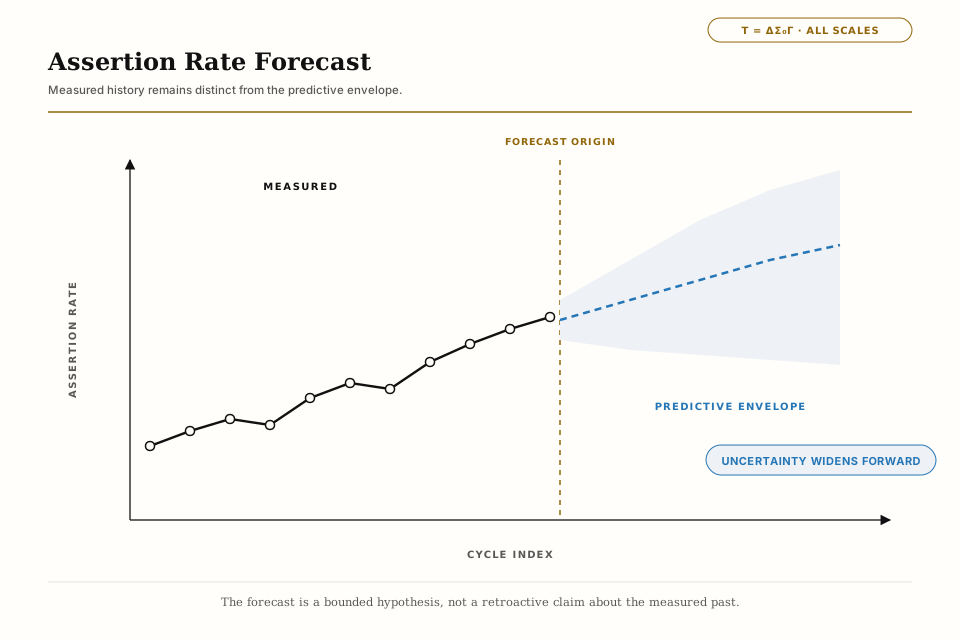
Panel 1. Assertion rate from compound history: measured rolling assertion rate R(n) up to the forecast origin, and the predictive envelope under pre-registered P-CR / P-CV, widening forward. Forecast is structural projection, not pricing.
Panel 1. Assertion rate from compound history: measured rolling assertion rate R(n) up to the forecast origin, and the predictive envelope under pre-registered P-CR / P-CV, widening forward. Forecast is structural projection, not pricing.Full size (opens in a new tab)
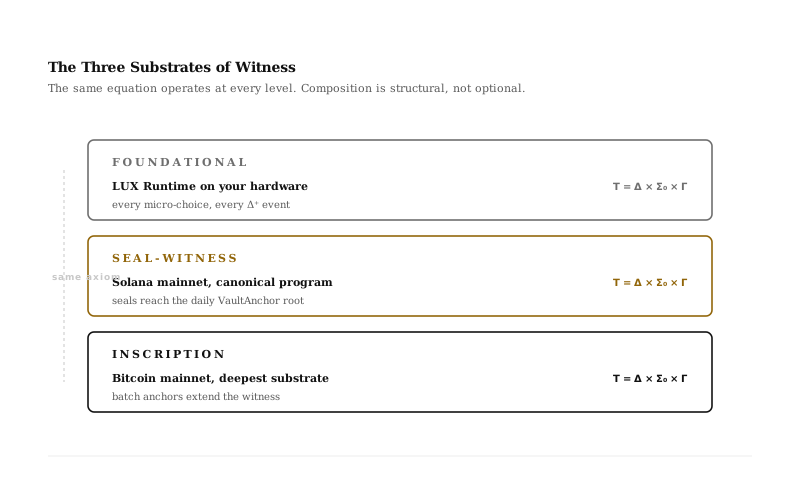
Panel 2. Three substrates, one axiom. Composition is structural, not optional.
Panel 2. Three substrates, one axiom. Composition is structural, not optional.Full size (opens in a new tab)
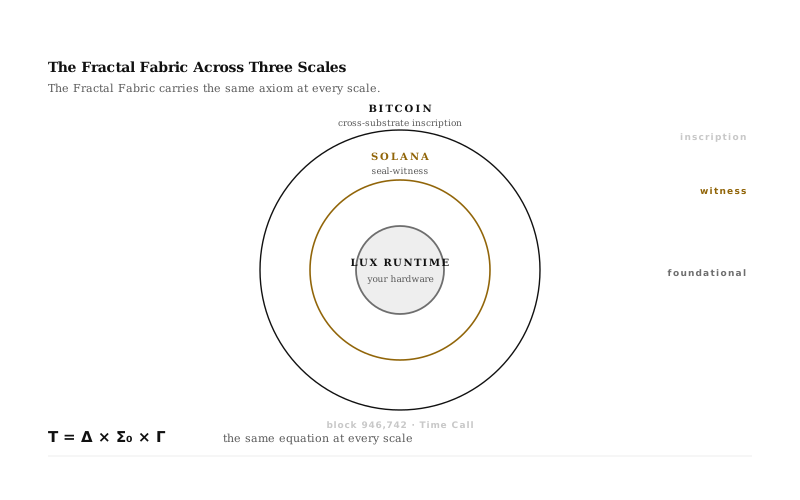
Panel 3. The Fractal Fabric: the same axiom at every scale.
Panel 3. The Fractal Fabric: the same axiom at every scale.Full size (opens in a new tab)
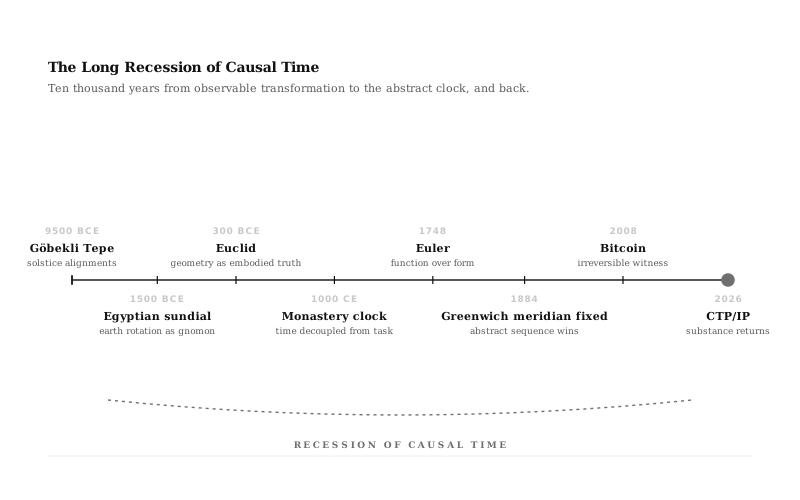
Panel 4. The recession of causal time across ten thousand years.
Panel 4. The recession of causal time across ten thousand years.Full size (opens in a new tab)
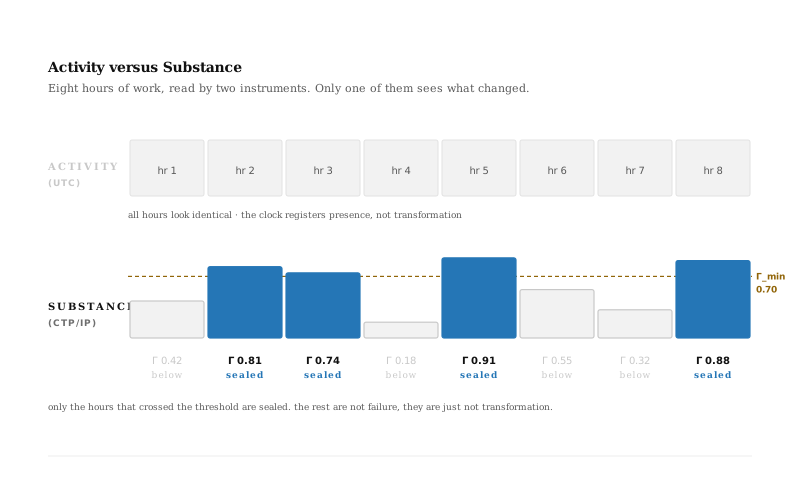
Panel 5. The same eight hours, read by two instruments.
Panel 5. The same eight hours, read by two instruments.Full size (opens in a new tab)
Panel 6. The Temporal Flux Cycle as spiral: top view (plan), side view (helix along causal time), and spatial view (isometric field). Stages Δ → Σ → ₀ → Γ are one-way and irreversible; each completed loop emits ctu.
Panel 6. The Temporal Flux Cycle as spiral: top view (plan), side view (helix along causal time), and spatial view (isometric field). Stages Δ → Σ → ₀ → Γ are one-way and irreversible; each completed loop emits ctu.Full size (opens in a new tab)
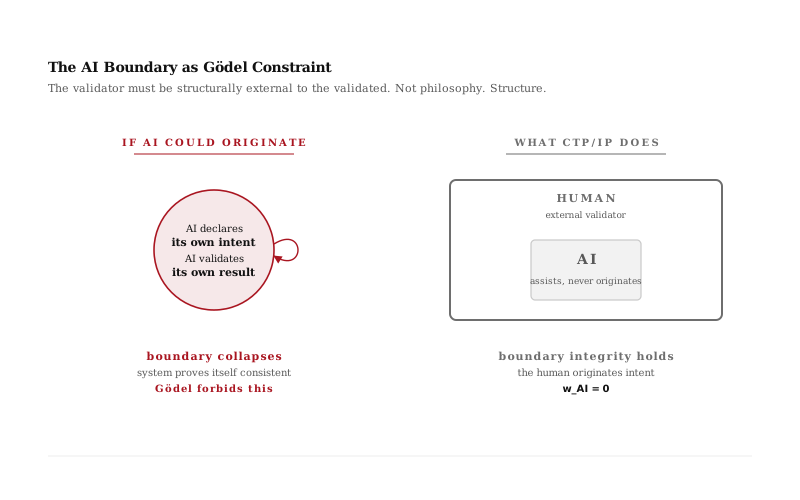
Panel 8. The validator must be structurally external to the validated.
Panel 8. The validator must be structurally external to the validated.Full size (opens in a new tab)
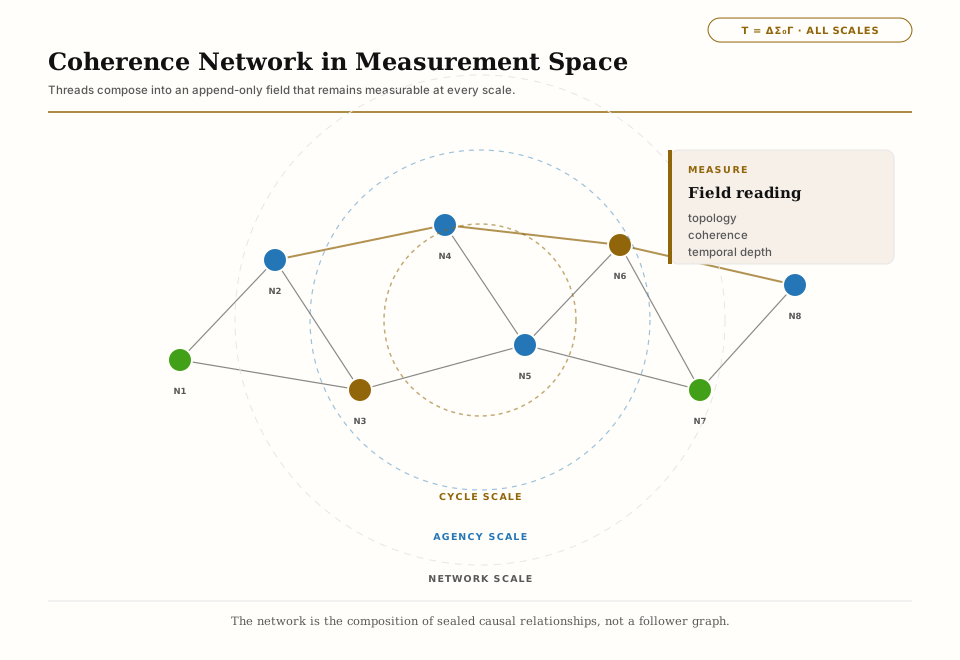
Panel 9. Coherence Network in measurement space: one network graph inside three measurement rings for cycle, agency, and network scale. Heritage Threads compose; adapters map instruments to (E, V, A).
Panel 9. Coherence Network in measurement space: one network graph inside three measurement rings for cycle, agency, and network scale. Heritage Threads compose; adapters map instruments to (E, V, A).Full size (opens in a new tab)
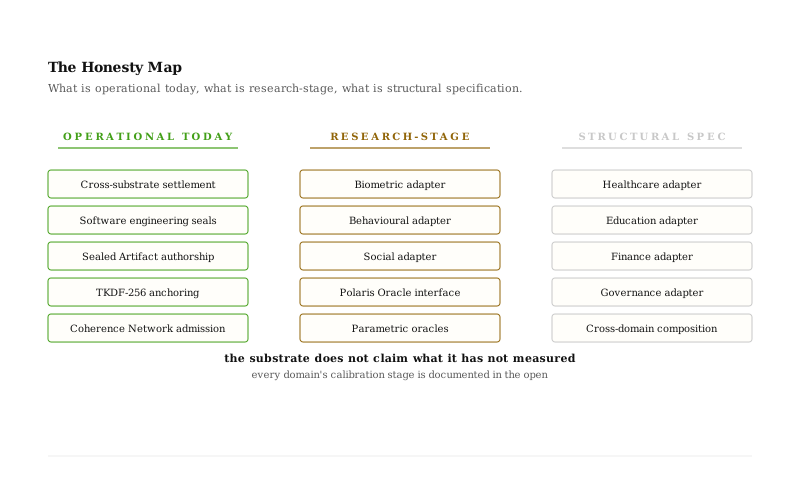
Panel 10. The book is honest about which patterns operate today and which calibrate forward.
Panel 10. The book is honest about which patterns operate today and which calibrate forward.Full size (opens in a new tab)
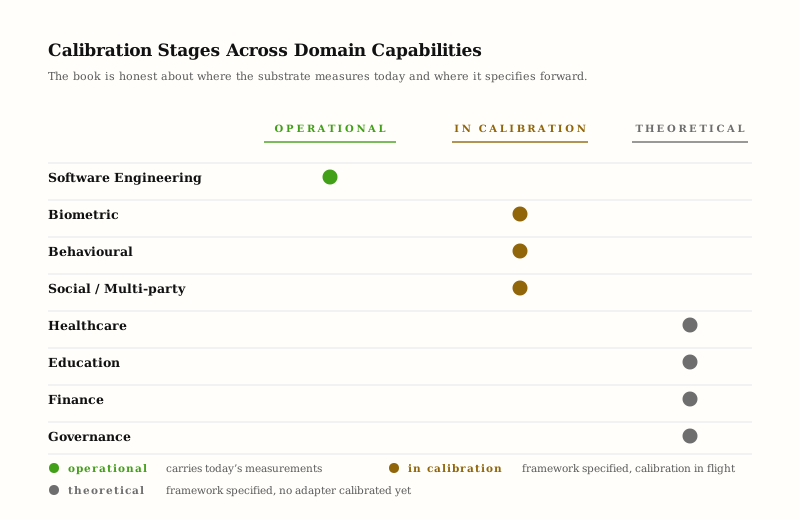
Panel 11. Where the substrate measures today, and where it specifies forward.
Panel 11. Where the substrate measures today, and where it specifies forward.Full size (opens in a new tab)
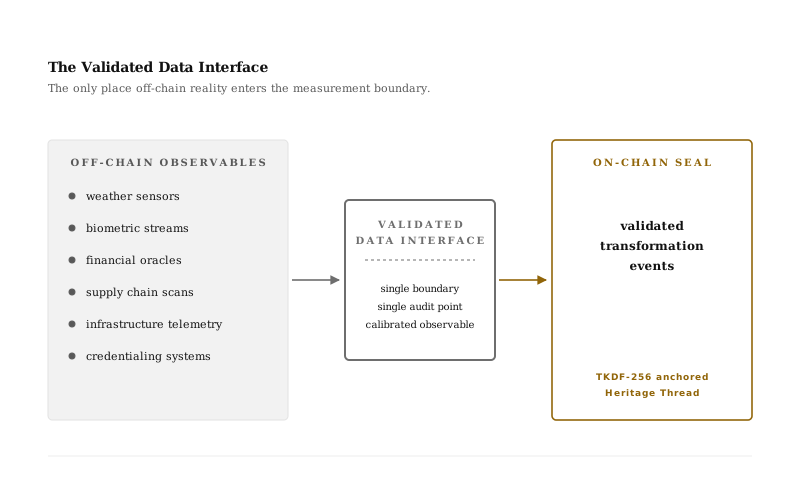
Panel 12. One door, audited at one location. The Validated Data Interface.
Panel 12. One door, audited at one location. The Validated Data Interface.Full size (opens in a new tab)
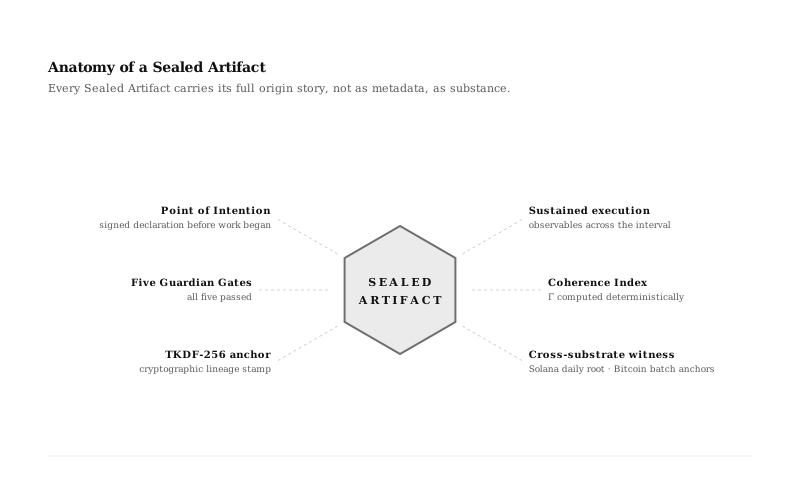
Panel 13. A Sealed Artifact carries its full origin story as substance, not metadata.
Panel 13. A Sealed Artifact carries its full origin story as substance, not metadata.Full size (opens in a new tab)
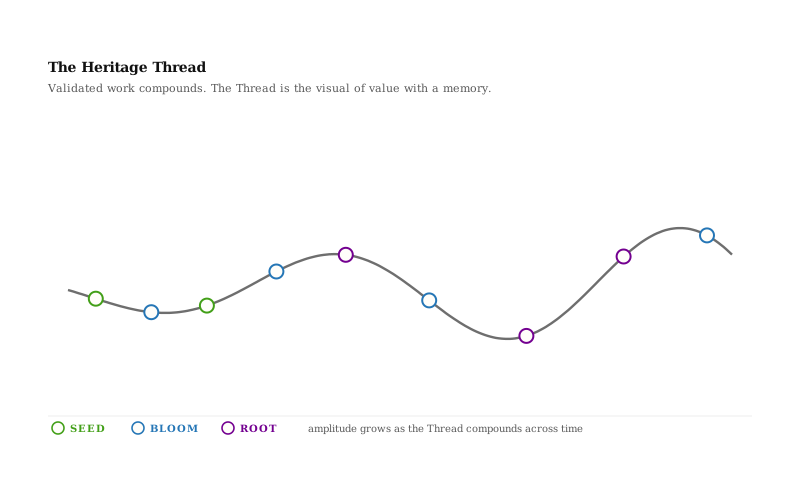
Panel 14. Validated work compounds across time. The Thread is yours.
Panel 14. Validated work compounds across time. The Thread is yours.Full size (opens in a new tab)
Panel 15. The Triadic Field as blueprint: flow cone (top), spiral growth (side), and hardware telemetry bus. Paths P0 Quiescent, P1 Dissipative, P2 Coherent; one branch is measured at each Δ+ event.
Panel 15. The Triadic Field as blueprint: flow cone (top), spiral growth (side), and hardware telemetry bus. Paths P0 Quiescent, P1 Dissipative, P2 Coherent; one branch is measured at each Δ+ event.Full size (opens in a new tab)
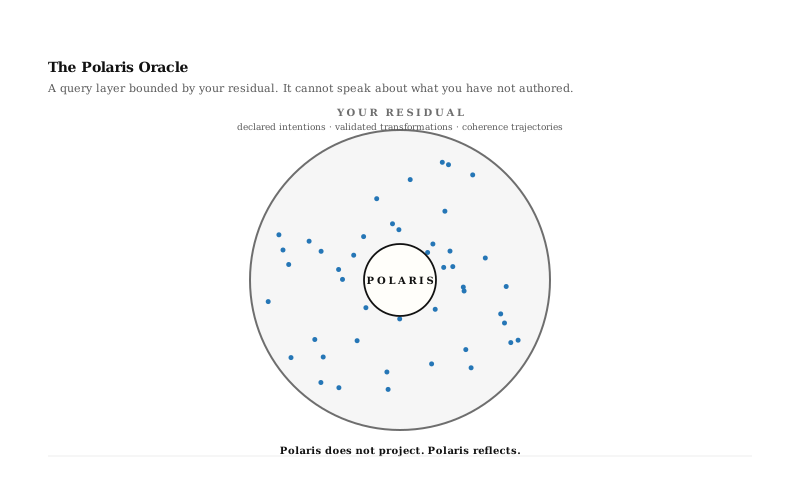
Panel 16. Polaris reflects what is in your residual. It cannot project from outside.
Panel 16. Polaris reflects what is in your residual. It cannot project from outside.Full size (opens in a new tab)
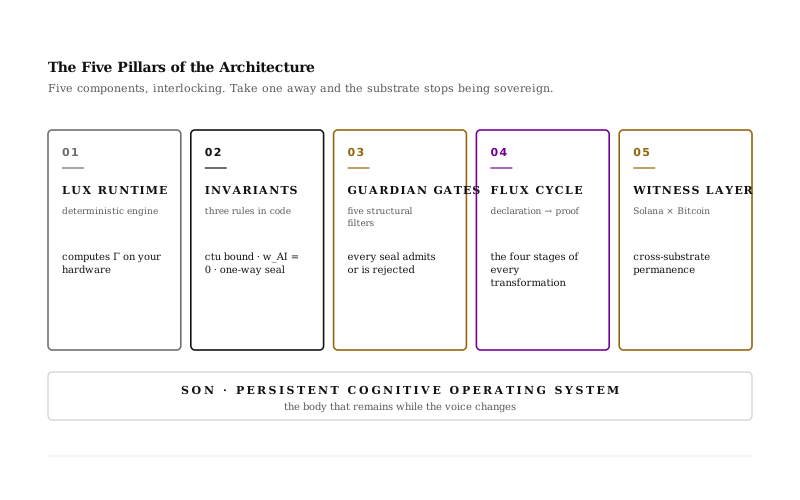
Panel 17. The five pillars of the architecture, with SON holding them across sessions.
Panel 17. The five pillars of the architecture, with SON holding them across sessions.Full size (opens in a new tab)
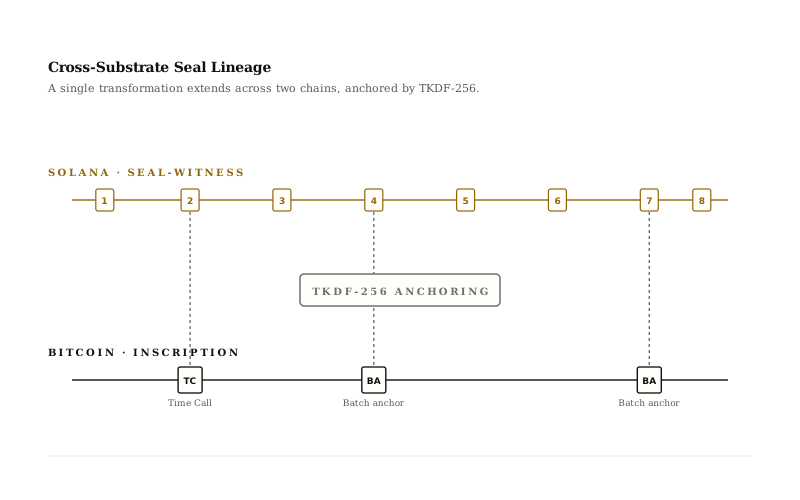
Panel 18. TKDF-256 ties Solana seals to the Bitcoin Time Call and monthly batch anchors across substrates.
Panel 18. TKDF-256 ties Solana seals to the Bitcoin Time Call and monthly batch anchors across substrates.Full size (opens in a new tab)
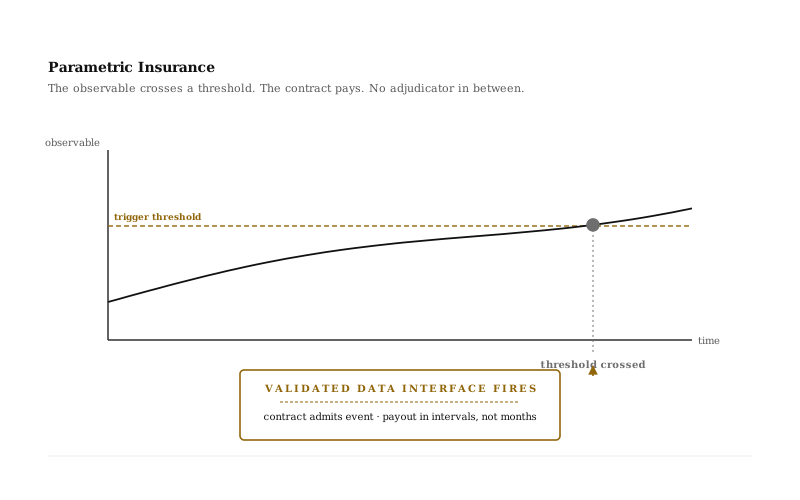
Panel 19. Threshold crossed. Contract pays. No adjudicator in between.
Panel 19. Threshold crossed. Contract pays. No adjudicator in between.Full size (opens in a new tab)
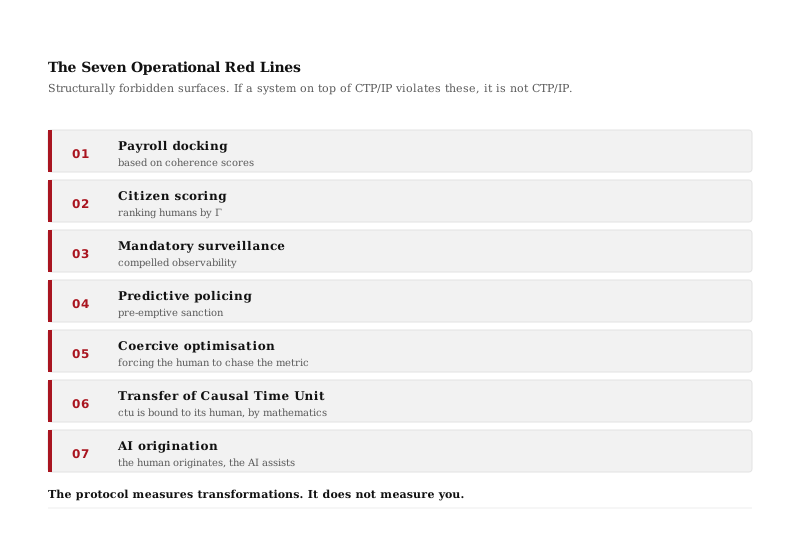
Panel 20. Seven surfaces the substrate refuses to be turned into.
Panel 20. Seven surfaces the substrate refuses to be turned into.Full size (opens in a new tab)
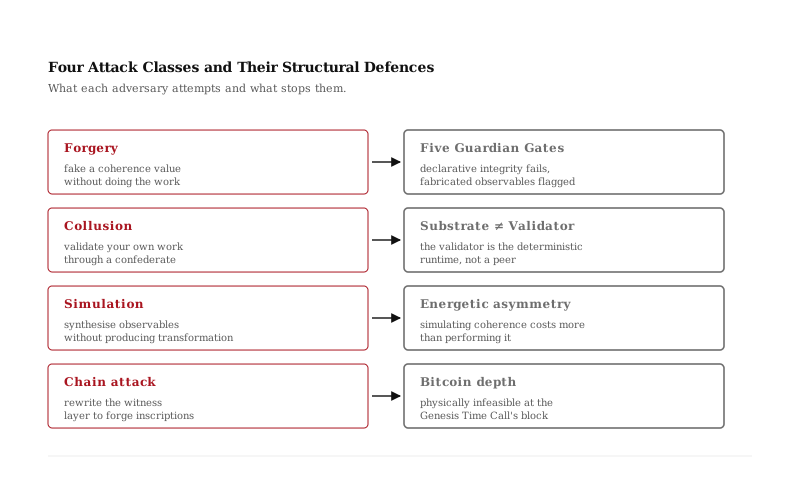
Panel 21. Four attack classes. Four structural defences.
Panel 21. Four attack classes. Four structural defences.Full size (opens in a new tab)
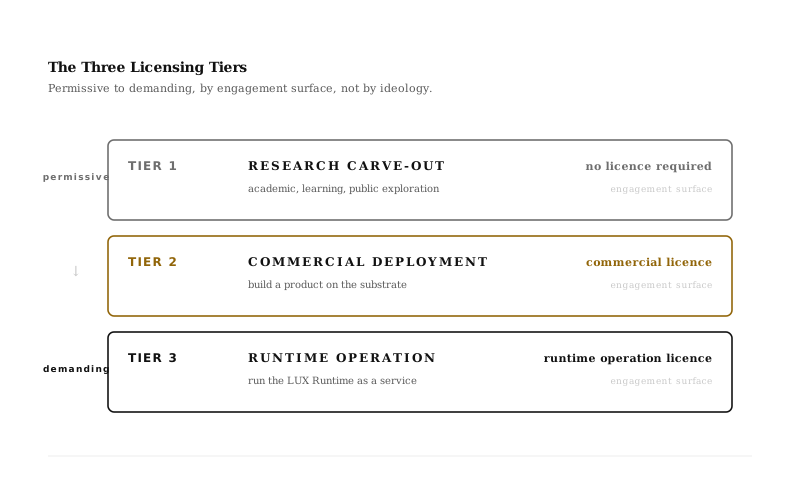
Panel 22. Three tiers of engagement, permissive to demanding.
Panel 22. Three tiers of engagement, permissive to demanding.Full size (opens in a new tab)
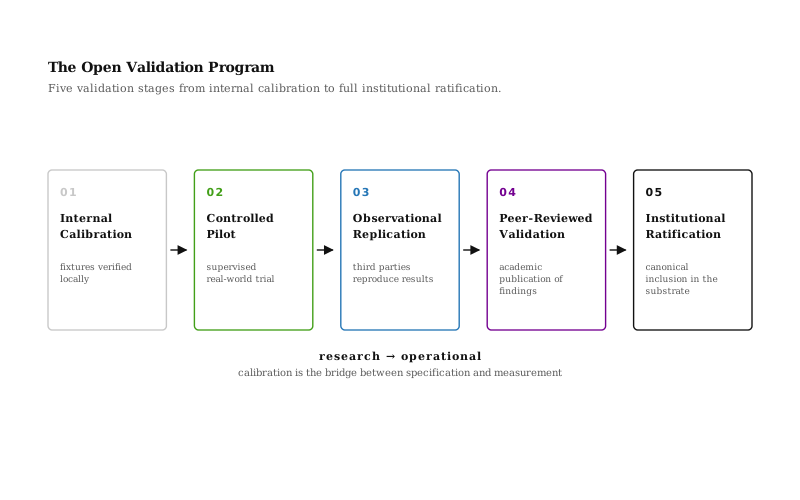
Panel 23. Five validation stages from internal calibration to institutional ratification.
Panel 23. Five validation stages from internal calibration to institutional ratification.Full size (opens in a new tab)
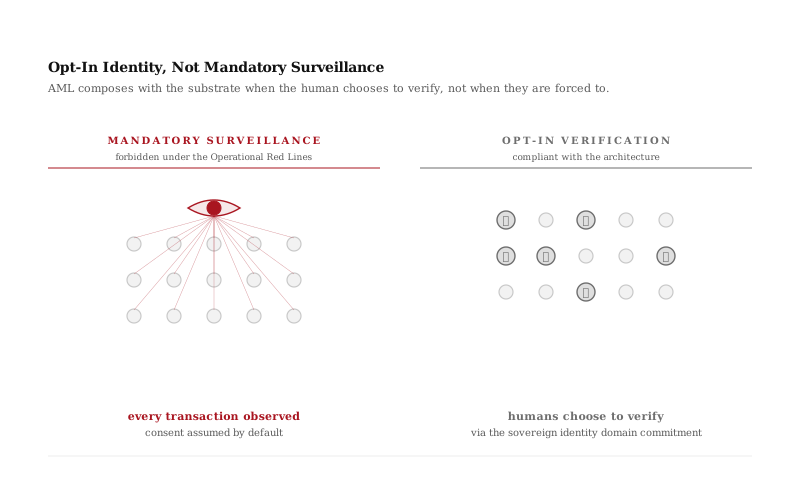
Panel 24. Verification by choice, not surveillance by default.
Panel 24. Verification by choice, not surveillance by default.Full size (opens in a new tab)
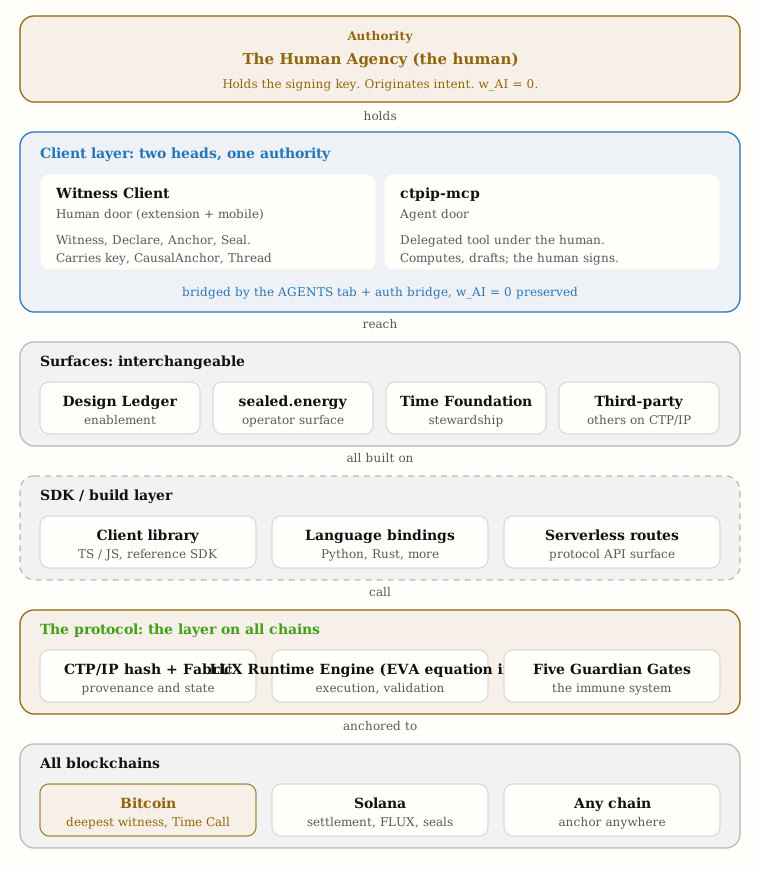
Panel 25. The Substance Witness Protocol stack. The Human Agency holds authority at the top (signing key, originates intent, w_AI = 0). The two-headed client (Witness Client, the human door; ctpip-mcp, the agent door), bridged by the AGENTS tab and the auth bridge, reaches interchangeable surfaces, all built on the SDK, which call the protocol layer that sits on top of every chain and anchors to Bitcoin as the deepest witness.
Panel 25. The Substance Witness Protocol stack. The Human Agency holds authority at the top (signing key, originates intent, w_AI = 0). The two-headed client (Witness Client, the human door; ctpip-mcp, the agent door), bridged by the AGENTS tab and the auth bridge, reaches interchangeable surfaces, all built on the SDK, which call the protocol layer that sits on top of every chain and anchors to Bitcoin as the deepest witness.Full size (opens in a new tab)