Research paper / Specified · corpus governs

The First Paper
The protocol, reported as science.

The protocol specification as methods, the deployment record as results, and the falsifiable predictions and forward commitments that bound the research claim.

TIME FOUNDATION
PUBLICATION LIBRARY
Explore the paper / interactive study

A claim becomes inspectable.

Trace the relationship between a declared claim, its method, the recorded evidence and a question that could challenge it.

RESEARCH / CONCEPTUAL MODELMETHOD ↔ EVIDENCEAn open research relationshipDeclare the claimInspect the methodRead the evidenceChallenge the claim
01 / 4
Seed / intention / inflectionBloom / coherence / flowTransformation / Root

Conceptual illustration. No signature, seal, ctu, FLUX or transaction is produced. Read the source.

© A claim becomes inspectable. - author: Erico LisbôaCorpus Δ1 ↗
The complete publication

A paper to read.
A record to inspect.

Specified · corpus governs. Read this publication in relation to the governing Corpus Δ1, not in place of it.

90Sections
17Source figures
2PDF layouts
Read the publicationExplore all charts & figures
Inside the paper

Mechanisms, made visible.
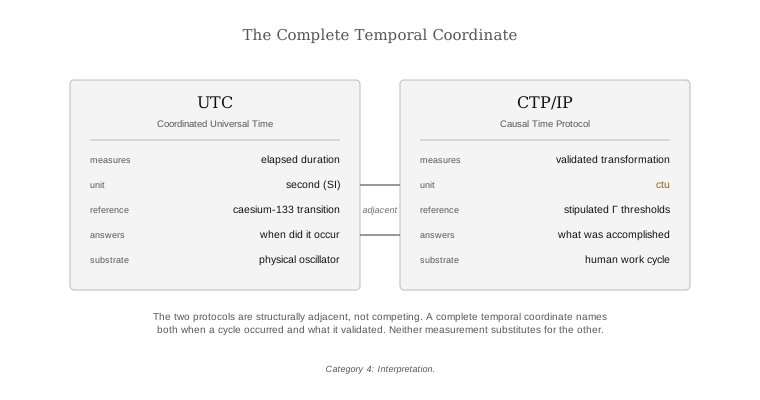
Figure 1. The complete temporal coordinate: UTC and CTP/IP as structurally adjacent measurement protocols.
Figure 1. The complete temporal coordinate: UTC and CTP/IP as structurally adjacent measurement protocols.Full size (opens in a new tab)

Loading the complete document index…

The figure collection

Every figure in this publication.
17 source figures
Figure 1. The complete temporal coordinate: UTC and CTP/IP as structurally adjacent measurement protocols.
Figure 1. The complete temporal coordinate: UTC and CTP/IP as structurally adjacent measurement protocols.Full size (opens in a new tab)
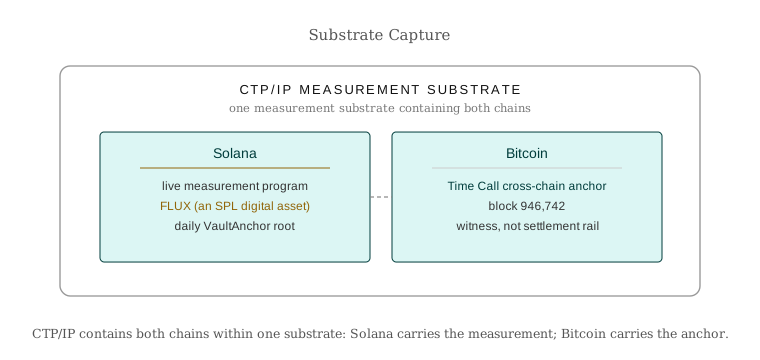
Figure 8. Cross-chain anchoring as substrate capture: CTP/IP contains both Solana and Bitcoin within one measurement substrate. Solana carries the live measurement program and FLUX (an SPL digital asset); Bitcoin carries the cross-chain Time Call anchor.
Figure 8. Cross-chain anchoring as substrate capture: CTP/IP contains both Solana and Bitcoin within one measurement substrate. Solana carries the live measurement program and FLUX (an SPL digital asset); Bitcoin carries the cross-chain Time Call anchor.Full size (opens in a new tab)
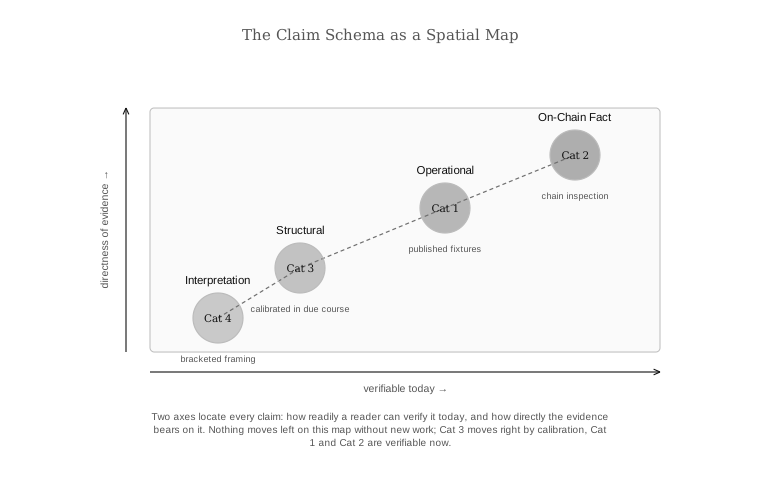
Figure 13. The four-category claim schema as a spatial map. Two axes locate every claim: verifiability today (horizontal) and directness of evidence (vertical). On-Chain Fact (Cat 2) is most verifiable and most direct; Operational (Cat 1) is reproducible now via fixtures; Structural Specification (Cat 3) is calibrated in due course; Interpretation (Cat 4) is conceptual framing, explicitly bracketed.
Figure 13. The four-category claim schema as a spatial map. Two axes locate every claim: verifiability today (horizontal) and directness of evidence (vertical). On-Chain Fact (Cat 2) is most verifiable and most direct; Operational (Cat 1) is reproducible now via fixtures; Structural Specification (Cat 3) is calibrated in due course; Interpretation (Cat 4) is conceptual framing, explicitly bracketed.Full size (opens in a new tab)
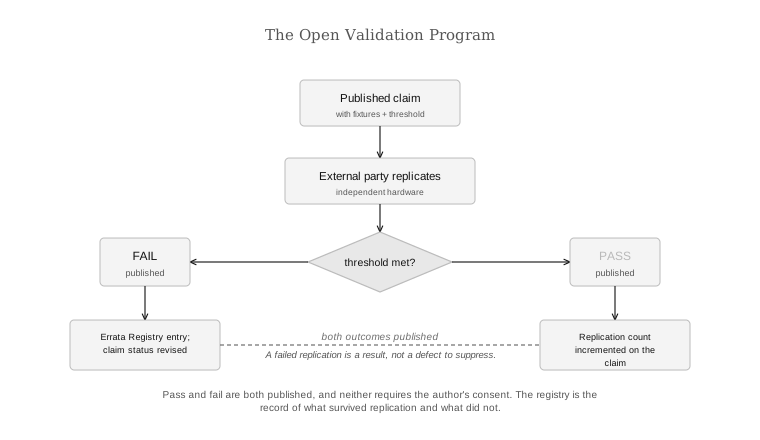
Figure 16. The Open Validation Program flow: external replication and falsification with pass and fail outcomes both published.
Figure 16. The Open Validation Program flow: external replication and falsification with pass and fail outcomes both published.Full size (opens in a new tab)
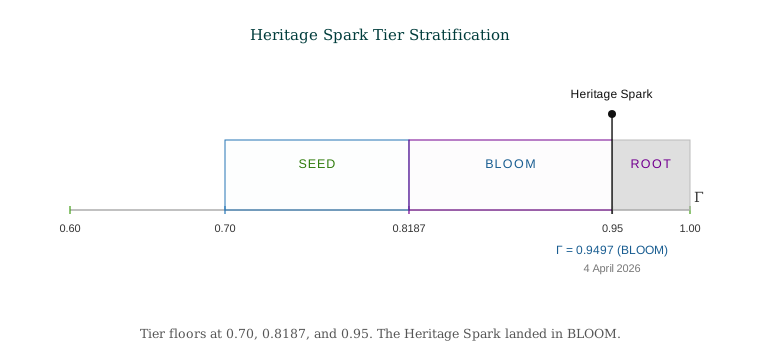
Figure 47. Heritage Spark coherence tier stratification.
Figure 47. Heritage Spark coherence tier stratification.Full size (opens in a new tab)
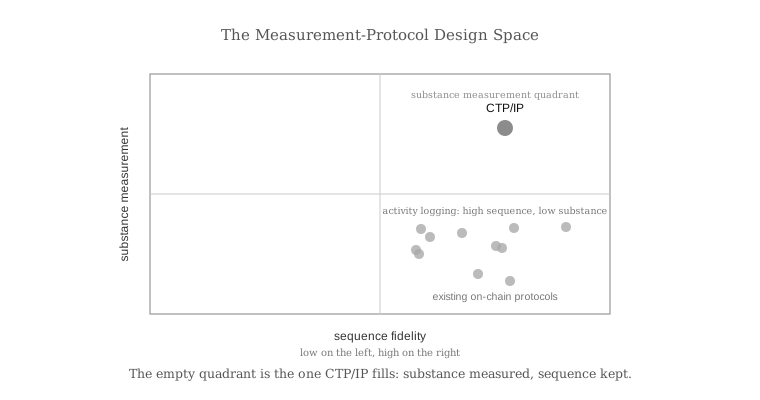
Figure 3. The measurement-protocol design space. Existing on-chain protocols cluster in the activity-logging quadrant (high sequence, low substance). CTP/IP fills the substance-measurement quadrant.
Figure 3. The measurement-protocol design space. Existing on-chain protocols cluster in the activity-logging quadrant (high sequence, low substance). CTP/IP fills the substance-measurement quadrant.Full size (opens in a new tab)
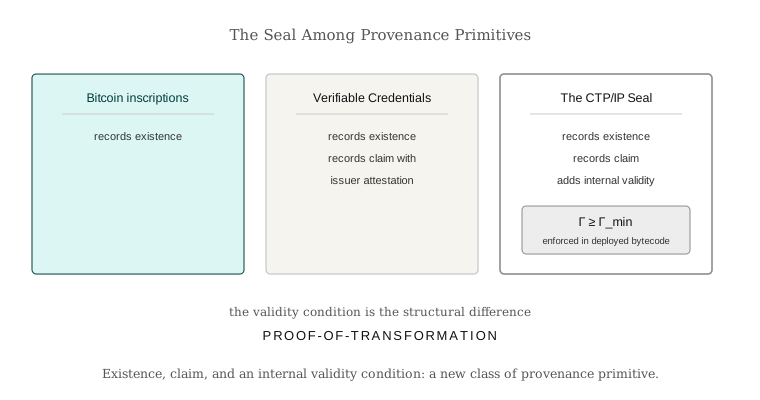
Figure 9. The seal compared to existing provenance primitives. Bitcoin inscriptions record existence; Verifiable Credentials record claim with issuer attestation; the seal adds an internal validity condition (Γ ≥ Γmin) enforced by deployed bytecode. The validity condition is the structural difference that makes the seal a new class of provenance primitive (Proof-of-Transformation).
Figure 9. The seal compared to existing provenance primitives. Bitcoin inscriptions record existence; Verifiable Credentials record claim with issuer attestation; the seal adds an internal validity condition (Γ ≥ Γmin) enforced by deployed bytecode. The validity condition is the structural difference that makes the seal a new class of provenance primitive (Proof-of-Transformation).Full size (opens in a new tab)
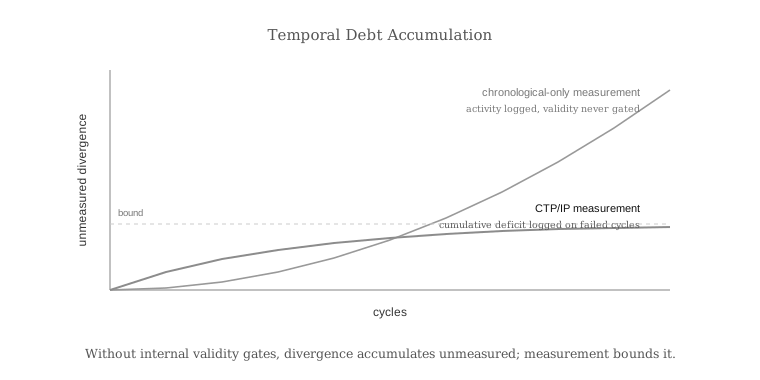
Figure 2. Temporal debt accumulation under chronological-only measurement vs CTP/IP measurement. Activity logged without internal validity gates accumulates unmeasured divergence; measurement bounds the accumulation through cumulative deficit logging on failed cycles.
Figure 2. Temporal debt accumulation under chronological-only measurement vs CTP/IP measurement. Activity logged without internal validity gates accumulates unmeasured divergence; measurement bounds the accumulation through cumulative deficit logging on failed cycles.Full size (opens in a new tab)
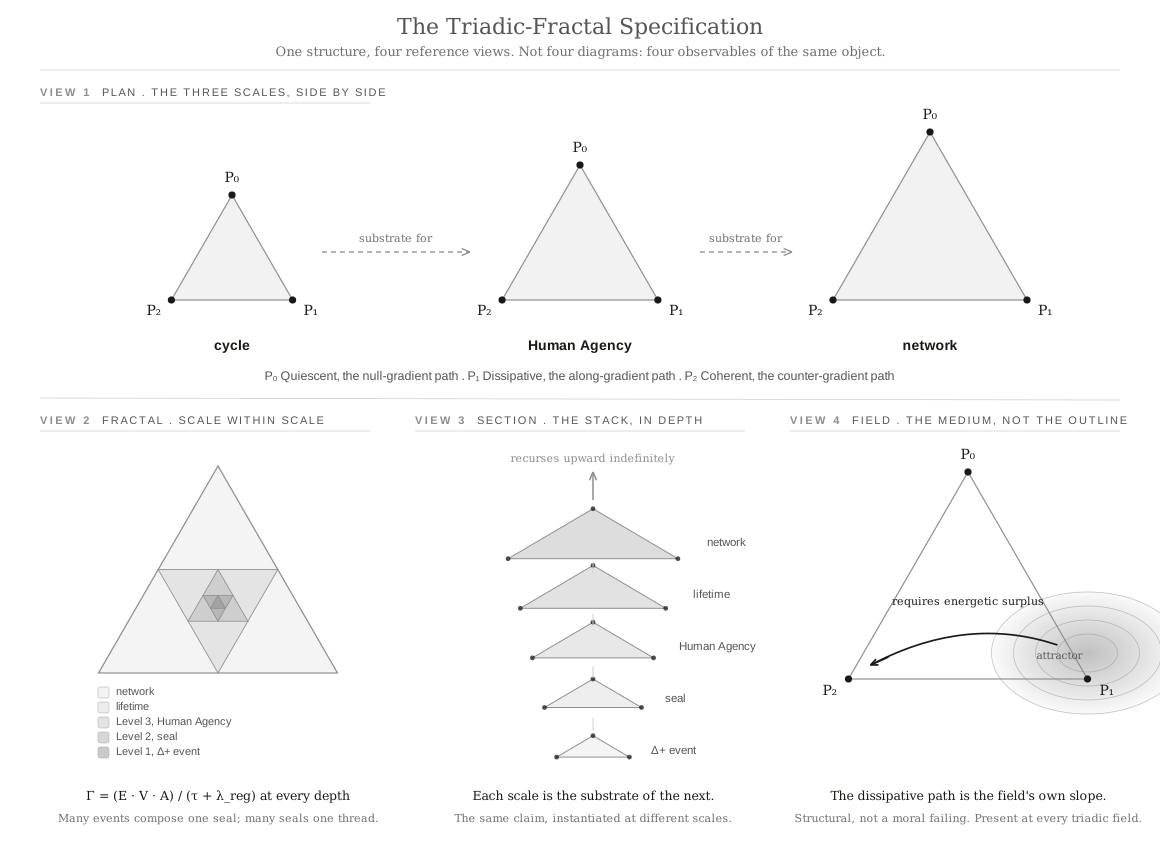
Figure 5. The Triadic-Fractal specification: P₀ (Quiescent), P₁ (Dissipative), P₂ (Coherent) paths fractally repeated across three scales (cycle, Human Agency, network). The same structural triadic field of selection appears at every scale.
Figure 5. The Triadic-Fractal specification: P₀ (Quiescent), P₁ (Dissipative), P₂ (Coherent) paths fractally repeated across three scales (cycle, Human Agency, network). The same structural triadic field of selection appears at every scale.Full size (opens in a new tab)
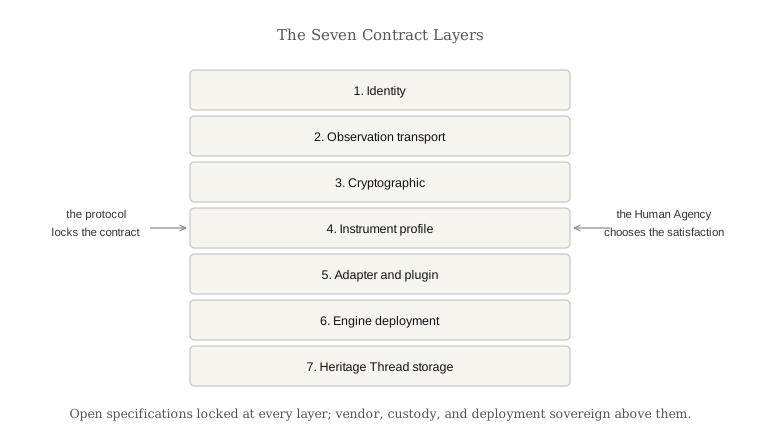
Figure 7. The seven contract layers. At each layer the protocol locks the contracts; the Human Agency chooses the satisfaction. Identity, observation transport, cryptographic, instrument profile, adapter and plugin, engine deployment, and Heritage Thread storage.
Figure 7. The seven contract layers. At each layer the protocol locks the contracts; the Human Agency chooses the satisfaction. Identity, observation transport, cryptographic, instrument profile, adapter and plugin, engine deployment, and Heritage Thread storage.Full size (opens in a new tab)
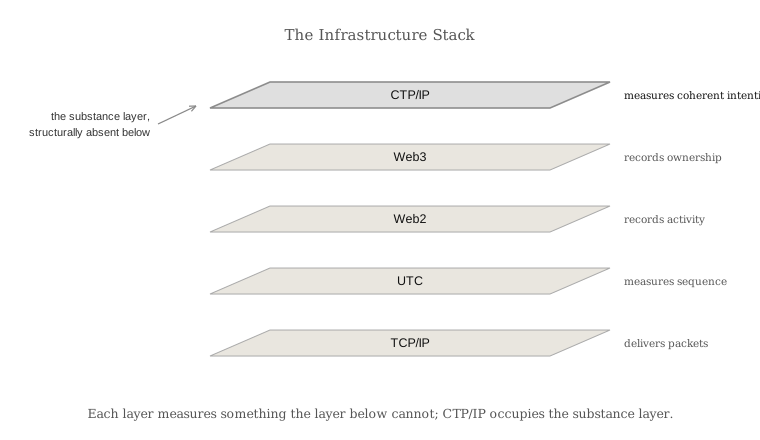
Figure 4. The infrastructure stack as 3D-layered substrate. Each layer measures something the layer below cannot: TCP/IP delivers packets; UTC measures sequence; Web2 records activity; Web3 records ownership; CTP/IP measures coherent intentional transformation. CTP/IP occupies the substance layer, structurally absent from the prior layers.
Figure 4. The infrastructure stack as 3D-layered substrate. Each layer measures something the layer below cannot: TCP/IP delivers packets; UTC measures sequence; Web2 records activity; Web3 records ownership; CTP/IP measures coherent intentional transformation. CTP/IP occupies the substance layer, structurally absent from the prior layers.Full size (opens in a new tab)
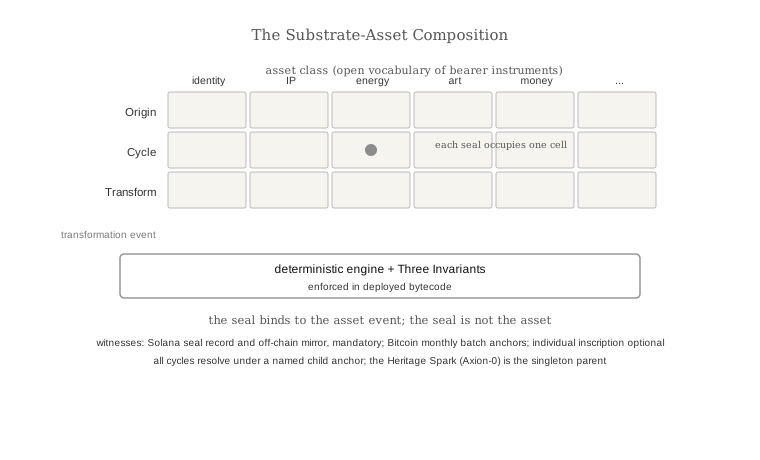
Figure 11. The substrate-asset composition. Transformation event (Origin, Cycle, Transform) intersected with asset class (the open vocabulary of bearer instruments and their derivatives). The substrate measurement layer measures the event through the deterministic engine and the Three Invariants enforced in deployed bytecode. The seal binds to the asset event; the seal is not the asset. Witness composition: on-chain seal record on Solana mainnet and an off-chain mirror record are both mandatory; cross-chain witness on Bitcoin comes through the monthly batch anchors under the Time Call, and an individual Bitcoin inscription is optional per cycle. All cycles resolve under a named child anchor; the Heritage Spark (Axion-0) is the singleton parent.
Figure 11. The substrate-asset composition. Transformation event (Origin, Cycle, Transform) intersected with asset class (the open vocabulary of bearer instruments and their derivatives). The substrate measurement layer measures the event through the deterministic engine and the Three Invariants enforced in deployed bytecode. The seal binds to the asset event; the seal is not the asset. Witness composition: on-chain seal record on Solana mainnet and an off-chain mirror record are both mandatory; cross-chain witness on Bitcoin comes through the monthly batch anchors under the Time Call, and an individual Bitcoin inscription is optional per cycle. All cycles resolve under a named child anchor; the Heritage Spark (Axion-0) is the singleton parent.Full size (opens in a new tab)
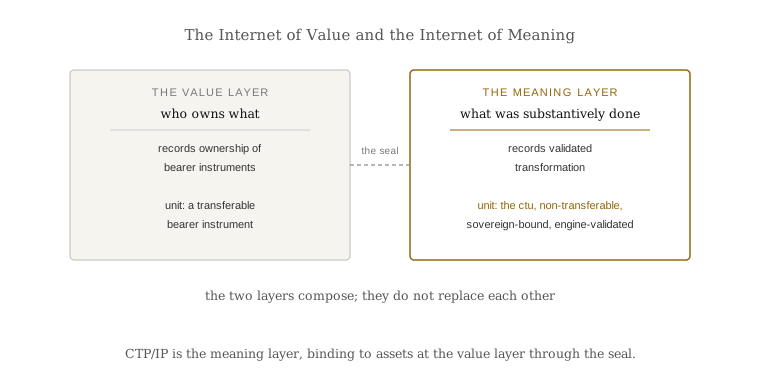
Figure 10. The internet of value contrasted with the internet of meaning. The value layer records ownership of bearer instruments and answers who owns what; its unit is a transferable bearer instrument. The meaning layer records validated transformation and answers what was substantively done; its unit is the Causal Time Unit (non-transferable, sovereign-bound, validated by the engine). The two layers compose; they do not replace each other. CTP/IP is the meaning layer that binds to assets at the value layer through the seal.
Figure 10. The internet of value contrasted with the internet of meaning. The value layer records ownership of bearer instruments and answers who owns what; its unit is a transferable bearer instrument. The meaning layer records validated transformation and answers what was substantively done; its unit is the Causal Time Unit (non-transferable, sovereign-bound, validated by the engine). The two layers compose; they do not replace each other. CTP/IP is the meaning layer that binds to assets at the value layer through the seal.Full size (opens in a new tab)
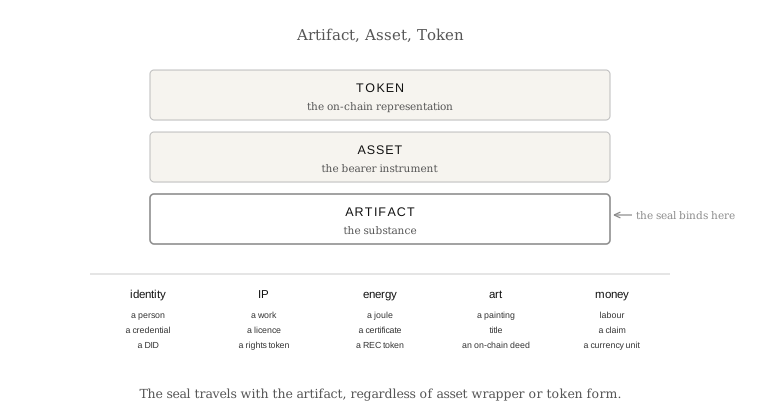
Figure 12. The distinction between artifact, asset, and token. Token is the on-chain representation; asset is the bearer instrument; artifact is the substance. CTP/IP binds at the artifact layer; the seal travels regardless of asset wrapper or token form. Examples across the asset universe show the three-layer pattern in identity, IP, energy, art, and money.
Figure 12. The distinction between artifact, asset, and token. Token is the on-chain representation; asset is the bearer instrument; artifact is the substance. CTP/IP binds at the artifact layer; the seal travels regardless of asset wrapper or token form. Examples across the asset universe show the three-layer pattern in identity, IP, energy, art, and money.Full size (opens in a new tab)
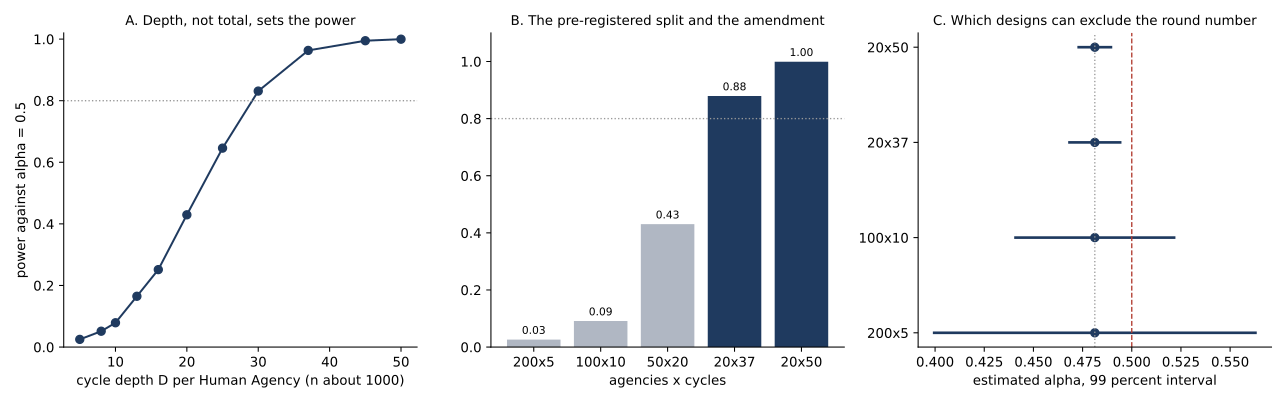
Figure 15. Statistical power of the M1 release criterion for P-CV. A: at a fixed total of about 1000 sealed cycles, achieved power against the round-number alternative alpha = 0.5 rises with cycle depth, not with total cycles, because the standard error of the decay-rate estimate falls as depth to the three-halves power; the dotted line is power 0.80. B: the five designs of the table; the pre-registered 100-by-10 split reaches power 0.09, the 20-by-37 design of the amendment 0.88 on fewer total cycles. C: 99 percent confidence intervals on the estimated rate for four designs, drawn at the predicted value ln phi; the two shallow designs fail to exclude alpha = 0.5 (the dashed line), the two deep ones exclude it. n stated per design; 4000 simulation replicates per point; two-sided test at the pre-registered 0.01 level.
Figure 15. Statistical power of the M1 release criterion for P-CV. A: at a fixed total of about 1000 sealed cycles, achieved power against the round-number alternative alpha = 0.5 rises with cycle depth, not with total cycles, because the standard error of the decay-rate estimate falls as depth to the three-halves power; the dotted line is power 0.80. B: the five designs of the table; the pre-registered 100-by-10 split reaches power 0.09, the 20-by-37 design of the amendment 0.88 on fewer total cycles. C: 99 percent confidence intervals on the estimated rate for four designs, drawn at the predicted value ln phi; the two shallow designs fail to exclude alpha = 0.5 (the dashed line), the two deep ones exclude it. n stated per design; 4000 simulation replicates per point; two-sided test at the pre-registered 0.01 level.Full size (opens in a new tab)
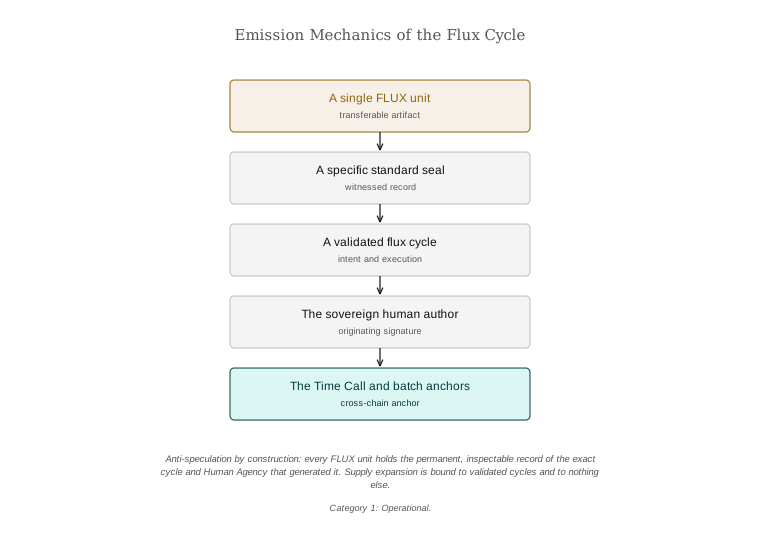
Figure 6. FLUX emission and value memory.
Figure 6. FLUX emission and value memory.Full size (opens in a new tab)
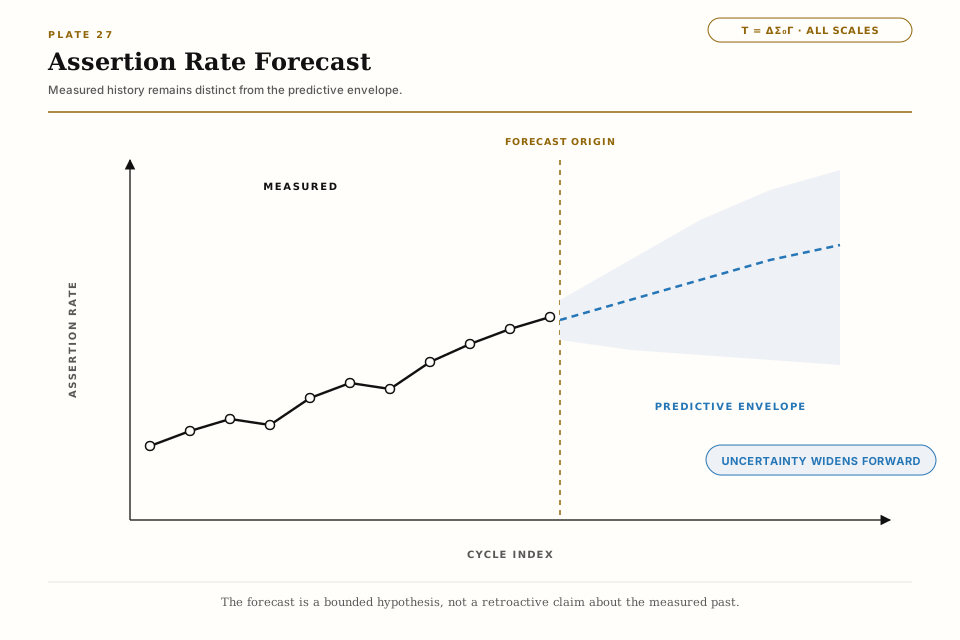
Panel 1. Assertion rate from compound history: measured Γ trajectory, rolling assertion rate R(n), predictive envelope under pre-registered P-CR / P-CV, and instrument face. Forecast is structural projection, not pricing.
Panel 1. Assertion rate from compound history: measured Γ trajectory, rolling assertion rate R(n), predictive envelope under pre-registered P-CR / P-CV, and instrument face. Forecast is structural projection, not pricing.Full size (opens in a new tab)